O Melhor Cogumelo para o Cérebro: O Guia para o Lion's Mane e Suporte Cognitivo
By Louis on 28/04/2026
O lion's mane é o melhor cogumelo para a saúde do cérebro, com pesquisas reais em humanos por trás dele. Aqui está o que os estudos mostram, o que comprar e o que os guias erram.
Melhor Cogumelo para o Cérebro: O Guia Honesto para o Lion's Mane e Suporte Cognitivo
Se você restringiu sua busca a cogumelos e quer um que realmente faça algo mensurável para o seu cérebro, a resposta é lion's mane. Não chaga, não reishi, não qualquer mistura de dezesseis cogumelos que um influenciador de bem-estar está promovendo esta semana. Lion's mane é o único cogumelo funcional com múltiplos ensaios clínicos humanos mostrando melhorias em testes cognitivos validados, e é o único que contém compostos comprovados para estimular o fator de crescimento nervoso.
O problema: a maioria dos produtos de lion's mane no mercado não fará nada por você, porque a indústria de suplementos tem um verdadeiro talento para pegar um cogumelo promissor e vender decepções caras. Aqui está o que a pesquisa realmente mostra, por que lion's mane é incomum no mundo dos cogumelos funcionais, e como evitar desperdiçar dinheiro.
Melhores Cogumelos para a Saúde do Cérebro em um Relance
Cogumelo | Mecanismo Cerebral | Dose Diária Típica | Força da Evidência |
|---|---|---|---|
Lion's Mane | Estimula o NGF, apoia a neurogênese | 500–3.000 mg de extrato | Forte (múltiplos ECRs humanos) |
Reduz a neuroinflamação, apoia o sono | 1.000–3.000 mg de extrato | Moderado (pré-clínico + ensaios de sono) | |
Melhora a utilização de oxigênio pelo cérebro | 1.000–3.000 mg de extrato | Moderado (mecanismo + indireto) | |
Antioxidante, reduz o estresse oxidativo no cérebro | 500–2.000 mg de extrato | Limitado (principalmente pré-clínico) |
As doses listadas são para extratos padronizados, não para pó de cogumelo cru.
Por que o Cogumelo Lion's Mane é o Melhor Cogumelo para Suporte Cerebral
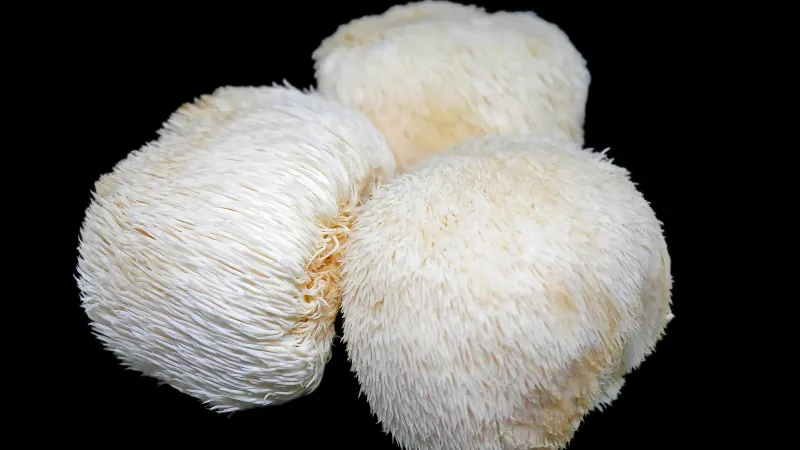
Lion's mane (Hericium erinaceus) ocupa o primeiro lugar por uma razão simples: é o único cogumelo funcional comum que contém compostos com um efeito direto e demonstrado no sistema nervoso. Especificamente, ele produz duas classes de moléculas bioativas que outros cogumelos simplesmente não produzem: hericenonas e erinacinas.
Ambas as classes de compostos parecem estimular a produção de fator de crescimento nervoso (NGF), uma proteína que seu cérebro usa para manter, crescer e reparar neurônios. O NGF apoia o tipo de manutenção estrutural que fundamenta a saúde cognitiva a longo prazo. Quando o NGF diminui (como acontece com a idade e em condições neurodegenerativas), os neurônios se tornam mais vulneráveis. O lion's mane parece impulsionar esse sistema na direção certa.
A outra parte é fator neurotrófico derivado do cérebro (BDNF), uma proteína relacionada envolvida em aprendizado, memória e regulação do humor. Um ensaio de 2023 em jovens adultos encontrou mudanças mensuráveis em pro-BDNF após 28 dias de suplementação com lion's mane, juntamente com melhorias subjetivas em estresse e humor.
É por isso que o lion's mane se comporta de maneira diferente dos outros cogumelos na conversa cognitiva. O reishi acalma a neuroinflamação, o cordyceps melhora a entrega de oxigênio ao cérebro, e o chaga atua como um antioxidante. Todos esses são mecanismos reais, mas são indiretos. O lion's mane é o único que opera na manutenção estrutural dos neurônios em si. Para entender como esses cogumelos se encaixam em outros sistemas do corpo, veja nosso guía completa de hongos funcionales.
O que a Pesquisa Humana Realmente Mostra
A evidência humana para o lion's mane é a mais forte na categoria de cogumelos funcionais para resultados cognitivos, mas ainda é menor do que a cópia de marketing sugere. Vale a pena ser honesto sobre ambos.
O estudo principal é Mori et al. (2009), um ensaio randomizado, duplo-cego e controlado por placebo publicado em Phytotherapy Research. Trinta adultos com idades entre 50 e 80 anos com leve comprometimento cognitivo tomaram 3 gramas por dia de cabelo de leão durante 16 semanas. O grupo que recebeu o suplemento mostrou melhorias significativas na Escala de Demência Hasegawa Revisada em comparação com o placebo. Detalhe importante: quando os participantes pararam de tomá-lo, as pontuações diminuíram de volta ao nível basal em quatro semanas. O cogumelo estava fazendo algo enquanto era consumido.
Três ensaios de acompanhamento acrescentam peso.Saitsu et al. (2019) encontraram melhorias no Mini-Exame do Estado Mental em 31 adultos mais velhos saudáveis a 3,2 g/dia durante 12 semanas.Li et al. (2020) mostraram melhorias cognitivas e na vida diária em pacientes com Alzheimer leve usando cabelo de leão enriquecido com erinacina A por 49 semanas.Docherty et al. (2023) testaram 1,8 g/dia em jovens adultos saudáveis por 28 dias, encontrando desempenho cognitivo mais rápido e redução do estresse subjetivo.
Vale a pena destacar honestamente: os próprios pesquisadores descrevem o campo como ainda em seus estágios iniciais. Os tamanhos das amostras são pequenos (a maioria dos estudos com menos de 50 participantes), as durações são curtas e ainda não há um grande ensaio multicêntrico. O mecanismo é plausível, a direção consistente do efeito é encorajadora, mas o cabelo de leão não foi testado na escala do óleo de peixe ou creatina.
A Questão do Micélio vs. Corpo Frutífero (Cabelo de Leão é Diferente)
Esta é a seção que a maioria dos artigos concorrentes erra, e isso é importante o suficiente para merecer seu próprio H2.
Para a maioria dos cogumelos funcionais (cordyceps, reishi, cauda de peru), a regra é simples: compre extrato do corpo frutífero, evite produtos de micélio em grãos. O corpo frutífero é onde os compostos bioativos residem, e o micélio cultivado em grãos acaba sendo principalmente amido de cereais.
O cabelo de leão quebra essa regra. As duas classes de compostos estimulantes do NGF são distribuídas de maneira diferente:
- Hericenonas são encontradas principalmente no corpo frutífero (o cogumelo branco em cascata)
- Erinacinas são encontrados principalmente no micélio (a rede subterrânea semelhante a raízes)
Isso é importante porque as erinacinas são as mais potentes das duas, e elas atravessam a barreira hematoencefálica de forma mais eficaz do que as hericenonas. O ensaio de Alzheimer Li 2020 usou um produto de micélio enriquecido com erinacina A especificamente por causa disso.
A conclusão honesta: um suplemento de cabelo de leão de qualidade deve incluir idealmente tanto o corpo frutífero QUANTO o micélio devidamente cultivado, não um ou outro. Um puro extrato de corpo frutífero perde as erinacinas. Um produto barato de micélio em grãos é principalmente aveia. Os melhores produtos usam uma abordagem dupla com conteúdo de beta-glucano verificado e conteúdo de erinacina verificado (raro, mas cada vez mais disponível).
Se você só vê "100% corpo frutífero" em um rótulo de cabelo de leão e a marca o comercializa como superior, eles estão aplicando uma regra que é correta para cordyceps, mas incompleta para cabelo de leão. Se você só vê "biomassa de micélio" sem especificar o conteúdo de erinacina ou tipo de substrato, esse é um problema diferente. Procure produtos que testem ambas as classes de compostos, com os controles de qualidade padrão: certificação orgânica, testes de laboratório de terceiros testes de laboratório, e um Certificado de Análise.
Navegar produtos verificados de melena de leão no ShroomSpy é um ponto de partida razoável se você preferir pular o trabalho de decodificação do rótulo.
Melhor Cabelo de Leão para Objetivos Específicos
A forma de cabelo de leão que é certa para você depende do que você realmente está tentando fazer. Três enquadramentos honestos:
Melhor para saúde cerebral geral e suporte cognitivo diário: um extrato duplo. Procure produtos que combinem corpo frutífero e micélio, extraídos em água quente e álcool, com conteúdo de beta-glucano verificado de pelo menos 25%. Isso cobre o perfil de compostos mais amplo e corresponde ao formato usado no ensaio Mori 2009.
Melhor para estresse, humor e névoa cerebral: extrato com foco em micélio com suporte BDNF. O estudo Docherty 2023 encontrou benefícios para o humor e estresse associados a mudanças pro-BDNF após 28 dias. Preparações ricas em micélio com conteúdo de erinacina confirmado parecem impulsionar mais desse efeito. Combinar com reishi à noite aborda o lado do sono da névoa cerebral.
Melhor para neuroproteção a longo prazo e suporte cognitivo relacionado à idade: micélio enriquecido com erinacina A. Esta é a forma usada no ensaio de Alzheimer Li 2020. É a opção mais cara e mais difícil de obter, mas se seu objetivo é a saúde cerebral a longo prazo em vez de foco na próxima semana, as erinacinas são a classe de compostos ativos com a evidência mais direta.
Reishi, Cordyceps e Chaga: O Elenco de Apoio
A crina de leão é a protagonista, mas três outros cogumelos merecem menção na conversa sobre o cérebro, cada um por um motivo diferente.
Reishi (Ganoderma lucidum) não estimula o NGF, mas modula a neuroinflamação, que está sendo cada vez mais compreendida como um dos principais fatores do declínio cognitivo. Os triterpenos do Reishi parecem atenuar esse processo. Também é útil para a qualidade do sono, e o sono é o melhor potenciador cognitivo que existe. Uma combinação comum: crina de leão pela manhã, reishi à noite.
Cordyceps (C. militaris) apoia a função cerebral indiretamente, melhorando a utilização de oxigênio. Se seus problemas cognitivos parecem mais com exaustão do que com confusão mental, o cordyceps pode ser mais relevante do que a crina de leão. Para a análise completa, veja nosso Melhor Suplemento de Cogumelos para Energia guia.
Chaga (Inonotus obliquus) traz suporte antioxidante, incluindo altos níveis de superóxido dismutase. Sua base de evidências é principalmente pré-clínica, então não espere efeitos cognitivos dramáticos, mas é uma inclusão razoável em uma combinação de saúde cerebral a longo prazo.
Se sua preocupação cognitiva é mais sobre atenção sustentada durante as tarefas do que sobre saúde cerebral a longo prazo, a crina de leão ainda é a resposta, mas a abordagem muda. Veja nosso Melhor Suplemento de Cogumelos para Foco post para essa perspectiva.
Crina de Leão vs. Nootrópicos Comuns: Onde se Encaixa
Se você já está tomando nootrópicos ou considerando uma combinação, a comparação honesta é importante. A crina de leão opera de maneira diferente dos suplementos cognitivos mais comuns, e combinar é geralmente mais inteligente do que substituir.
Crina de leão vs. cafeína + L-teanina. Esta é a combinação de nootrópicos mais comum e funciona através de um mecanismo totalmente diferente. A cafeína bloqueia os receptores de adenosina para alerta agudo; a L-teanina suaviza o pico de cafeína e apoia o foco calmo. A crina de leão não faz nenhum dos dois. Ela apoia a manutenção estrutural dos neurônios ao longo de semanas. A jogada inteligente: mantenha seu café da manhã com L-teanina para foco no mesmo dia, adicione crina de leão para o investimento cerebral a longo prazo. Eles não se conflitam.
Crina de leão vs. alfa-GPC e citicolina. Tanto o alfa-GPC quanto a citicolina são precursores de colina que aumentam a acetilcolina, o neurotransmissor mais associado à memória e aprendizado. Eles produzem efeitos agudos notáveis dentro de uma ou duas horas. A crina de leão atua a montante dos níveis de neurotransmissores, apoiando os neurônios que produzem e utilizam esses neurotransmissores. Pessoas que combinam os dois frequentemente relatam que a fonte de colina parece "mais forte" enquanto a crina de leão parece uma base mais estável. Trabalhos diferentes.
Cogumelo do leão vs. ômega-3 (DHA/EPA).Esta é a comparação mais próxima em termos de mecanismo. Ambos apoiam a estrutura cerebral a longo prazo, em vez de desempenho agudo. O DHA é um componente estrutural das membranas das células cerebrais; o cogumelo do leão apoia as proteínas que mantêm essas células. A verdade honesta: o ômega-3 tem uma base de evidências muito maior (décadas de pesquisa, centenas de ensaios) e é o suplemento cerebral fundamental a longo prazo. O cogumelo do leão é uma adição valiosa, não uma substituição.
Cogumelo do leão vs. racetams (piracetam, aniracetam).Os racetams são compostos farmacêuticos com efeitos cognitivos mais fortes e rápidos, mas não são legais como suplementos na maioria das jurisdições e o perfil de segurança a longo prazo é menos estabelecido. O cogumelo do leão é o equivalente de suplemento natural em intenção (apoio cognitivo a longo prazo) sem as questões legais ou de segurança.
A conclusão: o cogumelo do leão é melhor entendido como um investimento cerebral a longo prazo, não como um impulso cognitivo agudo. Se você quer sentir algo nas próximas duas horas, você quer cafeína, colina ou ambos. Se você quer que seu cérebro seja estruturalmente mais saudável em cinco anos, o cogumelo do leão deve fazer parte da sua rotina.
Como Tomar Cogumelo do Leão para Apoio Cerebral
Dosagem.Estudos em humanos que mostraram efeitos cognitivos positivos usaram de 1,8 a 3,2 gramas por dia de material de cogumelo do leão. Para um extrato padronizado 10:1, isso se traduz em aproximadamente 500 a 1.500 mg por dia. O pó de cogumelo inteiro requer doses mais altas (cerca de 3 gramas) porque os compostos ativos não estão concentrados. Nenhuma evidência publicada sugere que ciclar seja necessário, o uso contínuo diário é o padrão.
Horário.O cogumelo do leão não é um estimulante, então o horário importa menos do que a consistência. A maioria dos usuários o toma pela manhã com comida, às vezes dividido em duas doses. Tomá-lo com uma fonte de gordura pode melhorar a absorção dos compostos solúveis em gordura.
Quanto tempo até você notar algo.Efeitos subjetivos sobre foco ou humor podem aparecer dentro de 1 a 2 semanas para alguns usuários. As melhorias cognitivas mensuráveis observadas em ensaios clínicos levaram de 8 a 16 semanas de uso diário. O cogumelo do leão não é um nootrópico de ação imediata, e pessoas que o tomam por duas semanas e concluem que não funciona não deram uma chance justa. Comprometa-se a pelo menos 8 semanas antes de decidir.
Se a Névoa Cerebral é Sua Principal Queixa
A névoa cerebral é a razão mais comum pela qual as pessoas procuram um cogumelo cerebral, e merece um protocolo diferente do apoio cognitivo a longo prazo. A névoa cerebral raramente é um problema cerebral. Geralmente é consequência de dívida de sono, estresse crônico, oscilações de açúcar no sangue, desidratação, mudanças hormonais ou inflamação pós-viral. O cogumelo do leão pode ajudar, mas apenas como parte de uma solução mais ampla.
O protocolo que tende a funcionar para a névoa cerebral especificamente: 1.000 mg de extrato de cogumelo do leão pela manhã com o café da manhã, além de 500 a 1.000 mg de extrato de reishi à noite para melhorar a qualidade do sono. A maioria dos usuários relata melhorias subjetivas na névoa cerebral dentro de 2 a 4 semanas de uso consistente, mais rápido do que o cronograma para mudanças cognitivas mensuráveis em ensaios. Isso provavelmente ocorre porque o cogumelo do leão aborda um componente (manutenção neuronal) enquanto o reishi aborda outro (qualidade do sono e neuroinflamação).
Vale a pena ser direto: se sua névoa cerebral persistir após 8 semanas de suplementação consistente, além de abordar sono, hidratação e estresse, você deve consultar um médico em vez de tentar mais suplementos. A névoa cerebral persistente pode sinalizar hipotireoidismo, anemia, apneia do sono, depressão ou outras condições que requerem diagnóstico, não fungos.
Quem Não Deve Tomar Cogumelo do Leão
O cogumelo do leão é bem tolerado pela maioria dos adultos saudáveis, mas algumas populações devem consultar um médico primeiro. Pessoas em medicamentos para diabetes devem monitorar a glicose no sangue, uma vez que o cogumelo do leão pode ter um leve efeito redutor de glicose que pode se somar à insulina ou sulfonilureias. Pessoas em anticoagulantes devem consultar seu prescritor, pois o cogumelo do leão pode ter uma leve atividade antiplaquetária. A gravidez e a amamentação carecem de dados de segurança adequados, então a resposta padrão é evitá-lo. Pessoas com alergias a mofo ou fungos devem começar com uma dose baixa para testar a tolerância.
O efeito colateral mais comum relatado em ensaios clínicos é leve desconforto gastrointestinal, geralmente resolvido ao tomar o suplemento com comida.
A Conclusão
O melhor cogumelo para a saúde cerebral é o cogumelo do leão, dosado em 500 a 1.500 mg de um extrato 10:1 diariamente, tomado consistentemente por pelo menos 8 semanas. Procure produtos que incluam tanto o corpo de frutificação quanto os componentes de micélio, com testes de terceiros para metais pesados e, idealmente, para o conteúdo de hericenona e erinacina. Adicione reishi para sono e neuroinflamação, cordyceps se sua fadiga for um problema cognitivo, e evite produtos baratos de micélio em grãos que contenham principalmente amido de cereais. O cogumelo do leão é o raro cogumelo funcional com evidências reais de humanos por trás de suas alegações, mas apenas se você comprar a forma certa e mantiver o uso.
Pronto para levar sua jornada micológica para o próximo nível? Navegue por nossa gama completa de produtos de cogumelos em ShroomSpy.com/mushrooms/products e encontre tudo o que você precisa para cultivar, forragear e prosperar.
Perguntas Frequentes
Qual é o melhor cogumelo para a saúde do cérebro?
Juba de leão (Hericium erinaceus) é o cogumelo com mais respaldo científico para a saúde do cérebro. Vários ensaios clínicos em humanos mostraram melhorias na função cognitiva, com as evidências mais fortes em adultos com comprometimento cognitivo leve. A juba de leão é o único cogumelo funcional comum que contém compostos (hericenonas e erinacinas) com um efeito direto e demonstrado na produção de fator de crescimento nervoso.
Quanto tempo a juba de leão leva para funcionar na função cerebral?
Melhoras subjetivas na concentração ou humor podem aparecer em 1 a 2 semanas. As melhorias cognitivas mensuráveis observadas em estudos clínicos levaram de 8 a 16 semanas de uso diário consistente. A juba de leão não é um nootrópico de efeito imediato. Se você tomar por duas semanas e não sentir nada, esse é o cronograma funcionando como esperado, e não o suplemento falhando.
Devo comprar o corpo frutífero da juba de leão ou o micélio?
Ambos, idealmente. Os compostos ativos que estimulam o NGF estão distribuídos de maneira desigual: as hericenonas estão concentradas no corpo frutífero, enquanto as erinacinas (os compostos mais potentes que atravessam a barreira hematoencefálica) estão concentradas no micélio. Os melhores suplementos de juba de leão incluem ambos. O corpo frutífero puro não contém as erinacinas. Produtos baratos de micélio em grãos são principalmente amido de cereais.
A juba de leão pode ajudar com a névoa cerebral?
Relatos de usuários e pesquisas humanas limitadas sugerem que a juba de leão pode ajudar com a névoa cerebral subjetiva, particularmente quando tomada de forma consistente por 8 semanas ou mais. O mecanismo provavelmente passa pela manutenção neuronal apoiada pelo NGF e possivelmente pela redução da neuroinflamação. A névoa cerebral tem muitas causas (sono, estresse, hormônios, dieta), então a juba de leão funciona melhor juntamente com a abordagem desses fatores subjacentes, em vez de como uma solução isolada.
A juba de leão é segura para tomar todos os dias?
Para a maioria dos adultos saudáveis, a suplementação diária de juba de leão nas doses estudadas (500 a 3.000 mg de extrato por dia) parece ser bem tolerada. Converse com um médico antes de começar se você tomar anticoagulantes, medicamentos para diabetes ou imunossupressores, ou se estiver grávida ou amamentando. O efeito colateral mais comumente relatado é leve desconforto gastrointestinal, geralmente resolvido ao tomar o suplemento com alimentos. A juba de leão não é aprovada para diagnosticar, tratar, curar ou prevenir qualquer doença.
A juba de leão realmente regenera nervos?
Exagerado. A juba de leão estimula o fator de crescimento nervoso (NGF), que apoia a manutenção dos neurônios e pode ajudar nos processos de reparo. Estudos em animais mostraram regeneração de nervos periféricos após lesão com a suplementação de juba de leão, mas as evidências humanas para a real regeneração de nervos são limitadas e preliminares. A formulação precisa é que a juba de leão parece apoiar as condições para que neurônios saudáveis mantenham e se reparam, não que ativamente regenera nervos danificados sob demanda.
A juba de leão pode reverter a doença de Alzheimer?
Não. O ensaio Li 2020 em pacientes com Alzheimer leve mostrou desaceleração do declínio cognitivo e melhorias na função de vida diária ao longo de 49 semanas, o que é significativamente diferente de uma reversão. A juba de leão está sendo investigada como uma possível intervenção de suporte, não uma cura. Qualquer um que afirme o contrário em textos de marketing está ultrapassando a pesquisa real.
Todos os produtos de juba de leão funcionam da mesma forma?
Não. A origem é mais importante para a juba de leão do que para quase qualquer outro cogumelo funcional. O extrato puro do corpo frutífero contém hericenonas, mas mínimas erinacinas. Produtos de micélio em grãos são principalmente amido de cereais com traços de compostos miceliais. O micélio cultivado adequadamente com conteúdo verificado de erinacina é a forma mais rara e cara. O perfil de compostos ativos difere significativamente entre esses formatos, então duas garrafas rotuladas como "juba de leão" podem conter produtos muito diferentes.
A juba de leão é melhor que o café para concentração?
Mecanismo diferente, cronograma diferente, objetivo diferente. O café proporciona de 4 a 6 horas de alerta agudo através da estimulação do sistema nervoso central. A juba de leão apoia a saúde neuronal ao longo de 8 a 16 semanas de uso consistente. A maioria das pessoas que toma ambos relata que a combinação é melhor do que qualquer um sozinho. A juba de leão não substituirá seu café para concentração no mesmo dia, e o café não proporcionará os benefícios cerebrais de longo prazo associados à juba de leão.
Aviso: Esta declaração não foi avaliada pela Administração de Alimentos e Medicamentos. Este produto não se destina a diagnosticar, tratar, curar ou prevenir qualquer doença. Sempre consulte um profissional de saúde qualificado antes de iniciar um novo suplemento, especialmente se você tomar medicamentos, estiver grávida ou amamentando, ou tiver uma condição médica.
Confira nossos produtos de Juba de Leão!
Perguntas frequentes
O lion's mane (Hericium erinaceus) é o cogumelo mais respaldado por pesquisas para a saúde do cérebro, com múltiplos ensaios clínicos em humanos mostrando melhorias cognitivas, inclusive em adultos com comprometimento cognitivo leve. É o único cogumelo funcional comum que contém compostos, hericenonas e erinacinas, com um efeito direto e demonstrado na produção de fator de crescimento nervoso. Em contraste, reishi, cordyceps e chaga atuam por meio de mecanismos mais indiretos.
Referências
- Docherty, S., Doughty, F. L., & Smith, E. F. (2023). Os Efeitos Agudos e Crônicos da Suplementação de Cogumelo Lion’s Mane na Função Cognitiva, Estresse e Humor em Adultos Jovens: Um Estudo Piloto, Duplo-Cego e de Grupos Paralelos. .
- Li, I., Chang, H., Lin, C., Chen, W., Lu, T., Chen, Y., Chen, Y., & Chen, C. (2020). Prevenção da Doença de Alzheimer Precoce por Micélio de Hericium erinaceus Enriquecido com Erinacina A: Estudo Piloto Duplo-Cego Controlado por Placebo. .
- Saitsu, Y., Nishide, A., Kikushima, K., Kuniyoshi, S., & Ohnuki, K. (2010). Melhora das funções cognitivas pela ingestão oral de Hericium erinaceus. .
- Mori, K., Inatomi, S., Ouchi, K., Azumi, Y., & Tuchida, T. (2009). Efeitos benéficos do cogumelo Yamabushitake (Hericium erinaceus) na deterioração cognitiva leve: um ensaio clínico duplo-cego controlado por placebo. .