Mycorrhizal Fungi: Earth's First Global Map Revealed
By Louis on 15/06/2026
Scientists built the first global map of mycorrhizal fungi, the underground networks that feed most plants and store soil carbon. See what they found.
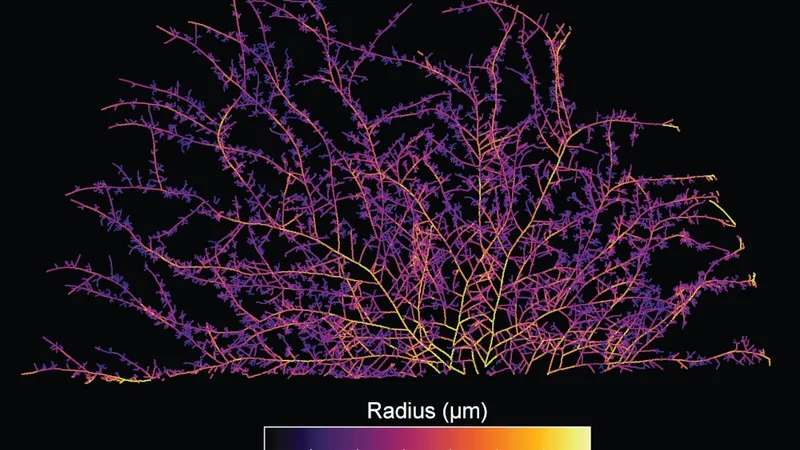
Mycorrhizal Fungi Just Got Their First Global Map, and the Scale Is Ridiculous
Somewhere under the grass you walked across this morning, a fungal network is shuttling carbon, water, and nutrients on a scale that makes the global shipping industry look like a kid's lemonade stand. Researchers have now mapped that network across the entire planet for the first time. A study in the journal Science lays out the first global picture of arbuscular mycorrhizal fungi, the threadlike organisms that partner with most land plants and quietly run a chunk of Earth's life-support system. The headline figure is almost comical: the world's topsoil holds roughly 110 quadrillion kilometers of these fungal threads. That is close to a billion times the distance from Earth to the sun, packed into the dirt beneath your feet.
You can check the map out here! It's pretty interesting!
The trade deal happening under your shoes
Arbuscular mycorrhizal fungi, usually shortened to AM fungi, strike a deal with about 70% of plant species on Earth. The fungi push out microscopic threads called hyphae, which act like a hugely extended root system. They scavenge phosphorus, nitrogen, and water from soil that plant roots alone can't reach, then deliver it straight to the host. In some cases the fungi supply as much as 80% of a plant's phosphorus. Plants pay for the service in carbon, handing over sugars they pulled out of the air through photosynthesis.
That carbon payment is the part climate scientists care about. The research team estimates these networks move around 1 billion metric tons of carbon into Earth's soils every year. So this isn't a quirky biology footnote. It is one of the larger carbon-handling operations on the planet, and almost nobody can see it.
A number that genuinely breaks your brain
The map puts hard figures on something that used to be a shrug. Beyond the 110 quadrillion kilometers of thread, the team estimates the networks hold roughly 300 megatons of carbon, which works out to somewhere between four and six times the combined mass of every living human. Down at ground level, topsoil packs an average of about 237 feet of hyphae into a single cubic inch.
Here is the comparison the researchers reached for to make it land: stretched into one straight line, this fungal thread would reach roughly 10% of the way across the Milky Way. The thing rerouting nutrients under a cow pasture in Ohio operates at a galactic length scale. Worth sitting with for a second.
How do you map something you can't see?
You can't exactly photograph the entire underground from orbit, so the team built the picture in layers. They pulled density readings from more than 16,000 soil cores collected around the world, used robotic imaging to watch living hyphae grow and branch, then fed all of it into machine-learning models that predicted fungal density across regions nobody sampled directly.
That method matters for how you read the results. The global map is a set of model-based predictions calibrated against real soil samples, not a literal census of every thread on Earth. The patterns are strongest where sampling was densest and fuzzier where data is thin, which the researchers are upfront about. They also released an interactive visualization so anyone can poke around the predicted hotspots, built by SPUN, the University of Sheffield, and the AMOLF institute.
Why grasslands (including a slice of Florida) are the real MVPs
When the team looked at where the biomass concentrates, forests were not the winners. Wild grasslands hold roughly 40% of the world's AM fungal biomass. The densest readings came from high-altitude and flooded grasslands, and the Everglades right here in Florida landed among the standouts. The soggy, sun-soaked ground that snowbirds drive past on the way to the beach is one of the planet's busier fungal exchanges.
There is an uncomfortable twist in that finding. Grasslands are some of the least protected ecosystems on the map, far behind forests in conservation attention and legal cover. The richest fungal real estate is also the ground we tend to overlook.
The part that should worry you
The map didn't just count fungi. It flagged where they're thinning out. In the study's comparisons, cropland networks ran close to half as dense as wild grassland, roughly 47% lower where natural grass had been converted to farm fields. The team's read at a global scale is that agriculture reduces network density, though the why is still a set of hypotheses rather than a settled mechanism. Tilling likely shreds the hyphae physically, and heavy fertilizer use may train plants to lean on chemical inputs instead of their fungal partners. Those are plausible explanations the data is consistent with, not proven cause and effect.
Stack that against land-use trends and it gets sharper. Grasslands are being plowed into farmland about four times faster than forests are being cleared. A separate SPUN finding from last year reported that 95% of the biodiversity hotspots for these fungi sit outside protected areas. We are converting the densest networks fastest while protecting them least.
Why a fungal map matters beyond the lab
The researchers behind the project, including evolutionary biologist Dr. Toby Kiers of SPUN, argue that fungi have been sidelined in climate and conservation planning for too long, and that a map like this finally gives policymakers something concrete to point at. You can't protect soil carbon you've never measured. Now there's a baseline.
For anyone who loves mushrooms, there's a quieter takeaway too. The lion's mane on your cutting board and the oyster cluster on a hardwood log are the visible tip of a kingdom that's mostly underground, mostly invisible, and mostly running the show. The fruiting bodies we cook, study, and obsess over depend on the same fungal machinery this map just brought into focus.
The bottom line
A team of scientists looked under the entire planet and found a living network long enough to lap the galaxy, heavier than humanity, and shrinking fastest exactly where it's densest. The first global map of mycorrhizal fungi turns a hand-wave into hard numbers, and those numbers make a clear case for treating soil fungi as climate infrastructure rather than background scenery. The mushrooms get the glory. The threads do the work.
Ready to dig deeper into the kingdom under your feet? Browse our full range of mushroom products and find everything you need to grow, forage, and thrive.
Check out our Products!
Perguntas frequentes
Mycorrhizal fungi are soil fungi that form partnerships with plant roots. They extend thin threads called hyphae through the soil, gather water and nutrients like phosphorus and nitrogen, and trade them to plants in exchange for carbon-rich sugars. Arbuscular mycorrhizal fungi, the type in this new map, partner with about 70% of all plant species.
Referências
- Stewart, J. D. (2026). Global density and biomass of arbuscular mycorrhizal fungal networks. .