Última atualização:
Agaricus xanthodermus
"Yellow Stainer, Yellow-staining mushroom"
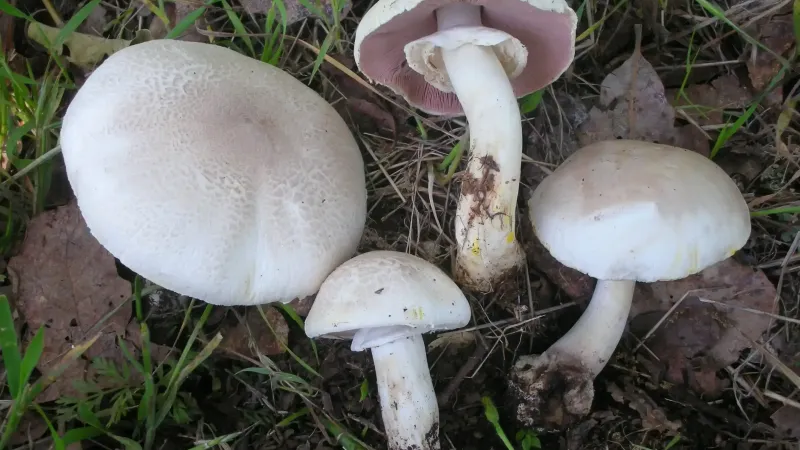
Agaricus xanthodermus fruiting bodies
Classificação Científica
Reino:Fungi
Divisão:Basidiomycota
Classe:Agaricomycetes
Ordem:Agaricales
Família:Agaricaceae
Gênero:Agaricus
Perguntas Frequentes
- O que é a espécie Yellow Stainer?
- A espécie Yellow Stainer (Agaricus xanthodermus) pertence à família Agaricaceae. É estudada por suas características biológicas e está documentada no banco de dados micológico da ShroomSpy.
- A espécie Yellow Stainer é comestível?
- Venenoso — não comer. Agaricus xanthodermus é o cogumelo venenoso mais ingerido por engano em regiões temperadas porque se parece muito com os cogumelos-do-campo, cogumelos-cavalo e champignons comestíveis (Agaricus bisporus, A. arvensis). Causa intoxicação gastrointestinal — náuseas, vômitos, cólicas abdominais e diarreia, por vezes com dor de cabeça, sudorese e rubor — entre 0,3 e 6 horas (geralmente cerca de 2 horas) após o consumo. Os sintomas devem-se a compostos fenólicos e costumam ceder sozinhos em cerca de 24 horas, embora crianças e pessoas sensíveis possam ser mais afetadas. Dois sinais de alerta confiáveis: a carne, sobretudo a base do pé, mancha de amarelo-cromo intenso em segundos ao ser cortada ou amassada, e exala um odor fenólico (carbólico, de tinta) desagradável que se intensifica ao cozinhar. Além disso, tende a acumular metais pesados. Em caso de ingestão, contate um centro de toxicologia.
- Qual é a classificação científica de Yellow Stainer?
- A espécie Yellow Stainer pertence ao reino Fungi, divisão Basidiomycota, classe Agaricomycetes, ordem Agaricales, família Agaricaceae, gênero Agaricus. Seu nome científico é Agaricus xanthodermus.
Sobre
Agaricus xanthodermus, o cogumelo amarelante, é um cogumelo lamelado tóxico da família Agaricaceae que imita de perto vários cogumelos-do-campo comestíveis, tornando-se uma das espécies venenosas mais confundidas. Tem um chapéu liso branco a acinzentado de 5–15 cm de diâmetro, lamelas livres e apertadas que passam de branco a rosa sujo e a castanho-chocolate, e um pé com anel cuja base fica amarelo intenso em segundos ao ser cortada. Todo o cogumelo exala um odor fenólico (carbólico) desagradável que se intensifica ao cozinhar. Cresce na relva — gramados, pastagens, parques e beiras de estrada — muitas vezes em anéis de fada, do fim da primavera ao outono na Europa e no leste e centro da América do Norte.
História
Agaricus xanthodermus foi descrito formalmente pelo farmacêutico francês Léon Gaston Genevier em 1876. O epíteto xanthodermus combina o grego xanthos ("amarelo") e derma ("pele"), em referência à coloração amarela característica da sua superfície e carne. Como o género Agaricus contém os cogumelos comestíveis mais conhecidos do mundo, o amarelante há muito é uma causa notória de intoxicações acidentais entre colhedores que o confundem com espécies seguras. É agrupado com outras espécies de odor fenólico no chamado "grupo xanthodermus".
Visão geral
O cogumelo amarelante é um decompositor saprótrofo dos solos de pastagem. Não é comestível nem cultivado. A identificação baseia-se em duas pistas constantes que o separam dos Agaricus comestíveis: corte ou amasse a carne — sobretudo a base do pé — e a espécie tóxica fica amarelo-cromo quase de imediato, passando muitas vezes depois a castanho; e verifique o cheiro, que é medicinal, metálico ou fenólico, em vez do agradável aroma a frutos secos ou amêndoa dos cogumelos-do-campo e cogumelos-cavalo comestíveis. As suas toxinas são compostos fenólicos que provocam mal-estar gastrointestinal; além disso concentra metais pesados. Entre as confusões perigosas estão o comestível Agaricus bisporus, A. arvensis e A. campestris, pelo que se devem aplicar sempre os testes da mancha amarela e do cheiro antes de considerar qualquer Agaricus silvestre para a mesa.
Características Físicas
Chapéus:
The cap is convex to flat, measuring 5-15 cm in diameter, with a smooth, yellowish to brownish surface that bruises yellow when handled.
Lamelas:
Gills are free, crowded, and initially white, turning pinkish as the spores mature.
Avaliações de Cogumelos
0.0
Baseado em 0 Avaliação
5
★4
★3
★2
★1
★Compartilhe seus pensamentos
Se você consumiu este cogumelo, compartilhe seus pensamentos com nossa comunidade