Última atualização:
Coprinopsis atramentaria
"Common Ink Cap, Inky Cap, Smooth Inky Cap, Tippler's Bane"
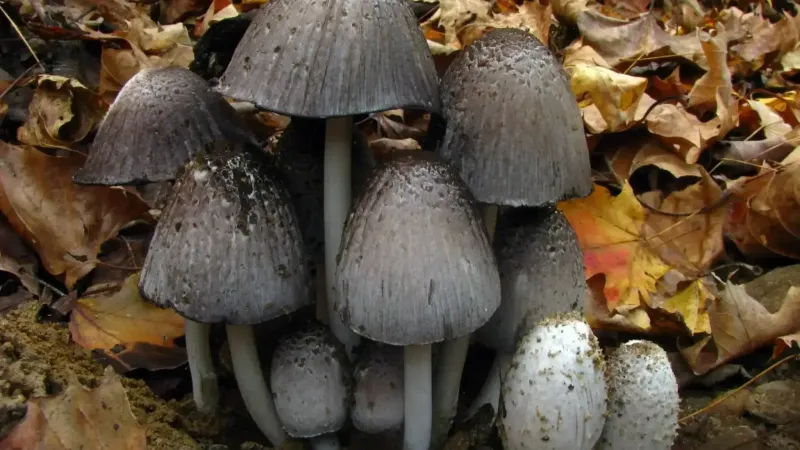
Coprinopsis atramentaria fruiting bodies
Classificação Científica
Reino:Fungi
Divisão:Basidiomycota
Classe:Agaricomycetes
Ordem:Agaricales
Família:Psathyrellaceae
Gênero:Coprinopsis
Perguntas Frequentes
- O que é a espécie Common Ink Cap?
- A espécie Common Ink Cap (Coprinopsis atramentaria) pertence à família Psathyrellaceae. É estudada por suas características biológicas e está documentada no banco de dados micológico da ShroomSpy.
- A espécie Common Ink Cap é comestível?
- Tóxico com álcool. Coprinopsis atramentaria contém coprina, um aminoácido que inibe a acetaldeído desidrogenase tal como o medicamento dissulfiram (Antabuse). Comer este cogumelo e consumir álcool dentro de cerca de 72 horas provoca intoxicação por acetaldeído: rubor facial, sabor metálico, palpitações, dor de cabeça latejante, náuseas, vômitos e pressão arterial baixa, começando 30 a 60 minutos após beber. A reação é desagradável, mas não é fatal e geralmente desaparece em poucas horas. O cogumelo em si não é tóxico quando consumido jovem e sem nenhum álcool, mas como a interação com o álcool passa facilmente despercebida e persiste por dias, não é recomendado para consumo.
- Qual é a classificação científica de Common Ink Cap?
- A espécie Common Ink Cap pertence ao reino Fungi, divisão Basidiomycota, classe Agaricomycetes, ordem Agaricales, família Psathyrellaceae, gênero Coprinopsis. Seu nome científico é Coprinopsis atramentaria.
Sobre
Coprinopsis atramentaria, commonly known as the inky cap or tippler's bane, is a distinctive mushroom characterized by its bell-shaped, dark brown to black cap that dissolves into an inky liquid as it matures. This species typically grows in nutrient-rich soils, often found in grassy areas, gardens, and along roadsides, particularly in temperate regions. While it is edible when young, it is notorious for its potential toxicity when consumed with alcohol, leading to severe gastrointestinal distress. Its ecological role includes decomposing organic matter, thereby contributing to nutrient cycling in its habitat.
History
Coprinopsis atramentaria has been utilized in various culinary traditions, particularly in Europe, where it is sometimes featured in dishes before the cap begins to deliquesce. The species was first described scientifically by the mycologist Elias Magnus Fries in 1838, and its name reflects its characteristic inky cap—derived from the Latin "atramentum," meaning "ink." Over time, the understanding of its edibility has evolved, with early culinary uses overshadowed by awareness of its adverse reactions when paired with alcohol, leading to its cautionary reputation.
Research into C. atramentaria has revealed its unique biochemical properties, including the presence of coprine, a compound responsible for its toxic effects when alcohol is consumed. This has sparked interest in its potential medicinal applications, although the risks associated with its consumption have led to a more cautious approach in modern foraging and culinary practices.
Overview
Coprinopsis atramentaria plays a significant ecological role as a saprotroph, breaking down dead organic matter and recycling nutrients back into the soil. It is primarily found in the wild and is not commonly cultivated due to its rapid decay and the specific conditions required for growth. Key distinguishing features include its rapidly dissolving cap and the presence of a white spore print, which sets it apart from similar species like Coprinus comatus, the shaggy mane, which does not exhibit the same deliquescent behavior.
Commercially, while not widely sought after due to its toxicity concerns, C. atramentaria remains of interest for its unique properties and role in the ecosystem. Its careful foraging and consumption practices highlight the importance of understanding mushroom biology and the potential risks associated with wild edibles.
Sabores
Suave
Agradavelmente suave e levemente doce quando consumido sem álcool; amplamente utilizado na culinária europeia quando o aviso sobre álcool é respeitado.
Texturas
Macio
Carne delicada que deve ser cozida rapidamente antes que a auto-digestão (deliquescência) comece.
Fragrâncias
Terroso
Aroma terroso limpo; a tinta auto-digerente produz um odor desagradável à medida que os espécimes envelhecem.
Características Físicas
Chapéus:
The cap is bell-shaped to conical, measuring 3-10 cm in diameter, initially white to grayish, becoming black and inky as it matures.
Lamelas:
Gills are free, crowded, and initially white, turning black and dissolving into a black liquid as the mushroom matures.
Farmacologia
Ajuda Com
Dependência
Coprina (1-aminociclopropanol) em C. atramentaria é um inibidor irreversível da aldeído desidrogenase que produz reações aversivas de acetaldeído com álcool — o mesmo mecanismo que o dissulfiram (Antabuse) — tornando-a historicamente notável como um potencial deterrente do álcool.
Possíveis Efeitos Colaterais
Náusea
C. atramentaria causa náuseas severas, vômitos, rubor, taquicardia e dor de cabeça dentro de 30 minutos a 2 horas após consumir mesmo pequenas quantidades de álcool até 72 horas após comer o cogumelo.
tonto
Tontura, hipotensão e palpitações ocorrem devido ao acúmulo de acetaldeído da inibição da ALDH mediada por coprina após a co-ingestão de álcool.
Informação Nutricional
Tamanho da Porção100
Quantidade por Porção
Calorias260
% Valor Diário*
Gordura Total 2.2 g3%
Gordura Saturada 0 g0%
Gordura Trans 0 g
Colesterol 0 mg0%
Sódio 14 mg1%
Carboidratos Totais 44 g16%
Fibra Alimentar 16 g57%
Açúcares Totais 0 g
Proteína 20 g40%
Vitamina A 0 µg 0%•Tiamina B1 0 mg 0%
Riboflavina B2 0 mg 0%•Niacina B3 0 mg 0%
Vitamina B6 0 mg 0%•Folato B9 0 µg 0%
Vitamina B12 0 mg 0%•Vitamina C 0 mg 0%
Vitamina D 0 µg 0%•Vitamina E 0 mg 0%
Vitamina K 0 µg 0%•Cálcio 0 mg 0%
Cobre 0 mg 0%•Ferro 0 mg 0%
Magnésio 0 mg 0%•Manganês 0 mg 0%
Fósforo 300 mg 24%•Potássio 1700 mg 36%
Selênio 18 µg 33%•Zinco 0 mg 0%
Vit A 0 µg 0%•B1 0 mg 0%
B2 0 mg 0%•B3 0 mg 0%
B6 0 mg 0%•B9 0 µg 0%
B12 0 mg 0%•Vit C 0 mg 0%
Vit D 0 µg 0%•Vit E 0 mg 0%
Vit K 0 µg 0%•Cálcio 0 mg 0%
Cobre 0 mg 0%•Ferro 0 mg 0%
Mg 0 mg 0%•Mn 0 mg 0%
Fósf. 300 mg 24%•Pot. 1700 mg 36%
Selênio 18 µg 33%•Zinco 0 mg 0%
* Os percentuais de valores diários são baseados em uma dieta de 2.000 calorias.
Avaliações de Cogumelos
0.0
Baseado em 0 Avaliação
5
★4
★3
★2
★1
★Compartilhe seus pensamentos
Se você consumiu este cogumelo, compartilhe seus pensamentos com nossa comunidade