Última atualização:
Laetiporus conifericola
"conifer polypore, pine chicken, western chicken of the woods"
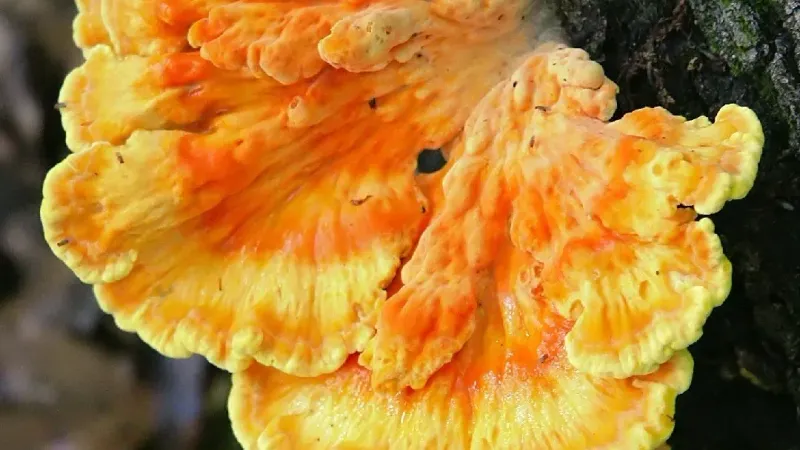
Laetiporus conifericola fruiting bodies
Classificação Científica
Reino:Fungi
Divisão:Basidiomycota
Classe:Agaricomycetes
Ordem:Polyporales
Família:Polyporaceae
Gênero:Laetiporus
Perguntas Frequentes
- O que é a espécie conifer polypore?
- A espécie conifer polypore (Laetiporus conifericola) pertence à família Polyporaceae. É estudada por suas características biológicas e está documentada no banco de dados micológico da ShroomSpy.
- A espécie conifer polypore é comestível?
- Comestível quando jovem e bem cozido, mas com ressalvas importantes. Laetiporus conifericola cresce sobre coníferas, e os exemplares de hospedeiros coníferos (e o grupo aparentado do frango da floresta ocidental) causam desconforto gastrointestinal e, em uma minoria de pessoas, reações alérgicas como urticária ou inchaço, especialmente quando consumidos crus, em grandes quantidades ou com álcool. Os corpos frutíferos velhos ficam azedos e desagradáveis. Nunca o consuma cru; cozinhe-o bem e prove uma pequena porção primeiro. Não o confunda com sósias venenosos de Laetiporus, como L. huroniensis, que cresce em coníferas, e L. gilbertsonii, que cresce em eucaliptos, ambos implicados em envenenamentos.
- Que efeitos a espécie conifer polypore produz?
- A espécie conifer polypore está associada aos seguintes efeitos: Energia. As experiências individuais variam conforme a dose, o estado de espírito e o ambiente.
- Qual é a classificação científica de conifer polypore?
- A espécie conifer polypore pertence ao reino Fungi, divisão Basidiomycota, classe Agaricomycetes, ordem Polyporales, família Polyporaceae, gênero Laetiporus. Seu nome científico é Laetiporus conifericola.
Sobre
Laetiporus conifericola é um poliporo em forma de prateleira (suporte), de cor laranja a amarelo brilhante, nativo do oeste da América do Norte, onde frutifica sobre coníferas vivas e mortas do verão ao outono. É um dos cogumelos "frango da floresta", a contraparte ocidental que cresce em coníferas do oriental Laetiporus sulphureus, que cresce em madeiras duras. Como seus parentes, é valorizado por sua textura carnuda semelhante à do frango quando jovem, embora os exemplares de coníferas se destaquem por um sabor mais azedo e exijam cozimento completo.
História
Laetiporus conifericola é um membro reconhecido relativamente recente do gênero Laetiporus, separado do grupo mais amplo do "frango da floresta" com base em seu hospedeiro conífero e em sua área de distribuição no oeste da América do Norte. Durante grande parte do século XX, as coleções ocidentais que cresciam em coníferas eram simplesmente agrupadas com Laetiporus sulphureus, que na verdade não ocorre no oeste da América do Norte. À medida que os micologistas esclareceram o gênero, L. conifericola foi distinguido por onde cresce e sobre o que cresce, ao lado de outros sósias ocidentais como Laetiporus gilbertsonii, associado ao eucalipto.
Visão geral
Ecologicamente, Laetiporus conifericola é um fungo de podridão parda: suas enzimas decompõem a celulose da madeira de conífera e deixam para trás uma lignina parda modificada, causando o característico rachamento cúbico observado em madeiras macias em decomposição e desempenhando um papel próprio na ciclagem de nutrientes da floresta. É colhido em vez de cultivado comercialmente. Suas características distintivas principais são seus corpos frutíferos em prateleira de cor amarela a laranja brilhante, uma face inferior com poros (em vez de lamelas) e seu crescimento diretamente sobre coníferas, o que o separa do oriental L. sulphureus, que cresce em madeiras duras. Como o frango da floresta que cresce em coníferas pode causar desconforto estomacal ou reações alérgicas em algumas pessoas, ele só deve ser consumido jovem, bem cozido e em quantidades moderadas.
Características Físicas
Chapéus:
The cap is fan-shaped to bracket-like, measuring 5 to 30 cm across, with a smooth to slightly velvety texture. The color ranges from bright yellow to orange, often fading to a paler hue with age.
Lamelas:
None - this species has pores on the underside of the cap instead of gills.
Efeitos Cognitivos
Energia
Laetiporus conifericola é um poliporo comestível rico em proteínas; seu alto teor de aminoácidos pode apoiar a energia física e a recuperação quando consumido como alimento.
Farmacologia
Ajuda Com
Sistema Imunológico
Como outras espécies de Laetiporus, L. conifericola contém polissacarídeos beta-glucano que podem modular a sinalização do receptor tipo toll para melhorar a vigilância imunológica.
Inflamação
Triterpenoides lanostano em Laetiporus spp. podem inibir enzimas ciclooxigenases, contribuindo para uma potencial atividade anti-inflamatória.
Possíveis Efeitos Colaterais
Náusea
L. conifericola causa desconforto gastrointestinal em uma minoria notável de pessoas quando consumido em grandes quantidades ou cru; sempre cozinhe bem.
Alergias
Reações alérgicas raras, incluindo urticária e angioedema, foram documentadas com espécies de Laetiporus, especialmente quando consumidas cruas ou com álcool.
Constituintes Químicos
Química Medicinal
Informação Nutricional
Tamanho da Porção100
Quantidade por Porção
Calorias290
% Valor Diário*
Gordura Total 2.5 g3%
Gordura Saturada 0.3 g2%
Gordura Trans 0 g
Colesterol 0 mg0%
Sódio 20 mg1%
Carboidratos Totais 55 g20%
Fibra Alimentar 18 g64%
Açúcares Totais 0 g
Proteína 22 g44%
Vitamina A 0 µg 0%•Tiamina B1 0 mg 0%
Riboflavina B2 0 mg 0%•Niacina B3 12 mg 75%
Vitamina B6 0 mg 0%•Folato B9 0 µg 0%
Vitamina B12 0 mg 0%•Vitamina C 0 mg 0%
Vitamina D 8 µg 40%•Vitamina E 0 mg 0%
Vitamina K 0 µg 0%•Cálcio 0 mg 0%
Cobre 0 mg 0%•Ferro 0 mg 0%
Magnésio 0 mg 0%•Manganês 0 mg 0%
Fósforo 320 mg 26%•Potássio 1800 mg 38%
Selênio 22 µg 40%•Zinco 4.5 mg 41%
Vit A 0 µg 0%•B1 0 mg 0%
B2 0 mg 0%•B3 12 mg 75%
B6 0 mg 0%•B9 0 µg 0%
B12 0 mg 0%•Vit C 0 mg 0%
Vit D 8 µg 40%•Vit E 0 mg 0%
Vit K 0 µg 0%•Cálcio 0 mg 0%
Cobre 0 mg 0%•Ferro 0 mg 0%
Mg 0 mg 0%•Mn 0 mg 0%
Fósf. 320 mg 26%•Pot. 1800 mg 38%
Selênio 22 µg 40%•Zinco 4.5 mg 41%
* Os percentuais de valores diários são baseados em uma dieta de 2.000 calorias.
Avaliações de Cogumelos
0.0
Baseado em 0 Avaliação
5
★4
★3
★2
★1
★Compartilhe seus pensamentos
Se você consumiu este cogumelo, compartilhe seus pensamentos com nossa comunidade