Última atualização:
Omphalotus olearius
"Jack-o'-lantern mushroom, False chanterelle"
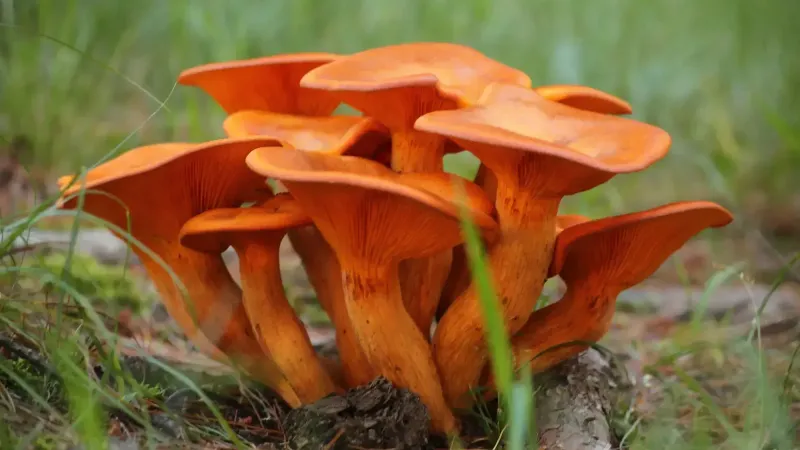
Omphalotus olearius fruiting bodies
Classificação Científica
Reino:Fungi
Divisão:Basidiomycota
Classe:Agaricomycetes
Ordem:Agaricales
Família:Omphalotaceae
Gênero:Omphalotus
Perguntas Frequentes
- O que é a espécie Jack-o'-lantern mushroom?
- A espécie Jack-o'-lantern mushroom (Omphalotus olearius) pertence à família Omphalotaceae. É estudada por suas características biológicas e está documentada no banco de dados micológico da ShroomSpy.
- A espécie Jack-o'-lantern mushroom é comestível?
- Venenoso — não consumir. O jack-o'-lantern não é mortal, mas é um irritante gastrointestinal violento. A ingestão causa náuseas intensas, vômitos, cólicas abdominais, diarreia e sudorese, que costumam começar entre 15 minutos e algumas horas e durar até cerca de 24 horas; casos graves podem exigir cuidados hospitalares de suporte. É uma das causas mais comuns de intoxicação por cogumelos porque é confundido com os chanterelles comestíveis: ao contrário dos chanterelles (que crescem isolados e têm falsas lamelas rombas e bifurcadas em forma de prega), o jack-o'-lantern cresce em densos cachos sobre ou perto da madeira e tem lamelas verdadeiras, finas, afiadas e decurrentes.
- Qual é a classificação científica de Jack-o'-lantern mushroom?
- A espécie Jack-o'-lantern mushroom pertence ao reino Fungi, divisão Basidiomycota, classe Agaricomycetes, ordem Agaricales, família Omphalotaceae, gênero Omphalotus. Seu nome científico é Omphalotus olearius.
Sobre
Omphalotus olearius, o cogumelo jack-o'-lantern, é um vistoso fungo decompositor de madeira, de cor laranja brilhante a amarelo-alaranjado, que frutifica em densos cachos sobre madeira dura enterrada ou acima dela. É conhecido por dois aspectos: sua bioluminescência — os corpos frutíferos frescos emitem um leve brilho verde, mais intenso nas lamelas — e sua toxicidade. É um irritante gastrointestinal venenoso e uma das causas mais frequentes de intoxicação por cogumelos, em grande parte porque os coletores o confundem com os chanterelles comestíveis.
História
O epíteto olearius e o sinônimo illudens ("que engana") remetem à sua antiga associação com os olivais e à sua capacidade de enganar os coletores. Seu inquietante brilho noturno — uma forma de luminescência natural chamada foxfire — é conhecido desde a antiguidade; Plínio, o Velho, mencionou um agárico luminoso que crescia nas árvores e podia ser localizado por sua própria luz à noite. Em diferentes culturas o brilho deu origem a lendas, e o resplendor outonal das lamelas inspira seu nome comum evocativo do Halloween. Apesar de sua beleza, foi documentado repetidamente como agente de intoxicação, incluindo intoxicações em massa de coletores que o tomaram por chanterelles.
Visão geral
Do ponto de vista ecológico, Omphalotus olearius é um decompositor de podridão branca que degrada a lignina e a celulose da madeira dura morta e enterrada, e acredita-se que sua bioluminescência seja um subproduto desse metabolismo de decomposição. É comum na América do Norte no fim do verão e início do outono, e também ocorre no sul da Europa e no Oriente Médio, frequentemente perto de oliveiras. Embora o cogumelo seja venenoso, seus compostos sesquiterpênicos — principalmente a iludina S e a iludina M — despertaram interesse farmacológico: a iludina S inspirou o agente anticâncer semissintético irofulven, estudado em ensaios clínicos de oncologia. Seus traços distintivos principais são o crescimento em cachos sobre a madeira, a coloração laranja brilhante uniforme, as lamelas verdadeiras afiadas e decurrentes, a esporada branca e o brilho verde dos exemplares frescos.
Características Físicas
Chapéus:
The cap is typically funnel-shaped, measuring 5-15 cm in diameter, with a smooth, orange to yellow-orange surface that may become slightly wavy at the edges.
Lamelas:
The gills are closely spaced, decurrent, and have a similar orange color to the cap, often with a slightly lighter edge.
Farmacologia
Ajuda Com
Câncer
Illudin S e illudin M de O. olearius foram investigados como agentes alquilantes antitumorais; um derivado sintético (irofulven) entrou em ensaios clínicos oncológicos.
Possíveis Efeitos Colaterais
Náusea
O. olearius causa náuseas severas, vômitos e cólicas abdominais dentro de 30 minutos a 3 horas devido aos sesquiterpenos illudin — uma causa bem documentada de intoxicação por cogumelos.
tonto
Tontura e diaforese frequentemente acompanham os sintomas gastrointestinais; a hospitalização é às vezes necessária para cuidados de suporte.
Constituintes Químicos
Química Medicinal
Avaliações de Cogumelos
0.0
Baseado em 0 Avaliação
5
★4
★3
★2
★1
★Compartilhe seus pensamentos
Se você consumiu este cogumelo, compartilhe seus pensamentos com nossa comunidade