Última atualização:
Ophiocordyceps sinensis
"Fungo Lagarta Chinês, Dong Chong Xia Cao, Yartsa Gunbu"
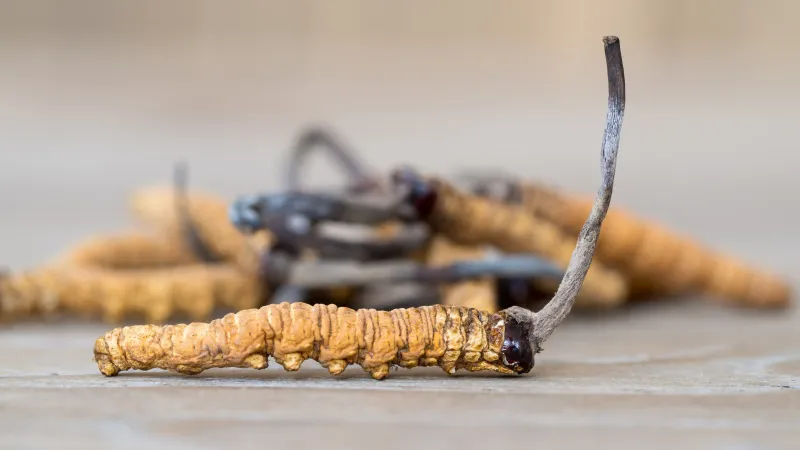
Ophiocordyceps sinensis fruiting bodies
Classificação Científica
Reino:Fungi
Divisão:Ascomycota
Classe:Sordariomycetes
Ordem:Hypocreales
Família:Ophiocordycipitaceae
Gênero:Ophiocordyceps
Perguntas Frequentes
- O que é a espécie Fungo Lagarta Chinês?
- A espécie Fungo Lagarta Chinês (Ophiocordyceps sinensis) pertence à família Ophiocordycipitaceae. É estudada por suas características biológicas e está documentada no banco de dados micológico da ShroomSpy.
- A espécie Fungo Lagarta Chinês é comestível?
- Comestível - tônico tradicional, extremamente caro
- Que efeitos a espécie Fungo Lagarta Chinês produz?
- A espécie Fungo Lagarta Chinês está associada aos seguintes efeitos: Energia, Resistência, Calma. As experiências individuais variam conforme a dose, o estado de espírito e o ambiente.
- Qual é a classificação científica de Fungo Lagarta Chinês?
- A espécie Fungo Lagarta Chinês pertence ao reino Fungi, divisão Ascomycota, classe Sordariomycetes, ordem Hypocreales, família Ophiocordycipitaceae, gênero Ophiocordyceps. Seu nome científico é Ophiocordyceps sinensis.
Sobre
Ophiocordyceps sinensis, comumente conhecido como o fungo da lagarta chinesa ou dong chong xia cao ("verme de inverno, grama de verão"), é um dos organismos mais valorizados na medicina tradicional chinesa e tibetana. Este fungo entomopatogênico parasita as larvas de mariposas fantasma (Thitarodes spp.) nos prados alpinos do Planalto Tibetano a altitudes entre 3.000 e 5.000 metros. O corpo frutífero — um estroma esbelto e marrom-escuro — emerge do hospedeiro lagarta mumificada, tornando-se um dos fungos mais visualmente distintos e caros que existem.
História
Ophiocordyceps sinensis tem sido usado na medicina tradicional chinesa por mais de 2.000 anos, com o primeiro registro escrito aparecendo no Clássico Herbal do Lavrador Divino de aproximadamente 200 d.C. Conhecido no Tibete como yartsa gunbu, historicamente foi reservado para a corte imperial e a nobreza rica devido à sua extrema raridade.
Na cultura tibetana, a antiga crença de que este organismo se transformava de animal em planta com as mudanças das estações levou ao seu nome poético "verme de inverno, grama de verão." Hoje, seus preços ultrapassam $20.000 por quilo, tornando-o o fungo mais caro do mundo.
Visão Geral
Ophiocordyceps sinensis desempenha um papel ecológico único como um parasita especialista das larvas de mariposas fantasma em ecossistemas de pastagens de alta altitude. Ao contrário de seu parente cultivável Cordyceps militaris, O. sinensis provou ser extremamente difícil de cultivar comercialmente. Os principais compostos bioativos incluem cordicepina, ácido cordicepico, polissacarídeos e adenosina.
Características Físicas
Chapéus:
Cabeça estromatal alongada de cor marrom escura em forma de clava
Lamelas:
Nenhum - produz peritécios
Efeitos Cognitivos
Energia
Tradicionalmente usado para combater a fadiga e aumentar a energia, apoiando a produção de ATP celular.
ResistêNcia
Pode melhorar a resistência física e a stamina, historicamente valorizado por atletas no Tibete.
Calma
Propriedades adaptogênicas que podem ajudar a gerenciar as respostas ao estresse.
Farmacologia
Ajuda Com
Fadiga
Tradicionalmente usado como um tônico contra fadiga e letargia.
Sistema Imunológico
Polissacarídeos mostraram atividade imunomoduladora em estudos preliminares.
Estresse
Usado como um adaptógeno para resistir ao estresse físico e mental.
Respiração Pulmonar
Uso tradicional para condições respiratórias; pode apoiar a função pulmonar.
Função Renal
Considerado um tônico renal na medicina tradicional chinesa.
Inflamação
Pesquisas preliminares sugerem propriedades anti-inflamatórias.
Estresse Oxidativo
Extratos demonstraram atividade antioxidante in vitro.
Libido
Uso tradicional como afrodisíaco; pode influenciar a função reprodutiva.
Possíveis Efeitos Colaterais
Alergias
Reações alérgicas raras; acúmulo de metais pesados em espécimes selvagens é uma preocupação.
Náusea
O consumo excessivo pode causar leve desconforto gastrointestinal.
Constituintes Químicos
Química Medicinal
Avaliações de Cogumelos
0.0
Baseado em 0 Avaliação
5
★4
★3
★2
★1
★Compartilhe seus pensamentos
Se você consumiu este cogumelo, compartilhe seus pensamentos com nossa comunidade