Última atualização:
Psilocybe subaeruginascens
"Subaeruginascens"
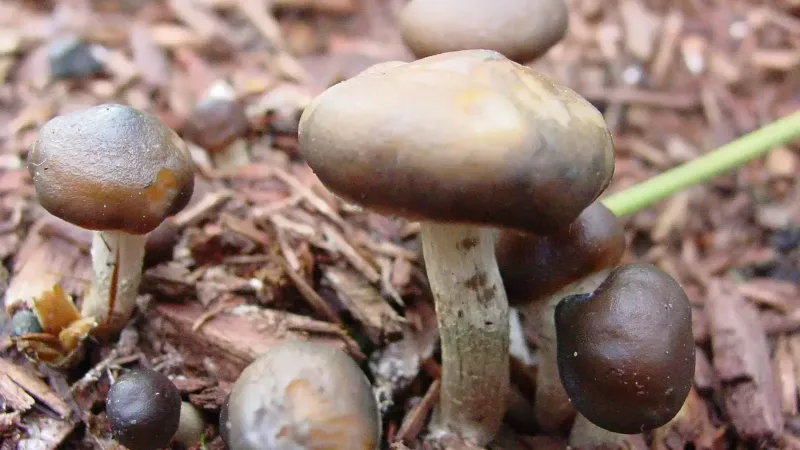
Psilocybe subaeruginascens fruiting bodies
Classificação Científica
Reino:Fungi
Divisão:Basidiomycota
Classe:Agaricomycetes
Ordem:Agaricales
Família:Strophariaceae
Gênero:Psilocybe
Perguntas Frequentes
- O que é a espécie Subaeruginascens?
- A espécie Subaeruginascens (Psilocybe subaeruginascens) pertence à família Strophariaceae. É estudada por suas características biológicas e está documentada no banco de dados micológico da ShroomSpy.
- A espécie Subaeruginascens é comestível?
- Psicoativo, não é um cogumelo culinário. Contém psilocibina e psilocina e apresenta marcada mancha azul ao ser machucado; sua ingestão provoca alucinações e estados alterados de consciência. Sua posse e uso são ilegais na maioria das jurisdições. É facilmente confundido com a mortal Galerina marginata, por isso a coleta silvestre representa risco grave.
- A espécie Subaeruginascens é psicoativa?
- A espécie Subaeruginascens está documentada como psicoativa. Contém compostos psicoativos que podem produzir efeitos que alteram a mente. As leis que regem a posse e o uso variam conforme a jurisdição.
- Que efeitos a espécie Subaeruginascens produz?
- A espécie Subaeruginascens está associada aos seguintes efeitos: Memória. As experiências individuais variam conforme a dose, o estado de espírito e o ambiente.
- Qual é a classificação científica de Subaeruginascens?
- A espécie Subaeruginascens pertence ao reino Fungi, divisão Basidiomycota, classe Agaricomycetes, ordem Agaricales, família Strophariaceae, gênero Psilocybe. Seu nome científico é Psilocybe subaeruginascens.
Sobre
Psilocybe subaeruginascens é um pequeno cogumelo psicoativo lignícola da família Strophariaceae que contém os alcaloides indólicos psilocibina e psilocina. Possui um chapéu cônico a convexo de cor castanho-alaranjada a oliva ou castanho-esverdeada, de 1 a cerca de 6 cm de diâmetro, viscoso quando úmido e higrófano, clareando para amarelo-alaranjado ao secar. As lâminas são amplamente aderidas e de cor castanho-acinzentada a castanho-escura na maturidade, e a haste esbelta e esbranquiçada possui um anel membranoso persistente; todas as partes ficam azuladas ao serem machucadas. É considerado de atividade fraca a moderada.
História
Psilocybe subaeruginascens foi originalmente descrita pelo micologista Franz von Höhnel e é considerada a mesma espécie que Psilocybe aerugineomaculans. É uma espécie marcadamente asiática, documentada no sul temperado do Japão e na Indonésia subtropical, e acredita-se que se distribua entre essas regiões. Estudos químicos, incluindo o trabalho de Koike e colaboradores no início da década de 1980, confirmaram a presença de psilocibina e psilocina, situando-a entre os Psilocybe produtores de psilocibina que ficam azulados.
Visão geral
Ecologicamente é um decompositor que cresce de forma gregária a agrupada em solos enriquecidos com detritos lenhosos, em lascas de madeira e em lascas misturadas com esterco de cavalo, frequentemente ao longo de trilhas e estradas que margeiam florestas decíduas. Pode frutificar em grandes colônias. Os traços de campo mais confiáveis são o anel membranoso da haste e o rápido azulamento do tecido machucado. Uma observação de segurança fundamental: assemelha-se muito à mortal Galerina marginata, que contém amatoxinas letais; o depósito de esporos castanho-ferrugem e a ausência de azulamento distinguem a Galerina, mas uma identificação errada pode ser fatal.
Características Físicas
Chapéus:
The cap is conical to bell-shaped, measuring 1.5 to 5 cm in diameter, with a smooth, moist surface that can appear slightly sticky. It is typically brown to yellow-brown, fading to a lighter color with age.
Lamelas:
The gills are attached to the stem, closely spaced, and initially light brown, becoming darker as the spores mature.
Efeitos Cognitivos
MemóRia
A psilocibina de P. subaeruginascens promove a neuroplasticidade hipocampal em estudos com animais, um mecanismo relevante para a formação de memória associativa.
Efeitos Psicoativos
AlucinóGeno
P. subaeruginascens produz alucinações características mediadas por psilocibina; o conteúdo de aeruginascina pode modular a ligação aos receptores e suavizar o efeito disfórico.
EufóRico
Elevação acentuada do humor e euforia são marcas registradas das experiências com P. subaeruginascens, atribuídas à atividade serotoninérgica da psilocina.
Perspicaz
Insight introspectivo e aumento da flexibilidade cognitiva são características subjetivas centrais das sessões de P. subaeruginascens em doses moderadas a altas.
Visuais
Fenômenos visuais pronunciados, incluindo padrões geométricos complexos e realce de cores em doses acima de 1,5g de peso seco.
Constituintes Químicos
Química Medicinal
Avaliações de Cogumelos
0.0
Baseado em 0 Avaliação
5
★4
★3
★2
★1
★Compartilhe seus pensamentos
Se você consumiu este cogumelo, compartilhe seus pensamentos com nossa comunidade