Última atualização:
Tremella mesenterica
"Witch's Butter, Golden Jelly Fungus"
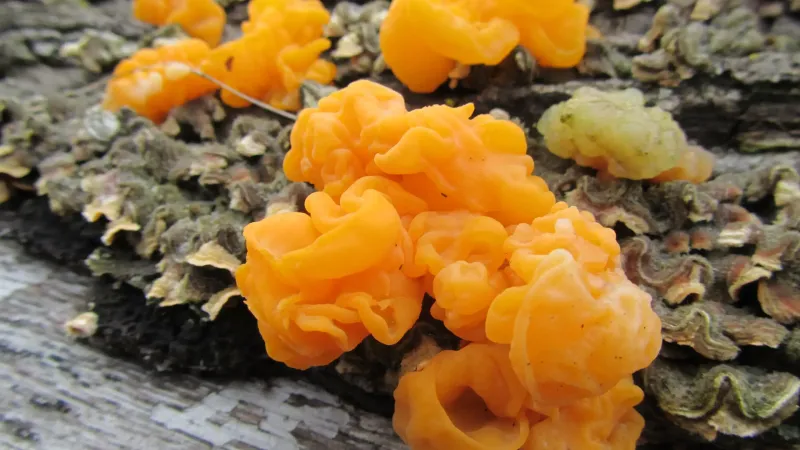
Tremella mesenterica fruiting bodies
Classificação Científica
Reino:Fungi
Divisão:Basidiomycota
Classe:Tremellomycetes
Ordem:Tremellales
Família:Tremellaceae
Gênero:Tremella
Perguntas Frequentes
- O que é a espécie Witch's Butter?
- A espécie Witch's Butter (Tremella mesenterica) pertence à família Tremellaceae. É estudada por suas características biológicas e está documentada no banco de dados micológico da ShroomSpy.
- A espécie Witch's Butter é comestível?
- Comestível. O corpo de frutificação gelatinoso de cor amarela brilhante é inofensivo e comestível, embora praticamente sem sabor (insípido, às vezes com um leve toque de damasco). É gelatinoso quando úmido e fica pequeno e duro ao secar; pode ser seco e reidratado em sopas, assim como os fungos gelatinosos asiáticos aparentados. É mais valorizado por sua textura e uso medicinal tradicional do que como cogumelo culinário.
- Que efeitos a espécie Witch's Butter produz?
- A espécie Witch's Butter está associada aos seguintes efeitos: Calma, Relaxado. As experiências individuais variam conforme a dose, o estado de espírito e o ambiente.
- Qual é a classificação científica de Witch's Butter?
- A espécie Witch's Butter pertence ao reino Fungi, divisão Basidiomycota, classe Tremellomycetes, ordem Tremellales, família Tremellaceae, gênero Tremella. Seu nome científico é Tremella mesenterica.
Sobre
Tremella mesenterica, commonly known as the yellow brain fungus, is a distinctive jelly-like fungus characterized by its bright yellow to orange color and convoluted, brain-like appearance. This species typically grows on decaying wood, particularly in damp, shaded forest environments, and is often found during the late summer and fall. While T. mesenterica is not considered edible in the traditional sense, it holds ecological significance as a decomposer, breaking down wood and contributing to nutrient cycling in forest ecosystems. Additionally, it has garnered interest for its potential medicinal properties, including immune support and skin health.
History
Historically, Tremella mesenterica has been used in traditional Chinese medicine, where it is valued for its purported health benefits, including its ability to promote skin hydration and overall vitality. The species was first described scientifically in 1789 by the mycologist Christiaan Hendrik Persoon, and its name derives from the Latin word "tremella," meaning "trembling," which refers to its gelatinous texture. Over time, the understanding of this species has evolved, with modern research exploring its bioactive compounds and potential applications in health and wellness.
In recent years, T. mesenterica has gained attention in the realm of functional foods and dietary supplements, particularly for its polysaccharides that may offer antioxidant and anti-inflammatory benefits. This shift reflects a growing interest in natural products and their roles in promoting health, moving beyond traditional culinary uses to a broader understanding of their medicinal properties.
Overview
Ecologically, Tremella mesenterica plays a crucial role as a saprotrophic fungus, helping to decompose dead wood and recycle nutrients back into the soil, which supports forest health and biodiversity. While it is primarily found in the wild, there are limited efforts to cultivate it commercially, often overshadowed by more popular edible fungi. Its unique gelatinous texture and bright coloration distinguish it from similar species, such as Tremella fuciformis, which is often cultivated for culinary and medicinal purposes.
In terms of commercial significance, T. mesenterica is less prominent than its counterparts but is increasingly recognized for its potential health benefits, leading to a growing interest in its applications in beauty products and dietary supplements. Its distinctive appearance and ecological role make it a fascinating subject of study within the field of mycology.
Características Físicas
Chapéus:
The fruiting body is irregularly shaped, gelatinous, and can reach sizes of up to 10 cm across. It is bright yellow to orange in color and has a wavy, lobed texture.
Lamelas:
None
Efeitos Cognitivos
Calma
Os polissacarídeos de Tremella podem apoiar um estado mental calmo por meio de mecanismos adaptogênicos e anti-inflamatórios leves que reduzem o estresse neuronal.
Relaxado
O glucuronoxilomannan de T. mesenterica pode promover o relaxamento modulando citocinas inflamatórias associadas às respostas ao estresse.
Farmacologia
Ajuda Com
Sistema Imunológico
Os polissacarídeos de glucuronoxilomannan de T. mesenterica podem apoiar a função imunológica estimulando a atividade de macrófagos e a produção de citocinas.
Inflamação
Os polissacarídeos de Tremella podem apresentar atividade anti-inflamatória inibindo mediadores pró-inflamatórios, embora as evidências clínicas sejam preliminares.
Estresse Oxidativo
As frações de melanina e polissacarídeos de T. mesenterica podem ajudar a eliminar radicais livres e reduzir danos celulares oxidativos.
Possíveis Efeitos Colaterais
Alergias
Indivíduos com alergias ou sensibilidades fúngicas podem experimentar reações alérgicas ao manusear ou consumir espécies de Tremella.
Constituintes Químicos
Química Medicinal
Avaliações de Cogumelos
0.0
Baseado em 0 Avaliação
5
★4
★3
★2
★1
★Compartilhe seus pensamentos
Se você consumiu este cogumelo, compartilhe seus pensamentos com nossa comunidade