Chytrid Fungus: Why Some Frogs Survive It and Others Don't
By Louis on 27/07/2026
The chytrid fungus has devastated amphibians worldwide, yet some populations recover. Scientists found the answer starts when frogs are still tadpoles.
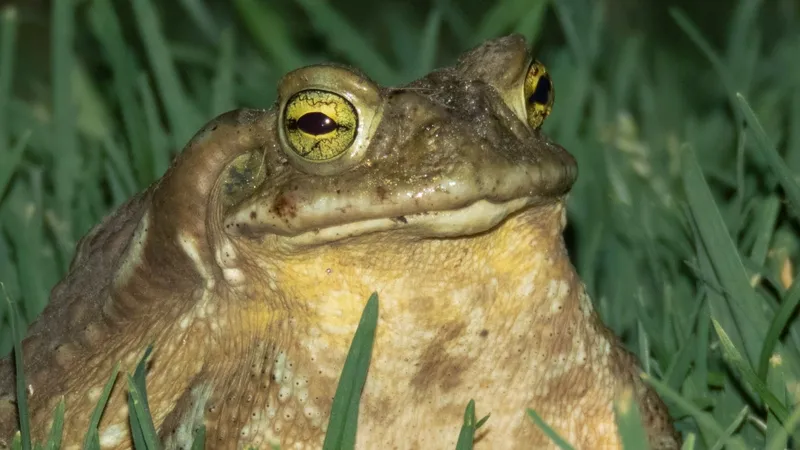
Why Some Frogs Survive the Fungus That's Wiping Out Amphibians Worldwide
There is a fungus that has done more damage to biodiversity than almost any pathogen on record, and most people have never heard of it. The chytrid fungus, Batrachochytrium dendrobatidis, or Bd for short, has driven catastrophic declines in frogs and toads across the planet. It attacks their skin, wrecks their ability to balance water and salts, and has pushed entire species toward the edge. Yet some populations, hit just as hard, quietly bounce back. Scientists have now worked out why, and the answer comes down to timing. The survivors get their immune defenses up and running before the fungus ever gets its shot.
The fungus that kills on schedule
To understand the new findings, you need to understand how Bd actually kills, because it's oddly patient about it. The fungus feeds on keratin, the tough protein in adult amphibian skin. Tadpoles and larvae are mostly safe, because their skin isn't keratinized yet. It's only when they go through metamorphosis, transforming from tadpole to adult, that their skin changes and the door swings open. That is the moment Bd has been waiting for, and it's when mass die-offs tend to hit.
The disease it causes, chytridiomycosis, has been linked to declines in hundreds of amphibian species and is considered one of the worst wildlife diseases ever documented. So the puzzle researchers kept running into wasn't why Bd kills. It was why, at some sites, it stops winning.
Four lakes, one telling difference
A team led by University College London, ZSL, and Imperial College London went to the Pyrenees, the mountains straddling France and Spain, and studied common midwife toads at four lakes that had all suffered severe Bd outbreaks. Published in the journal Nature Chemical Biology, the study set up a natural experiment.
At one lake, the toads were still in freefall and had nearly vanished. At the other three, the populations had recovered, even though the fungus was still present in the water and soil around them. Same fungus, same species, four sites, completely different outcomes. Whatever separated the survivors from the doomed wasn't the absence of the pathogen. The fungus never left. Something about the toads themselves had changed.
The answer was in the tadpoles all along
The team zeroed in on antimicrobial peptides, natural antibiotic-like chemicals that amphibians secrete from their skin as part of their immune system. These peptides are a frog's frontline chemical defense, and the question was when each population switched them on.
That timing turned out to be everything. Toads from the recovering populations started producing these protective peptides early, while they were still tadpoles. By the time metamorphosis rolled around and their new adult skin made them vulnerable, their chemical defenses were already built and ready. The struggling population did the opposite. Their tadpoles made far fewer of these peptides, so when they matured into that dangerous window, they walked into it unarmed. Tadpoles that produced a wider variety of peptides were much more likely to survive, and populations that lagged kept dying at high rates.
In other words, the frogs that live are the ones that showed up to the fight already holding the weapons. Same species, same threat, just a different rehearsal schedule.
What could delay a tadpole's immune system?
The obvious follow-up question is why some tadpoles mature their defenses early and others don't. The researchers don't have a full answer yet, but lead author Dr. Phillip Jervis pointed to a few suspects. Genetics is one. Environment is another, including water temperature. And there's a stranger possibility involving predators.
The idea goes like this. If a lake is full of trout, which happily eat tadpoles, the pressure is on to grow up fast and get out of the water. A tadpole racing through development to escape being eaten may leave the water before its immune chemistry has fully matured, trading one danger for another and arriving on land underprepared for the fungus. It's a grim little example of how threats in an ecosystem don't line up neatly, and how solving for one can quietly worsen another. That connection isn't confirmed, but it's the kind of thread the team wants to pull next.
More than a thousand hidden defenses
Here's the part that stretches well beyond frogs. To catalog the toads' chemical arsenal, the researchers used mass spectrometry, a technique that measures molecules with extreme precision and can reconstruct their structure. They expected to find a modest set of peptides. They found 1,152. Of those, only seven had ever been documented before.
Sit with that ratio for a second. More than 1,100 previously unknown immune molecules, hiding in the skin of a toad, waiting for anyone to look with the right instrument. Senior author Professor Alethea Tabor noted that many human medicines started in the natural world, penicillin from a fungus being the classic example, and that these peptides are fresh leads worth investigating. She tied it directly to antimicrobial resistance, the escalating problem of infections outsmarting our existing drugs, where science badly needs new starting points. Worth being clear-eyed here, as always: these are early leads, not medicines. Most such candidates never make it to a pharmacy shelf. But you don't get new drugs without new molecules to study, and a toad just handed researchers over a thousand of them.
Why a frog disease belongs on a mushroom site
You might notice this is the second fungal apocalypse we've covered that isn't about the mushrooms you eat. That's the point worth making. Fungi are not a side character in the story of life on Earth, they're a driving force, capable of collapsing entire branches of the animal kingdom and, at the same time, capable of producing the next generation of medicines. The same kingdom that gives you a nice roasted lion's mane also contains one of the deadliest wildlife pathogens ever recorded. Respecting fungi means taking both halves seriously.
The bottom line
The chytrid fungus is one of the most destructive pathogens in the natural world, but it is not unbeatable. Some amphibian populations recover because their immune defenses mature early, before the fungus can exploit the vulnerable window that metamorphosis opens. Along the way, scientists stumbled onto more than a thousand unknown immune molecules that could inform how we fight infections in humans. It's a rare piece of good news in the amphibian decline story, and a reminder that the answers to fungal threats are often hiding inside the organisms fighting them off.
Check out our Products!
Preguntas frecuentes
The chytrid fungus, Batrachochytrium dendrobatidis (Bd), is a pathogen that infects amphibians and causes a disease called chytridiomycosis. It feeds on keratin in adult frog and toad skin, disrupting their ability to regulate water and minerals. It has been linked to severe declines in hundreds of amphibian species worldwide and is considered one of the most damaging wildlife diseases on record.