De Hy-Fi a Hy-Lo: La arquitectura cultivada con micelio pasa de pabellón a producción
By Josh Shearer on 17/05/2026
Una década después de la torre Hy-Fi de The Living en MoMA PS1, los materiales de construcción a base de micelio están superando las pruebas de código de incendios y estructurales, y comenzando a aparecer en edificios comerciales en construcción en este momento.
El Resumen del Material
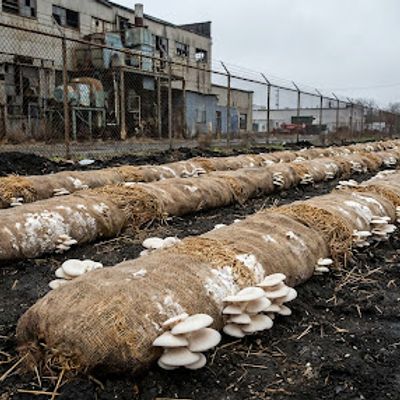
Los compuestos ligados por micelio se producen al cultivar una red micelial fúngica a través de un sustrato de desechos agrícolas, típicamente restos de maíz picados, fibra de cáñamo, astillas de madera o paja de arroz, dentro de un molde de formación. Después de que el micelio coloniza el sustrato, el bloque ligado se somete a un tratamiento térmico para detener el crecimiento y estabilizar la estructura. El material resultante es biológico en origen pero inerte en servicio. Las cepas de producción más comunes son Ganoderma lucidum y Trametes versicolor, elegidas por sus densas y uniformes redes hifales y su tolerancia a sustratos de bajo costo.
Las propiedades materiales relevantes son competitivas con varias categorías establecidas. La densidad típicamente oscila entre sesenta y doscientos kilogramos por metro cúbico, dependiendo de la compactación del sustrato, lo que sitúa a los compuestos de micelio en el mismo rango que el poliestireno expandido, la balsa y el corcho ligero. La conductividad térmica se sitúa entre cero punto cero cuatro y cero punto cero seis vatios por metro-kelvin, comparable a la lana mineral aislante. Los coeficientes de absorción acústica en el rango de frecuencia media superan a los de la mayoría de los espumas sintéticas. La resistencia a la compresión es modesta pero suficiente para aplicaciones no portantes.
El techo estructural, por ahora, es la principal limitación para la adopción. Los compuestos de micelio no pueden reemplazar el concreto o el acero estructural. Pueden, y cada vez más lo hacen, reemplazar el poliestireno expandido, la lana mineral, los paneles acústicos de poliuretano y los bloques de relleno ligeros.
El Punto de Referencia Hy-Fi
The Living, una firma de arquitectura fundada por David Benjamin, ganó el Programa de Jóvenes Arquitectos 2014 en MoMA PS1 con una torre de cuarenta pies ensamblada a partir de aproximadamente diez mil ladrillos ligados por micelio. Los ladrillos fueron producidos por Ecovative Design, la empresa de Nueva York que había estado desarrollando la producción de micelio a escala industrial desde 2007. Hy-Fi estuvo de pie desde junio hasta septiembre en el patio de PS1, fue desmantelada al final de la temporada, y los ladrillos fueron compostados de nuevo en el sistema de vías verdes de la ciudad de Nueva York.
Hy-Fi fue una prueba de concepto para el volumen de producción, Ecovative podría producir diez mil ladrillos uniformes y estructuralmente adecuados en un cronograma definido, y una prueba de concepto para la disposición al final de la vida útil. No intentó demostrar el cumplimiento de códigos, el rendimiento contra incendios, la estabilidad a largo plazo de la humedad, o cualquiera de las otras pruebas que requiere un edificio permanente. Esas pruebas comenzaron en los años siguientes.
Lo Que Ha Pasado por Pruebas Regulatorias
Ahora existen tres líneas de material regulado en las cadenas de suministro comerciales.
Producto de panel acústico de micelio. Principalmente de la empresa italiana MOGU, que ha pasado la prueba de clase de fuego europea B-s2-d0, suficiente para su instalación en oficinas comerciales, hoteles y techos de espacios públicos. Las baldosas acústicas de MOGU están especificadas en adecuaciones comerciales europeas en volúmenes pequeños pero en crecimiento.
Panel de aislamiento de micelio. La empresa británica Biohm ha desarrollado un panel de aislamiento certificado para aplicaciones de paredes no portantes bajo las regulaciones de construcción del Reino Unido, con rendimiento térmico y contra incendios documentado comparable a la lana mineral. La base de clientes principal de Biohm es la renovación residencial y la construcción de estructuras de marco de madera, donde el material compite contra aislamientos sintéticos por motivos de carbono incorporado.
Bloque de relleno estructural. Ecovative produce un bloque ligado por micelio dimensionado a las dimensiones estándar de mampostería, destinado a paredes de partición no portantes y como relleno aislante en la construcción de marcos de madera. El bloque tiene datos de pruebas ASTM de EE. UU. para resistencia a la compresión, rendimiento térmico y absorción de agua, y ha sido incorporado en varios proyectos residenciales certificados por el Desafío de Edificios Viviendo.
Edificios en Construcción en Este Momento
Un número modesto de estructuras comerciales y residenciales permanentes que incorporan componentes de micelio están actualmente en diseño o construcción. Ejemplos notables incluyen varias renovaciones residenciales certificadas como Casa Pasiva en el Reino Unido que utilizan paneles de aislamiento Biohm en ensamblajes de paredes de renovación. Un puñado de instalaciones de baldosas acústicas MOGU en adecuaciones de hoteles y oficinas europeas están documentadas en la prensa comercial. La iniciativa Bauhaus Earth, un consorcio de investigación y construcción con sede en Alemania, ha incorporado elementos ligados por micelio en varios edificios de demostración que exploran la construcción basada en bioproductos a escala urbana.
En los Estados Unidos, la construcción residencial con elementos de micelio sigue siendo más rara y se concentra en construcciones personalizadas en lugar de proyectos a escala de desarrolladores. Se informa que el primer edificio a escala comercial permitido con elementos estructurales de micelio como parte significativa de su envoltura aislante está en construcción en el norte del estado de Nueva York, aunque la documentación sigue siendo escasa en el registro público.
Los Cuellos de Botella que Retienen una Adopción Más Rápida
Tres limitaciones recurrentes en las discusiones de la industria.
Capacidad de producción. La instalación de Ecovative en Nueva York es la planta de producción de micelio más grande del mundo y produce unas pocas toneladas por semana, suficiente para abastecer cientos de renovaciones residenciales o algunos pequeños edificios comerciales anualmente, pero muy por debajo de lo que se requeriría para desplazar la lana mineral de cualquier participación significativa en el mercado global de aislamiento. Se están construyendo nuevas instalaciones en EE. UU., Europa e India, pero la brecha de capacidad de producción sigue siendo sustancial.
Incertidumbre normativa. Cada jurisdicción reguladora requiere sus propias pruebas de fuego, estructura y humedad para nuevos materiales de construcción. El costo de someter productos de micelio a cada régimen de código relevante en cada mercado objetivo es una inversión continua significativa que limita la rapidez con la que nuevas variantes de productos pueden llegar al mercado.
Familiaridad del contratista. Los compuestos de micelio se manejan e instalan de manera diferente a los materiales que reemplazan. La mano de obra capacitada para especificar, cortar e instalar estos materiales es limitada, y la adopción por parte de los contratistas se queda atrás en comparación con la disponibilidad del material.
Qué Observar a Continuación
Dos desarrollos probablemente darán forma a los próximos años. El primero es la maduración gradual de las pruebas de código en los Estados Unidos. Varios productos de micelio están supuestamente en la cola para informes del Servicio de Evaluación ICC, lo que agilizaría sustancialmente la adopción en EE. UU. El segundo es la aparición de componentes de micelio en la construcción residencial y comercial a escala de desarrolladores, lo que aún no ha sucedido en volúmenes significativos pero parece estar avanzando de proyectos de demostración individuales hacia especificaciones repetibles.
Si los materiales ligados por micelio se convierten en un elemento estándar en las envolturas de edificios comerciales o permanecen como una especificación de nicho de sostenibilidad es, a partir de 2026, una pregunta con una respuesta de cinco a diez años en lugar de uno a dos años. El pabellón de 2014 ha echado raíces.
Preguntas frecuentes
Se fabrican cultivando una red micelial fúngica a través de un sustrato de desechos agrícolas —típicamente paja de maíz picada, fibra de cáñamo, astillas de madera o paja de arroz— dentro de un molde de formación. Una vez que el micelio coloniza el sustrato, el bloque unido se somete a un tratamiento térmico para detener el crecimiento y estabilizarlo, de modo que el material terminado sea de origen biológico pero inerte en su uso. Las cepas de producción más comunes son Ganoderma lucidum y Trametes versicolor, elegidas por sus densas y uniformes redes hifales y su tolerancia a sustratos de bajo costo.