Inside China's Smart Mushroom Farm Producing 35,000 Tons a Year
By Louis on 04/20/2026
A farm in Chengdu is producing 50x the yield of traditional cropland using IoT, big data, and Huawei tech. Here's what it means for the industry...
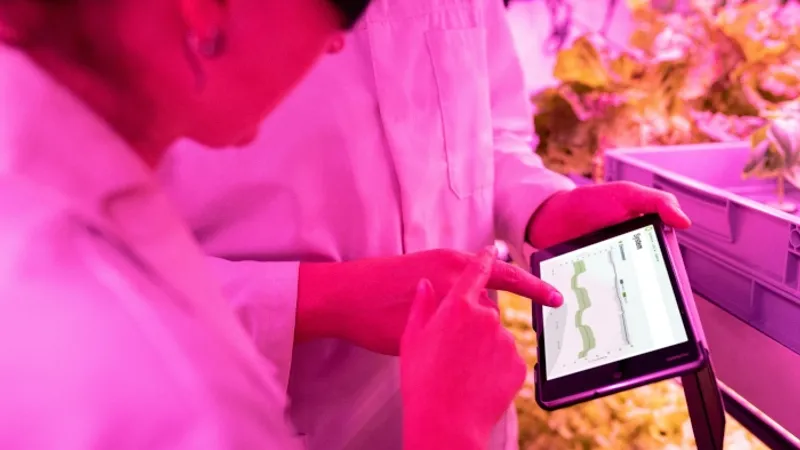
The Mushroom Farm Producing 50 Times More Than Traditional Cropland
Most mushroom growers obsess over their fruiting conditions. Temperature, humidity, CO2 levels: the usual suspects. At Chengdu Finc Biotechnology Co in Sichuan province, China, those variables are managed by an AI-assisted platform monitoring over 100 parameters in real time, across 90 cultivation rooms, 24 hours a day. The weather outside is, quite literally, irrelevant.
The result is one of the most productive mushroom operations on the planet, and a glimpse at where large-scale fungal cultivation is heading.
What Chengdu Finc Is Actually Doing
Built in partnership with Huawei's innovation center, the farm runs on an intelligent digital management platform that connects every workshop through the internet of things. Every cultivation room feeds data back to a central control hub, where plant manager Feng Heng and his team can monitor and adjust conditions across the entire operation.
The numbers that come out of this system are hard to contextualize without stopping to think about them. A single cultivation room produces around 25 metric tons of mushrooms in a 21-day growing cycle. The farm has 90 of those rooms running year-round. At full capacity, annual output exceeds 35,000 tons.
The land efficiency is the real headline. The farm's 13.3 hectares of factory-style cultivation produces as much as 667 hectares of traditional farmland, a 50-to-1 advantage. For context, 667 hectares is roughly 930 football fields. The farm itself is a fraction of that.
Chengdu wasn't chosen for this operation by accident. The city sits at the western end of the China-Europe Railway Express network, and that rail infrastructure changes the economics of exporting fresh mushrooms entirely.
In the past, mushrooms were shipped by sea to Southeast Asian markets, a journey that took the better part of a month. Now, they travel by train from the railway port 10 kilometres away, reaching destinations in just seven days. For white beech mushrooms with a shelf life of 40 days, that speed difference is the entire business model.
Mushrooms from the farm are now sold in 57 countries and regions, with around 70 percent exported to key markets including Singapore, Thailand, Vietnam, the United States and the European Union. Last year, the company's mushroom exports surpassed 13,460 tons, up 45 percent from the previous year.
That growth rate, in a single year, on a product with a 40-day shelf life, is only possible because the logistics infrastructure matches the production capacity. One without the other doesn't work.
This Is Part of a Much Larger Shift in Chinese Agriculture
Chengdu Finc is a standout example, but it's not an isolated one. According to statistics from the China Commercial Industry Research Institute, China's smart agriculture market grew from 62.2 billion yuan ($9 billion) in 2020 to approximately 105 billion yuan in 2024, representing an average annual growth rate of 14 percent. The market is projected to hit 120 billion yuan for 2025.
That's not hobbyist tinkering with environmental controllers. That's a government-backed, technology-company-partnered, infrastructure-supported industrial shift. The Qingbaijiang district authorities, home to the Chengdu International Railway Port, have committed to supporting Chengdu Finc's expansion this year, alongside upgrades to cold-chain container capacity at the rail hub.
A complete industrial chain for rare edible mushrooms, spanning spawn cultivation, intelligent production, cold-chain logistics and international trade, is taking shape in the district. This isn't a farm. It's a vertically integrated supply chain built around fungi.
The technology gap between a Chengdu Finc cultivation room and a home grower's fruiting chamber is obviously vast. But the underlying principle isn't different: control your environment precisely, maintain consistency across cycles, and you get predictable, repeatable yields.
What the Chengdu model proves, at industrial scale, is that fungi respond exceptionally well to precision cultivation. Species that used to be considered difficult or unpredictable become reliable when the variables are locked in. That's directly applicable whether you're managing one monotub or a commercial grow room.
For anyone sourcing grow kits, substrates, and environmental monitoring equipment through ShroomSpy, the direction of travel in commercial cultivation is clear: data-driven, environment-controlled, and increasingly automated. You don't need Huawei to apply those principles at a smaller scale.
Final Spore Drop
The story out of Chengdu is a useful reminder that mushrooms, when given optimal conditions, are extraordinarily productive. The global appetite for edible fungi is growing alongside the technology to meet it. Whether that's a 35,000-tonne IoT operation in Sichuan or your first oyster mushroom flush in a spare bedroom, the fundamentals are the same: get the conditions right, and fungi will do the rest.
Ready to take your mycology journey to the next level? Browse our full range of mushroom products at ShroomSpy.com/mushrooms/products and find everything you need to grow, forage, and thrive.
Products
Frequently Asked Questions
At full capacity, the farm's annual output exceeds 35,000 tons. A single cultivation room produces around 25 metric tons of mushrooms in a 21-day growing cycle, and the farm runs 90 such rooms year-round.