Last updated:
Gymnopilus Junonius
"Spectacular Rustgill, Laughing Gym"
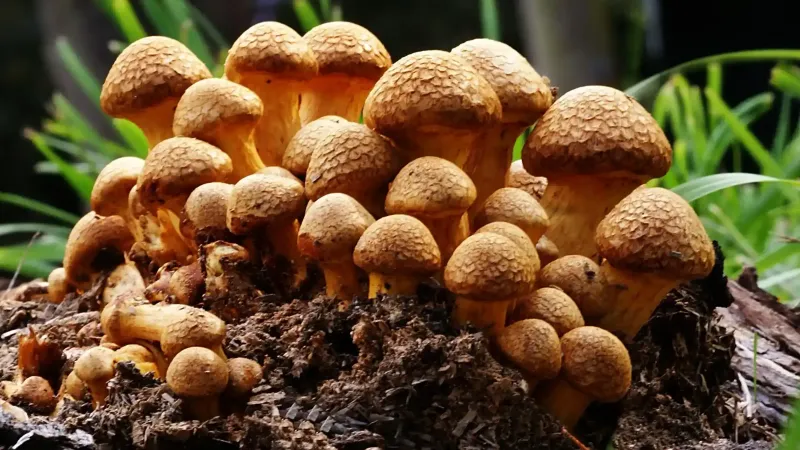
Gymnopilus Junonius fruiting bodies
Scientific Classification
Kingdom:Fungi
Division:Basidiomycota
Class:Agaricomycetes
Order:Agaricales
Family:Cortinariaceae
Genus:Gymnopilus
Frequently Asked Questions
- What is Spectacular Rustgill?
- Spectacular Rustgill (Gymnopilus Junonius) is a mushroom species, belonging to the Cortinariaceae family. It is studied for its biological characteristics and is documented in the ShroomSpy mycology database.
- Is Spectacular Rustgill edible?
- Inedible due to its bitter taste.
- Is Spectacular Rustgill psychoactive?
- Spectacular Rustgill is documented as a psychoactive species. It contains psychoactive compounds that may produce mind-altering effects. Laws governing possession and use vary by jurisdiction.
- What effects does Spectacular Rustgill produce?
- Spectacular Rustgill is associated with the following effects: Euphoric. Individual experiences vary based on dose, set, and setting.
- What is the scientific classification of Spectacular Rustgill?
- Spectacular Rustgill belongs to the kingdom Fungi, division Basidiomycota, class Agaricomycetes, order Agaricales, family Cortinariaceae, genus Gymnopilus. Its scientific name is Gymnopilus Junonius.
About
Gymnopilus junonius, known as the Spectacular Rustgill, is a large, vividly colored mushroom recognized for its brilliant orange to yellow cap, rust-colored gills, and bitter taste. Though sometimes mistaken for edible species due to its size and color, it is not recommended for consumption due to its bitter flavor and potential psychoactive compounds. It grows in large clusters on decaying wood and is one of the most visually striking wood-inhabiting fungi.
History
Native to temperate regions across North America, Europe, Asia, and Australia, this species has been extensively studied due to its occasional presence of psilocybin and other bioactive compounds. However, its toxicity and variability in chemistry make it unreliable and unsafe for recreational or culinary use. Historically, it was more often a subject of mycological curiosity than food or medicine.
It is often used as a visual indicator of forest health, showing where decay and wood turnover are occurring.
Overview
This mushroom forms dense, overlapping clusters on stumps and logs of hardwoods, especially in autumn. Caps range from bright yellow to deep orange, with a fibrous surface and gills that stain rust-brown as spores mature. The spore print is rusty-orange, and the flesh has a distinctively bitter taste, even when cooked.
Although some varieties contain trace levels of psilocybin, it is not considered a reliable or safe psychoactive mushroom and should be appreciated for its aesthetic and ecological role rather than ingestion.
Physical Characteristics
Caps:
Bright orange to yellow, often with a rusty brown center, up to 30 cm across, convex with an inrolled margin when young, becoming flatter with age.
Gills:
Yellow to rusty orange, close, adnate to adnexed.
Cognitive Effects
Euphoric
Users may experience feelings of happiness and well-being.
Psychoactive Effects
Perceptual
Visual perceptions may be enhanced or altered.
Pharmacology
Helps With
Blood Pressure
Some anecdotal reports suggest potential benefits in mood regulation.
Possible Side Effects
Nausea
Consumption can lead to gastrointestinal discomfort and nausea.
Grow at Home
Start your cultivation journey with quality grow kits from independent vendors
Chemical Constituents
Medicinal Chemistry
Similar Species
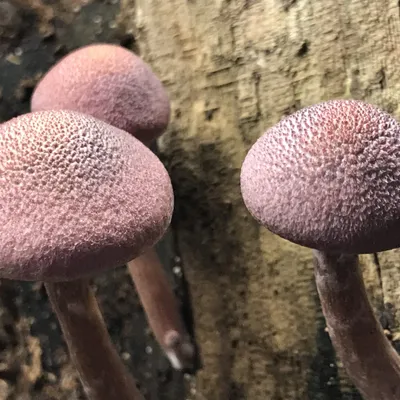
Species: Gymnopilus luteofolius
(Yellow Leaf Gymnopilus)
Edibility: Not edible. Gymnopilus luteofolius is a psilocybin-containing psychoactive species, not a culinary mushroom; ingestion produces hallucinogenic effects and is commonly accompanied by a very bitter taste and nausea.
Key Differences: G. luteofolius has a more uniformly yellow cap and lacks the psychoactive compounds.
Species: Gymnopilus luteofolius
(Yellow Leaf Gymnopilus)
Edibility: Not edible. Gymnopilus luteofolius is a psilocybin-containing psychoactive species, not a culinary mushroom; ingestion produces hallucinogenic effects and is commonly accompanied by a very bitter taste and nausea.
Key Differences: G. luteofolius has a more uniformly yellow cap and lacks the psychoactive compounds.
Mushroom Ratings
5.0
(1)
Based on 1 Review
5
★4
★3
★2
★1
★Share your thoughts
If you've consumed this mushroom, share your thoughts with our community
01/29/2025
Josh Shearer
CreativityEnergyEuphoricFocusSpiritualVisualsDizzy
Tried Gymnopilus Junonius (Spectacular Rustgill) dried and it hit me with this wave of creativity and energy that went for hours. Visuals were interesting - everything looked different, more meaningful somehow. Had deep conversations and worked on creative stuff that night.
Felt spiritual and insightful in a way that's hard to describe. Super focused. The calm reflection afterwards was nice too.
Did get dizzy at higher doses so respect this one - it's potent. Start slow and see how you react. But if you want something for creativity and new perspectives, this delivers. Just be smart about it