Last updated:
Phellinus Linteus
"Sanghwang"
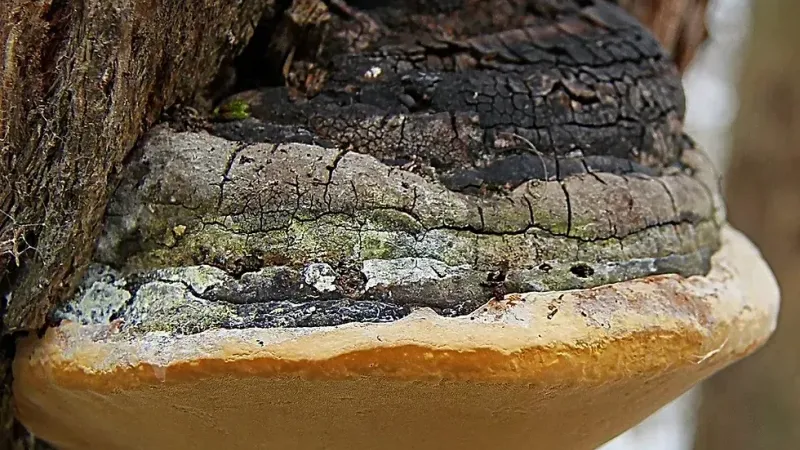
Phellinus Linteus fruiting bodies
Scientific Classification
Kingdom:Fungi
Division:Basidiomycota
Class:Agaricomycetes
Order:Hymenochaetales
Family:Hymenochaetaceae
Genus:Phellinus
Frequently Asked Questions
- What is Sanghwang?
- Sanghwang (Phellinus Linteus) is a mushroom species, belonging to the Hymenochaetaceae family. It is studied for its biological characteristics and is documented in the ShroomSpy mycology database.
- Is Sanghwang edible?
- medicinal
- What is the scientific classification of Sanghwang?
- Sanghwang belongs to the kingdom Fungi, division Basidiomycota, class Agaricomycetes, order Hymenochaetales, family Hymenochaetaceae, genus Phellinus. Its scientific name is Phellinus Linteus.
About
Phellinus linteus, commonly known as Mesima, is a hard, wood-like medicinal mushroom used predominantly in Traditional Chinese, Japanese, and Korean medicine. It is valued for its powerful anti-cancer, immune-modulating, and antioxidant effects. Though inedible due to its tough consistency, it is often consumed in the form of teas, extracts, and capsules for health support.
History
Mesima has a long-standing role in East Asian herbal traditions, often prescribed to support liver function, enhance immunity, and reduce tumor growth. Historical texts describe its use in managing conditions such as gastrointestinal issues, chronic fatigue, and various inflammatory diseases.
In modern times, it has gained recognition in integrative medicine and oncology for its ability to boost natural killer (NK) cell activity and enhance the effects of chemotherapy, particularly in breast, lung, and prostate cancers.
Overview
P. linteus forms a hard, hoof-shaped, orange to dark brown bracket on the trunks of hardwood trees, especially mulberry. The fruiting body has concentric rings and a velvety to crusty surface. It grows slowly and is harvested for its dense concentration of bioactive compounds.
Key constituents include polysaccharides (especially β-glucans), phenolic compounds, and hispidin, which contribute to its antitumor, anti-inflammatory, and antiviral effects. While not a culinary mushroom, it is highly regarded in functional medicine as a potent health tonic.
Flavors
Bitter
Phellinus linteus is often described as having a bitter taste, which is one of the reasons it's not typically used in culinary dishes.
Textures
Hard
The fruiting body of Mesima is hard and tough.
Woody
Due to its growth habit and nature, its texture is woody and not suitable for typical culinary preparations.
Fragrances
Earthy
Phellinus linteus has a natural earthy aroma.
Woody
Given its growth on old tree roots, it can sometimes have a slightly woody scent.
Physical Characteristics
Caps:
Hoof-shaped, up to 15 cm wide. Yellow-brown to black.
Gills:
Yellow-brown pores, 5-6 per mm.
Pharmacology
Helps With
Cancer
Shown to induce apoptosis in cancer cells and inhibit tumor growth
Immune System
Stimulates lymphocyte and macrophage activity
Inflammation
Exhibits anti-inflammatory effects by inhibiting TNF-alpha, IL-6, and nitric oxide
Sanghwang Products
Explore Sanghwang products from independent vendors
Chemical Constituents
Medicinal Chemistry
Similar Species
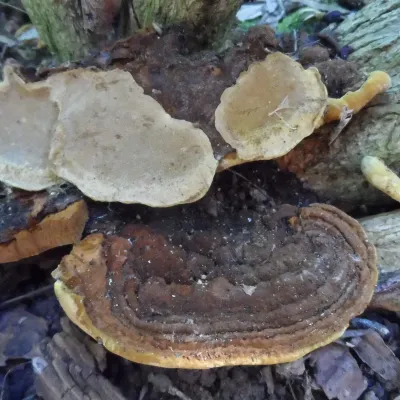
Species: Phellinus ribis
(Black Knot Fungus)
Edibility: Non-edible. Phellinus ribis is a hard, woody bracket fungus with no culinary use. As with other Phellinus conks, it is studied only as a medicinal decoction or extract, never eaten as food.
Key Differences: Grows on variety of trees, causes canker lesions
Species: Phellinus ribis
(Black Knot Fungus)
Edibility: Non-edible. Phellinus ribis is a hard, woody bracket fungus with no culinary use. As with other Phellinus conks, it is studied only as a medicinal decoction or extract, never eaten as food.
Key Differences: Grows on variety of trees, causes canker lesions
Mushroom Ratings
4.0
(1)
Based on 1 Review
5
★4
★3
★2
★1
★Share your thoughts
If you've consumed this mushroom, share your thoughts with our community
01/29/2025
Sam Matterson
CalmContentFocusEnduranceEnergySpiritualDizzy
Started taking Mesima mushrooms (Phellinus linteus) and after a few weeks I actually noticed changes. Focus got better - I usually struggle with getting distracted and this helped. Energy is up too.
The calming effect is what I like most. Less stressed, more centered. Sleep has improved which was unexpected but welcome. I take it as powder in smoothies or tea, both work fine.
Do get slightly dizzy sometimes so make sure you drink enough water with it. But overall this one's become part of my routine now. If you deal with anxiety or focus issues and want something natural, worth trying
References
- Liao, K. (2021). Effects of hispolon on glioblastoma cell growth. .
- Dong, Y. (2021). Enhanced Mycelium Production of Phellinus igniarius (Agaricomycetes) Using a He-Ne Laser with Pulsed Light. .
- Huang, S. (2018). Polysaccharide isolated from Phellinus linteus mycelia exerts anti-inflammatory effects via MAPK and PPAR signaling pathways. .
- Huang, S. (2018). Hepatoprotective Principles and Other Chemical Constituents from the Mycelium of Phellinus linteus. .
- Park, H. (2017). Phellinus linteus grown on germinated brown rice increases cetuximab sensitivity of KRAS-mutated colon cancer. .
- Su, H. (2017). Phellinus linteus Mycelium Alleviates Myocardial Ischemia-Reperfusion Injury through Autophagic Regulation. .
- Lin, C. (2016). Modulation of T cell response by Phellinus linteus. .
- Park, H. (2015). Phellinus linteus grown on germinated brown rice suppress metastasis and Induce Apoptosis of Colon Cancer Cells by suppressing NF-kB and Wnt/ß-catenin Signaling Pathways. .
- Mei, Y. (2015). A novel polysaccharide from mycelia of cultured Phellinus linteus displays antitumor activity through apoptosis. .
- Shao, H. (2015). Anti-inflammatory activity of mushroom-derived hispidin through blocking of NF-kappaB activation. .