Benefícios para a Saúde dos Cogumelos: O Guia Completo de 2026
By Louis on 20/05/2026
Um guia respaldado por pesquisas sobre os benefícios à saúde dos cogumelos, desde beta-glucanas e ergotioneína até vitamina D, saúde intestinal e suporte metabólico.
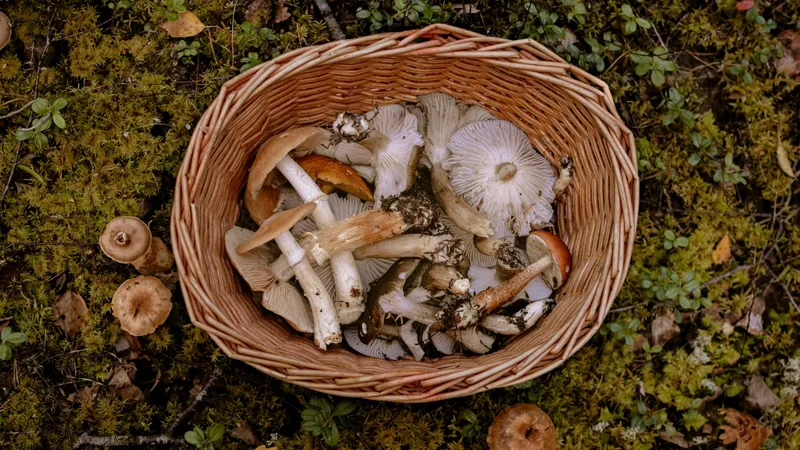
Health Benefits of Mushrooms: The Complete Guide
For something that lives most of its life underground and reproduces through spores, mushrooms have built an absurdly impressive resume. They are one of the only foods that produce vitamin D when exposed to sunlight, the richest natural source of an antioxidant some researchers have nicknamed the "longevity vitamin," and a quietly powerful ally for your immune system, gut, heart, and brain. The health benefits of mushrooms span everything from basic nutrition (potassium, B vitamins, selenium) to bioactive compounds you cannot get in meaningful amounts from any other food group.
If you have ever asked yourself whether mushrooms are actually good for you, the short answer is yes, and this guide explains exactly why. The longer answer covers what the evidence shows, what is still preliminary, and what to do with that information at the grocery store, the supplement aisle, or your next meal.
What Mushrooms Actually Are (And Why That Matters for Your Health)
Mushrooms are the fruiting bodies of fungi, a kingdom of life that sits closer to animals than to plants on the evolutionary tree. That biological oddity is the reason their nutrition profile looks so different from the rest of your produce drawer. Plants make their own food using chlorophyll. Mushrooms break down organic matter using enzymes, which is why they produce a unique set of compounds (beta-glucans, ergothioneine, ergosterol) that you simply will not find in a head of broccoli.
From a dietary standpoint, that distinction puts mushrooms in a category of their own. The USDA classifies them as vegetables for menu-planning purposes, but nutritionally they sit in a no-man's-land between produce, lean protein, and what many researchers now call "functional food." A 100-gram serving of white button mushrooms delivers around 22 calories, 3 grams of protein, 1 gram of fiber, and a meaningful dose of selenium, copper, potassium, riboflavin, niacin, and pantothenic acid. Not bad for something that grows in the dark.
For the granular numbers, see our breakdowns of exactly which nutrients mushrooms contain, how many calories are in different mushroom species, whether mushrooms count as a real fiber source, and how their protein content stacks up against other foods.
Are Mushrooms a Superfood?
The word "superfood" is a marketing term, not a scientific one, and we generally try to avoid it on principle. But the underlying question (do mushrooms deliver an unusual concentration of beneficial compounds compared to other foods?) is a fair one, and the honest answer is yes, on several counts.
Mushrooms are the highest dietary source of ergothioneine on the planet. They are the only non-animal food that produces meaningful amounts of vitamin D. They contain beta-glucans with documented immune-modulating activity. And they deliver this nutritional density at roughly 20 to 35 calories per 100-gram serving, which is hard to match in any other food category. Whether that earns them the "superfood" label depends on how seriously you take the label in the first place. We dig into the evidence in detail in our full review of the mushroom superfood claim.
Beta-Glucans: The Compound Behind the Immune System Hype
If you have ever wondered why functional mushrooms get classified as "immune support," beta-glucans are the answer. These are long-chain polysaccharides found in the cell walls of fungi, and they have a specific molecular structure (1,3/1,6 beta-D-glucan) that the human immune system recognizes through receptors on innate immune cells like macrophages and natural killer cells.
When those receptors engage with beta-glucans, the immune system is essentially put on a heightened state of readiness. The mechanism has been mapped in dozens of laboratory and animal studies, and a smaller but growing body of human clinical research has begun to confirm it. A 2020 systematic review published in Nutrients concluded that beta-glucan supplementation showed measurable effects on immune markers, though effect sizes varied by source, dose, and study design.
The species with the highest beta-glucan content tend to be the medicinal heavyweights: turkey tail, reishi, maitake, shiitake, and chaga. Common culinary mushrooms contain meaningful amounts too, just at lower concentrations. A note on cancer research, since it inevitably comes up here: certain isolated beta-glucan compounds (PSK from turkey tail in particular) are used as adjunct therapies alongside chemotherapy in Japan, with regulatory approval there since 1977. That is a legitimate area of integrative oncology research. It is not a claim that eating mushrooms treats cancer, and ShroomSpy does not make claims that overstate the evidence.
A practical note for shoppers: beta-glucan content varies wildly between products, and not every "mushroom supplement" actually contains the fruiting body where the beta-glucans live. Mycelium grown on grain often gets sold as "mushroom extract" but is largely starch by weight. Always check the certificate of analysis.
Ergothioneine: The Antioxidant You Have Probably Never Heard Of
Ergothioneine is a sulfur-containing amino acid that humans cannot synthesize. We have to get it from food, and mushrooms are by far the richest dietary source on the planet. Some species (notably oyster, king trumpet, and porcini) contain 30 to 40 times more ergothioneine than the next-best food source.
What makes ergothioneine interesting is that humans evolved a dedicated transporter protein for it (called OCTN1/SLC22A4), which strongly suggests our biology actively wants this compound around. It accumulates in tissues with high oxidative stress: the liver, kidneys, eyes, bone marrow, and brain. Researchers have proposed it functions as a "longevity vitamin," and observational studies have linked higher dietary ergothioneine intake to lower risk of cognitive decline, cardiovascular disease, and all-cause mortality.
The evidence is still mostly observational rather than causal, so this is not a "mushrooms cure aging" claim. But the mechanistic case is strong, ergothioneine is non-toxic at dietary doses, and getting more of it into your diet costs roughly the same as getting less of it.
If you want to maximize ergothioneine intake, focus on oyster, king trumpet, lion's mane, and porcini mushrooms. Cooking does not destroy ergothioneine the way it does some other antioxidants, so a stir-fry or sauté works just as well as eating them raw (which you should not do anyway, since chitin in raw mushroom cell walls is hard to digest).
Vitamin D: The Mushroom Trick Almost Nobody Uses
Mushrooms are the only non-animal food that produces meaningful amounts of vitamin D. They do it the same way human skin does: by converting a sterol precursor (ergosterol, the fungal equivalent of our 7-dehydrocholesterol) into vitamin D2 when exposed to UV light.
Here is the part most shoppers miss: nearly all commercial mushrooms are grown in the dark, which means a typical store-bought white button mushroom contains essentially no vitamin D. But you can fix this in your own kitchen. Slicing fresh mushrooms gills-up and leaving them in direct sunlight for 30 to 60 minutes can boost vitamin D content from near-zero to several hundred IU per serving. UV-exposed mushrooms sold as "vitamin D mushrooms" or "Sun Bella" can deliver over 400 IU per 3-ounce serving, comparable to a glass of fortified milk.
This matters because vitamin D deficiency is genuinely common in the United States, particularly in northern latitudes during winter, and dietary sources are limited. Mushrooms offer a vegan-friendly, plant-source option that almost nobody takes advantage of because almost nobody knows about it.
The vitamin D mushrooms produce is D2 rather than D3. There has been ongoing debate about which form raises serum vitamin D more efficiently, with most studies showing D3 is slightly more effective, though both work.
Heart Health: Cholesterol and Blood Pressure
The cardiovascular case for mushrooms is built on three converging lines of evidence. First, beta-glucans bind to bile acids in the digestive tract, which forces the liver to use cholesterol to make new bile, lowering circulating LDL cholesterol over time. Second, certain mushroom species (notably oyster mushrooms) contain natural statin compounds, including small amounts of lovastatin, the same molecule used in prescription cholesterol medication. Third, the high potassium and low sodium content of most edible mushrooms supports healthy blood pressure regulation.
A 2021 meta-analysis published in Nutrition Reviews looked at randomized controlled trials of mushroom consumption and found small but statistically significant reductions in total cholesterol and LDL cholesterol. The effect was modest, in the range of a 5 to 10 percent reduction, but consistent across studies. Population data from countries with high mushroom consumption (Japan, Korea, parts of China) shows lower rates of cardiovascular mortality, though disentangling mushroom effects from the rest of those diets is difficult.
For people managing cholesterol or blood pressure through diet, swapping a few servings of red meat per week for hearty mushroom dishes (think portobello "burgers," oyster mushroom stir-fries, or shiitake-based stews) is a low-risk, evidence-supported move. It is also a way to increase fiber and reduce saturated fat intake at the same time.
We cover the cholesterol side in detail in our guide to whether mushrooms can lower cholesterol, and the blood pressure side in our review of mushrooms and blood pressure.
Blood Sugar and Metabolic Health
Mushrooms are extremely low in carbohydrates and very high in soluble fiber, which makes them naturally well-suited for blood sugar management. The combination of low glycemic load and beta-glucan fiber appears to improve insulin sensitivity in some studies, though the human evidence here is more limited than the cardiovascular evidence.
Several preliminary clinical trials have looked at specific species (maitake, reishi, lion's mane) for effects on fasting glucose and HbA1c in people with prediabetes or type 2 diabetes. Results are mixed but generally favorable, with most studies showing small improvements in glucose control without side effects. The evidence is strongest for maitake, where compounds called SX-fraction and D-fraction have been studied for insulin-sensitizing effects.
The realistic takeaway: mushrooms are not a treatment for diabetes, and nobody should be substituting them for prescribed medication. But as part of a high-fiber, lower-carbohydrate eating pattern, they earn their place on the plate. For anyone using mushrooms as a meat substitute (a portobello cap has roughly the volume of a small burger but a fraction of the calories), the metabolic benefit comes partly from what you are not eating instead.
Gut Health: Prebiotic Fiber and Microbiome Support
Mushrooms contain two types of fiber that interest gut health researchers: chitin (the same compound that makes up insect exoskeletons, which sounds gross but is actually a robust prebiotic) and beta-glucans. Both make it through the upper digestive tract intact and become food for beneficial gut bacteria in the colon.
A 2023 study published in the Journal of Functional Foods found that regular consumption of white button mushrooms increased populations of beneficial Bacteroidetes and reduced markers of gut inflammation in healthy adults over a six-week period. Other research has linked mushroom intake to improved short-chain fatty acid production, which supports colon health and may have downstream effects on immune regulation, metabolism, and even mood.
The microbiome research field is still young, and broad claims about gut health should always be taken with appropriate skepticism. But the basic logic (high-fiber, low-calorie food that feeds beneficial bacteria) is well-established, and mushrooms fit that profile cleanly.
If gut health is a priority, variety matters more than picking a single "best" species. Rotating between oyster, lion's mane, shiitake, maitake, and white button mushrooms exposes the microbiome to a broader spectrum of fiber types and bioactive compounds.
Weight Management: Low Calorie, High Satiety
The weight management case for mushrooms is the simplest one in this guide and arguably the most actionable. Mushrooms are 90 to 92 percent water by weight, contain almost no fat, and deliver roughly 20 to 35 calories per 100-gram serving depending on species. They also have a meaty, umami flavor and a substantial texture that satisfies the same brain pathways as eating animal protein.
A multi-year intervention study at the University of Buffalo found that participants who substituted mushrooms for ground beef in standard meals (tacos, pasta sauce, lasagna) consumed significantly fewer total calories without reporting reduced satisfaction or increased hunger between meals. The "mushroom swap" has become a recognized dietary strategy specifically because it works without requiring willpower or meal planning gymnastics.
The umami compound responsible for the savory, meat-like quality of mushrooms is glutamate, the same molecule that gives aged cheese, soy sauce, and tomato paste their depth. Cooking mushrooms (especially with high heat that triggers Maillard browning) intensifies that umami profile and is the difference between a forgettable side dish and something genuinely craveable.
Anti-Inflammatory Compounds
Chronic low-grade inflammation is now recognized as a contributing factor in nearly every major chronic disease, and dietary patterns that lower systemic inflammation have become a central focus of nutrition research. Mushrooms appear in most of the credible "anti-inflammatory diet" frameworks, and the reasons are mechanistically well-supported.
Several compounds in mushrooms have documented anti-inflammatory activity in laboratory and animal studies. Beta-glucans modulate inflammatory cytokine production. Ergothioneine reduces oxidative damage that drives inflammation. Polysaccharide-protein complexes from species like reishi and turkey tail influence immune cell behavior in ways that calm rather than stoke inflammation. Triterpenes from reishi (ganoderic acids) have shown anti-inflammatory activity in cell culture and animal models.
Human clinical evidence is more limited, but a handful of randomized trials have shown reductions in inflammatory markers like C-reactive protein and IL-6 with regular mushroom consumption. The effect sizes are modest, and the strongest evidence comes from concentrated mushroom extracts rather than dietary intake. Still, for an everyday food with no real downsides, the directional evidence supports including more of them in regular meals.
Brain and Cognitive Health
The cognitive benefit case is mostly built around lion's mane (Hericium erinaceus), which contains compounds called hericenones and erinacines that have been shown to stimulate nerve growth factor (NGF) production in the brain. NGF supports the growth, maintenance, and survival of neurons, and its decline is associated with several neurodegenerative conditions.
Most of the lion's mane cognitive research has been done in animal models, but a few human trials have shown promising results. A 2009 Japanese study found that adults with mild cognitive impairment showed improved cognitive scores after sixteen weeks of lion's mane supplementation, with benefits diminishing after they stopped. A 2020 trial reported similar findings. The evidence is preliminary but interesting, and lion's mane has become one of the most popular functional mushrooms specifically for this reason.
Other species (reishi, cordyceps) have also been studied for cognitive and mood-related effects, with much weaker evidence. The ergothioneine and antioxidant content of mushrooms more broadly may also contribute to long-term brain health through reduced oxidative stress, but this is mechanistic reasoning rather than direct evidence.
Mushrooms for Specific Diets: Keto, Vegan, and Vegetarian
Mushrooms slot cleanly into nearly every major dietary framework, but two patterns particularly benefit from leaning into them.
Keto and low-carb diets. Mushrooms are one of the lowest-carb foods you can eat, with most species containing 2 to 4 grams of total carbohydrates per 100-gram serving and a substantial portion of that coming from fiber. They are also high in umami flavor and meaty enough in texture to anchor satisfying low-carb meals without leaning entirely on cheese and animal protein. We cover net carb counts and species-specific data in our guide to whether mushrooms are keto-friendly.
Vegan and vegetarian diets. Mushrooms are arguably the most useful single ingredient in plant-based cooking, both for flavor and nutrition. The umami depth they provide is genuinely difficult to replicate with other plant foods, which is why nearly every credible vegan recipe leans on them. Nutritionally, they offer vitamin D (especially when UV-exposed), B vitamins that can otherwise be limited in plant-only diets, complete protein in modest amounts, and selenium, which is harder to source on a strict vegan diet than most people realize. Our guide to mushrooms for vegans and vegetarians covers cooking techniques, nutritional gaps mushrooms help fill, and the species worth keeping on rotation.
How to Get More Mushrooms Into Your Diet (Without Boring Yourself)
The biggest barrier to capturing the health benefits of mushrooms is not the science. It is the cooking. A lot of people grew up eating mushrooms exactly one way (sliced raw on a salad, or rubbery on a frozen pizza) and decided the whole category was not for them. That is a tragedy that can be fixed in about twenty minutes of practice.
A few principles that change everything:
- Cook them dry first, then add fat. Mushrooms are sponges. If you add oil first, they soak it up and steam in their own water. Dry-sauté them in a hot pan until the water releases and evaporates, then add butter or oil to brown them. This is the single biggest upgrade most home cooks can make.
- Salt at the end, not the beginning. Salt draws moisture out, which prevents browning. Wait until they are golden, then season.
- Use a wider variety than just white button. Oyster mushrooms cook in five minutes and have a delicate seafood-like flavor. Maitake forms beautiful crispy clusters. King trumpet sliced into "scallops" caramelizes like nothing else. Shiitake stems make incredible broth.
- Treat dried mushrooms as a pantry staple. Dried porcini and shiitake last for years, rehydrate in fifteen minutes, and add concentrated umami to anything from risotto to ramen.
For supplementation rather than culinary use, ShroomSpy stocks tested powders, extracts, tinctures, and capsules across all the major functional species. If you are considering supplements rather than just adding more mushrooms to your meals, our functional mushroom collection is curated specifically for evidence-supported quality, with batch-tested beta-glucan content and full certificates of analysis.
Safety: When Mushrooms Are Not the Right Choice
For the overwhelming majority of people, edible mushrooms are extremely safe. They have been part of human diets for thousands of years and rarely cause problems beyond occasional digestive discomfort if eaten raw or in unusually large quantities. Still, there are a few situations worth understanding.
General safety and side effects. Most people tolerate culinary mushrooms without any issue. A small percentage report digestive upset from raw mushrooms, mild allergic reactions, or interactions between concentrated functional mushroom extracts and certain medications. Our full guide covers the situations where mushrooms can actually be bad for you, including drug interactions, allergy patterns, and which compounds get reduced or eliminated by cooking.
Mushrooms and dogs. This is one of the most-asked questions we get from pet-owning customers. Common store-bought culinary mushrooms (white button, cremini, portobello, shiitake, oyster) are generally considered safe for dogs in small amounts when plain and cooked. Wild mushrooms are a completely different category, and several species are lethally toxic to dogs. Our dedicated guide to whether mushrooms are bad for dogs covers safe species, toxic species, and what to do if you suspect mushroom poisoning.
Pregnancy. Well-cooked culinary mushrooms are generally considered safe during pregnancy, but concentrated functional mushroom supplements are a different conversation, and the safety data on extracts during pregnancy is limited. We address species-by-species considerations in our guide to mushroom safety during pregnancy.
Wild foraging is a different category entirely. Several deadly mushroom species (notably destroying angels and death caps) closely resemble edible varieties. Do not forage wild mushrooms for consumption without expert identification training. A field guide and a smartphone app are not enough.
These statements have not been evaluated by the Food and Drug Administration. The information in this article is educational and is not intended to diagnose, treat, cure, or prevent any disease. Always consult a qualified healthcare provider for personal medical questions.
Conclusion
The health benefits of mushrooms are not a single story. They are a stack of overlapping ones: excellent baseline nutrition, beta-glucans that talk directly to your immune system, ergothioneine that may protect tissues over a lifetime, vitamin D that no other plant food provides, fiber that feeds your microbiome, and bioactive compounds that support your heart, blood sugar, brain, and inflammatory tone. None of it is magic. All of it is supported by real research at varying degrees of strength. And nearly all of it is accessible through a few good meals a week and, where it makes sense, a quality supplement built around tested fruiting bodies rather than starchy mycelium filler.
Ready to take your mycology journey to the next level? Browse our full range of mushroom products at ShroomSpy.com/mushrooms/products and find everything you need to grow, forage, and thrive.
Confira nossos Produtos de Cogumelos Funcionais!
Perguntas frequentes
Mushrooms are the fruiting bodies of fungi, a kingdom that sits closer to animals than plants on the evolutionary tree. Rather than making food with chlorophyll, they break down organic matter with enzymes, which lets them produce compounds like beta-glucans, ergothioneine, and ergosterol that you will not find in plants. A 100-gram serving of white button mushrooms delivers around 22 calories, 3 grams of protein, 1 gram of fiber, plus selenium, copper, potassium, and several B vitamins.
Referências
- Beelman, R. B., Kalaras, M. D., Phillips, A. T., & Richie Jr, J. P. (2020). Is ergothioneine a ‘longevity vitamin’ limited in the American diet?. .
- Wasser, S. P. (2009). Atividades imunomoduladoras dos glucanos de cogumelos e complexos de polissacarídeos-proteínas em animais e humanos. Revista Internacional de Cogumelos Medicinais, 11(3), 209-217.