The New Predator of Zombie Fungus
By Louis on 10/07/2026
Scientists in Borneo found a horned hyperparasite fungus that preys on the infamous zombie-ant fungus. Meet Pleurocordyceps cornusynnemata.
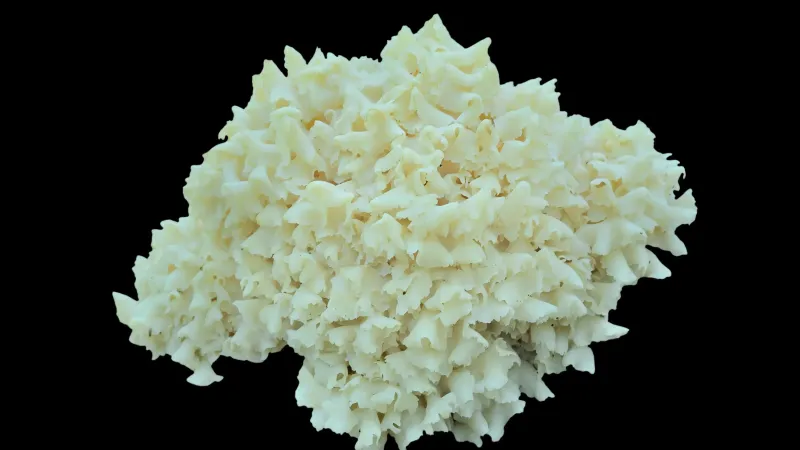
A New Hyperparasite Fungus Preys on Borneo's Zombie Fungus (and It Has Horns)
Somewhere in the jungles of Borneo, a fungus turns ants into puppets. It hijacks the insect's body, drives it to a good dying spot, kills it, and erupts from the corpse to rain spores on the next victim. Grim stuff. Now scientists have found the thing that hunts the hunter. Researchers in Malaysia have described a new hyperparasite fungus, a parasite whose prey is another parasite, and it comes accessorized with tiny horns. Meet Pleurocordyceps cornusynnemata, the fungus that eats the zombie-maker alive.
First, meet the zombie fungus
To appreciate the new discovery, you need to know its prey. The "zombie fungus," from the genus Ophiocordyceps, is one of nature's better horror stories. It infects an insect, most famously ants, and takes over. The fungus manipulates the host's nervous system until the ant stops behaving like an ant, wanders off from the colony, clamps onto a leaf or twig in a death grip, and dies exactly where the fungus wants it. Then a stalk grows out of the ant's body and releases spores onto the forest floor below, ready to catch the next unlucky forager.
This is not a new trick. Zombie fungi have been running this playbook for tens of millions of years, with infected insects preserved mid-takeover in ancient amber. If the whole setup sounds familiar, that's because Ophiocordyceps is the real-world muse behind the fungal apocalypse in a certain popular video game and TV series. The difference is that the real thing is very good at killing ants and completely uninterested in you. More on that below, because it's the question everyone asks.
Now meet its predator
Here's the plot twist. The newly described species, Pleurocordyceps cornusynnemata, doesn't bother hijacking an ant's brain. It targets ants that Ophiocordyceps has already zombified, then infiltrates and feeds directly on the thriving zombie-fungus tissue inside the host. In other words, it lets the zombie fungus do the hard work of killing the ant, then moves in and eats the winner. That is what earns it the label hyperparasite: a parasite that specializes in parasitizing another parasite.
The name is the fun part. Cornusynnemata refers to the distinct horn-shaped structures the fungus produces. Hyperparasites in this corner of the fungal world are not unheard of, but according to the research team this is the first known member of the genus Pleurocordyceps to sport that horned form. It sits in the family Polycephalomycetaceae, and it was collected during multiple field trips run by the University of Malaysia Sabah's Institute for Tropical Biology and Conservation. The formal description was published in the journal Phytotaxa in 2026.
And a spider-killer, because it's Borneo
The same field trips turned up a second new species for good measure, this one with a taste for arachnids. Leptobacillium geminatum is a spider-killing fungus that spreads its spores through the spider's body before finishing it off. That discovery was published separately in the New Zealand Journal of Botany in 2026. Two new insect-and-spider-hunting fungi from one set of expeditions is a decent haul, and a reminder that the rainforests of Borneo are still handing scientists creatures nobody has ever formally named.
Why this matters more than the nightmares it will give you
Beyond the shudder factor, the research team argues these fungi hold real practical promise. Fungi that evolved to chemically attack other fungi or insects are, in effect, walking pharmacies. The scientists suggest species like these could become sources for next-generation antimicrobial drugs, and could serve as biocontrol agents, natural predators deployed against agricultural pests instead of blanket chemical pesticides. Worth being clear-eyed here: that is stated potential, not a product on a shelf. Turning a jungle fungus into a medicine or a pest-control tool is a long road, and most candidates never make it.
The bigger point is what these finds represent. Borneo's rainforests are among the most biodiverse places on the planet and remain badly under-surveyed. Every hyperparasite and spider-killer described is one entry chipped off an estimated 2 million-plus fungal species that science has never named. The race is to document them before habitat loss quietly erases species we didn't know existed, a gap conservation scientists have started calling the shortfall between what lives and what we've recorded.
[Internal link: The Fungi Files breakdown of the State of the World's Plants and Fungi 2026 report]
What a horned zombie-hunter has to do with your kitchen
You might reasonably ask what any of this has to do with a mushroom marketplace. Fair. The answer is that the same fungal kingdom cooking up horned ant-assassins in Borneo is the one that gives you lion's mane, oyster clusters, and the reishi in your tea. Fungi are staggeringly diverse and mostly still mysterious, and the friendly, edible corner of that kingdom is the part we get to enjoy without any of the body-horror. The nightmare fungi and the delicious ones are cousins, which is either comforting or unsettling depending on your mood.
The bottom line
Scientists in Malaysia found a fungus that preys on the fungus that zombifies ants, gave it horns, and pulled a spider-killer out of the same jungle while they were at it. It's a genuinely wild discovery, and underneath the creep factor sits a serious point: we have barely begun to catalog fungal life, and these organisms may hold chemistry worth learning from. The zombie fungus gets the fame. Its brand-new predator just quietly proved that nothing in the forest is at the top of the food chain for long.
Curious about the friendlier side of the fungal kingdom? Browse our full range of mushroom products at ShroomSpy.com/mushrooms/products and stick to the mushrooms that want to be eaten, not the ones doing the eating.
Check out our Products!
Preguntas frecuentes
A hyperparasite is a parasite that lives off another parasite. In this case, the fungus Pleurocordyceps cornusynnemata targets ants that have already been infected by the parasitic zombie fungus, then feeds on that fungus rather than on the ant directly. It's a parasite preying on a parasite.