Mushroom Matcha: How to Make It (and Why)
By Josh Shearer on 15/07/2026
How to make lion's mane or reishi mushroom matcha, why matcha's L-theanine pairs with functional mushrooms, and how to choose good extracts.
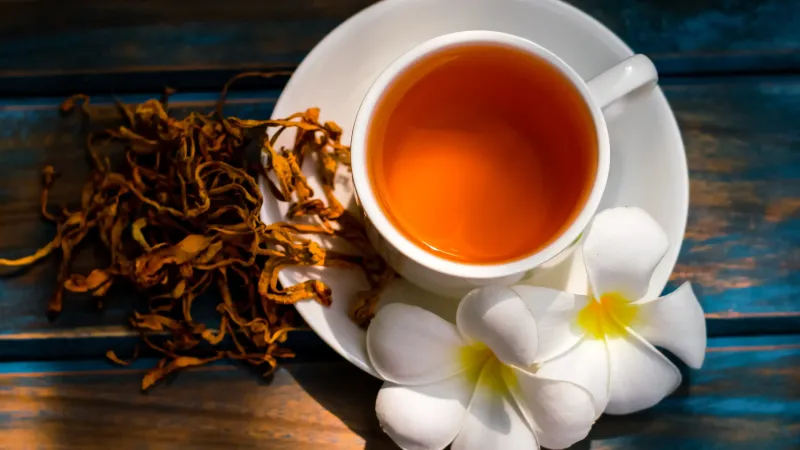
Mushroom matcha is exactly what it sounds like: a cup of whisked green-tea matcha with functional mushrooms stirred in. It has become a favorite morning drink for people who want the calm, steady focus matcha is known for, plus the cognitive support of lion's mane, without the jitter-and-crash of coffee. Here is how to make it, why the pairing works so well, and how to choose mushrooms that actually add something.
Why matcha and mushrooms pair so well
Matcha is powdered whole green tea. It delivers caffeine, but alongside it comes L-theanine, an amino acid that promotes a calm, alert state and famously takes the edge off caffeine's jitters. That "calm focus" is the reason matcha drinkers reach for it instead of coffee. Add lion's mane, the mushroom most associated with cognitive support, and you have a drink built entirely around clear-headed focus: theanine smooths the caffeine, and lion's mane adds daily cognitive support underneath it. Reishi works too, for a calmer, less caffeinated version. Because extracted mushroom compounds are heat-stable, whisking them into hot matcha costs you nothing.
The base recipe
Sift one to two teaspoons of matcha into a bowl or wide mug to avoid clumps. Add a splash of hot (not boiling) water, around 175°F, and whisk in a zig-zag motion until frothy. Stir in a measured dose of mushroom extract powder, such as our super-food extract powders, or a dropper of tincture. Top with hot water or steamed milk, sweeten lightly if you like, and drink. For an iced version, whisk the matcha and mushroom into a little water, then pour over ice and cold milk.
Which mushroom to add
Lion's mane is the natural match, turning matcha into a focus-forward morning ritual; our best lion's mane supplement guide covers choosing one, and a lion's mane tincture stirs in cleanly. Reishi suits an afternoon or lower-caffeine cup, adding a calming note. A blend gives broad daily support if you would rather keep it simple. Whichever you choose, use an extract: raw milled mushroom keeps its beta-glucans locked in chitin, while an extract makes them available, a point our mushroom powder guide explains.
Choosing quality on both sides
For the mushroom, the usual rules apply, fruiting body over mycelium-on-grain, genuine extraction, third-party testing, and a stated beta-glucan content. For the matcha, culinary-grade is fine when it is mixed with mushroom and milk; save ceremonial-grade for drinking matcha on its own. Keep the mushroom dose to the amount on its label rather than eyeballing it, since a good extract is concentrated.
As with any functional mushroom, the benefit is in the routine. A daily lion's mane matcha is an easy, genuinely pleasant way to keep that consistency, and it doubles as a lower-jitter alternative to a second coffee.
The bottom line
Mushroom matcha combines matcha's calm, theanine-smoothed focus with the cognitive support of lion's mane (or the calm of reishi) in one easy cup. Whisk your matcha, stir in a lab-tested fruiting-body extract, and make it a habit. Browse the powders and tinctures that go into it in our functional mushroom extracts collection, or see how the mushrooms compare in our best functional mushrooms guide.
Shop the mushrooms for your matcha
Grab a lab-tested extract powder or tincture for your next cup.
Preguntas frecuentes
Sift one to two teaspoons of matcha into a bowl, add a splash of hot water around 175°F, and whisk until frothy. Stir in a measured dose of mushroom extract powder or a dropper of tincture, then top with hot water or steamed milk. For iced matcha, whisk with a little water and pour over ice and cold milk.
Referencias
- Sadowska, A. (2026). Medicinal Mushrooms and Their Bioactive Compounds: From Traditional Use to Therapeutic Potential. .
- Docherty, S. & Doughty, F. (2023). The Acute and Chronic Effects of Lion's Mane Mushroom Supplementation on Cognitive Function, Stress and Mood in Young Adults: A Double-Blind, Parallel Groups, Pilot Study. .
- Hobbs, C. (2021). Christopher Hobbs's Medicinal Mushrooms: The Essential Guide. Storey Publishing.