The Magic Of Adaptogens Series: Energizing Effects Of Cordyceps
By Zaky J on 11/13/2024
Unlock Natural Energy with Cordyceps: Explore its adaptogenic benefits. Boost Energy, Reduce Stress and Increase Libido. What more could one ask for?
Say Hello to Cordyceps
Welcome to the next part of our exciting journey through the world of medicinal mushrooms. Today we shine a spotlight on a unique mushroom with an intriguing name - Cordyceps. Buckle up as we delve into the fascinating world of this medicinal mushroom, exploring its adaptogenic properties, specifically its potential energizing effects.
A Look at Cordyceps
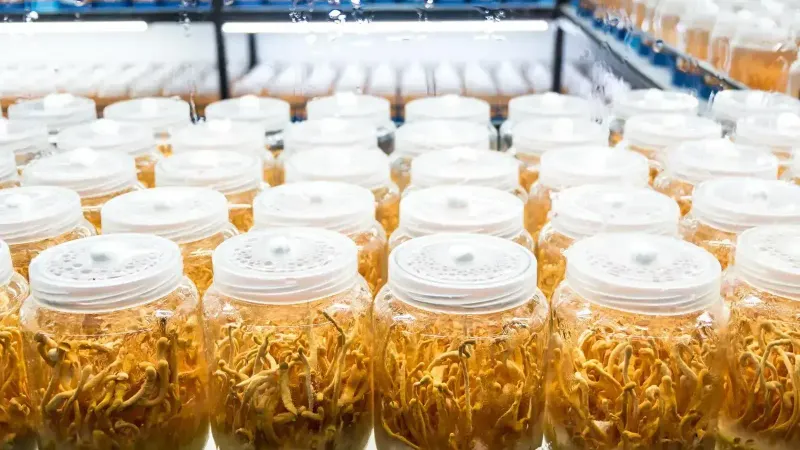
Cordyceps is a genus of parasitic fungi that grows on the larvae of insects. When these fungi attack their host, they replace the host tissue and sprout long, slender stems that grow outside the host's body. The most well-known of these species are Ophiocordyceps sinensis and Cordyceps militaris, both valued for their potential health benefits. While O. sinensis remains extremely rare and expensive as a wild-harvested species, C. militaris is now widely cultivated commercially, making it the more accessible option.
The Adaptogenic Edge
Adaptogens are natural substances that may help the body adapt to stress and support normal bodily functions. Cordyceps, with its host of beneficial compounds, fits into this category based on its long history of traditional use. By potentially interacting with the hypothalamic-pituitary-adrenal (HPA) axis, Cordyceps is traditionally believed to help modulate stress responses, though scientific evidence supporting this specific mechanism is limited.
Potential Energizing Effects of Cordyceps
One of the most notable traditional uses of Cordyceps is its association with energy and endurance support. This is often attributed to its potential capacity to support the body's production of adenosine triphosphate (ATP), though specific clinical studies confirming this mechanism require further investigation.
Preliminary research suggests that consumption of Cordyceps may lead to improved oxygen utilization during exercise, though the clinical evidence is not yet robust. A study published in the Journal of Alternative and Complementary Medicine found that participants who took Cordyceps supplements showed a 7% increase in VO2 max, though larger studies are needed to confirm these results.
Additionally, Cordyceps has shown some preliminary promise in supporting energy levels in older adults. A study found that elderly participants who consumed Cordyceps for 12 weeks showed improvements in metabolic and ventilatory thresholds, though more research is needed to define the size of the benefit and confirm these findings.
Explore Cordyceps Products
Frequently Asked Questions
Cordyceps is a genus of parasitic fungi that grows on the larvae of insects, replacing the host tissue and sprouting long, slender stems outside the host's body. The two most well-known species are Ophiocordyceps sinensis and Cordyceps militaris, both valued for their potential health benefits.
References
- Wu , N., Ge, X., Yin, X., & Yang, L. (2024). A review on polysaccharide biosynthesis in Cordyceps militaris. International Journal of Biological Macromolecules.
- Zhang, Y. (2023). Protective effect of Cordyceps sinensis against diabetic kidney disease through promoting proliferation and inhibiting apoptosis of renal proximal tubular cells. .
- TULI, H. (2022). Apoptotic effect of cordycepin on A549 human lung cancer cell line. .
- Sornchaithawatwong, C. (2022). Selective extraction of cordycepin from Cordyceps militaris – optimisation, kinetics and equilibrium studies. .
- Sun, H. (2021). Structure and hypoglycemic activity of a novel exopolysaccharide of Cordyceps militaris. .
- Barouki, R. (2021). Cordycepin: a bioactive metabolite with therapeutic potential. .
- Kontogiannatos, D. (2021). Biomass and Cordycepin Production by the Medicinal Mushroom Cordyceps militaris—A Review of Various Aspects and Recent Trends towards the Exploitation of a Valuable Fungus. .
- Yea, B. (2021). Cordyceps militaris (L.) Link Fruiting Body Reduces the Growth of a Non-Small Cell Lung Cancer Cell Line by Increasing Cellular Levels of p53 and p21. .
- Ashraf, S. A. & Elkhalifa, A. E. (2020). Cordycepin for Health and Wellbeing: A Potent Bioactive Metabolite of an Entomopathogenic Medicinal Fungus Cordyceps with Its Nutraceutical and Therapeutic Potential. Molecules.
- HUNG, D. (2020). Impact of different fermentation characteristics on the production of mycelial biomass, extra-cellular polysaccharides, intra-cellular polysaccharides, and on the antioxidant activities of Cordyceps militaris (L.) Fr. (strains AG-1, PSJ-1). .
Comments
I’ve been diving into the world of adaptogens lately, and I have to say, Cordyceps has really caught my attention. I love how it’s not just about boosting energy but also enhancing endurance. I recently tried a Cordyceps supplement before my morning workout, and wow, I felt like I could go for miles! It’s fascinating how these fungi can help our bodies adapt to stress and improve overall performance. Plus, the fact that they’ve been used in traditional medicine for centuries adds to their credibility. I’m curious, have you tried incorporating Cordyceps into your routine? I’d love to hear about your experience or any recipes you might have! It’s amazing how something so small can have such a big impact on our health. Looking forward to hearing your thoughts!