5 Dangerous Mushroom Look-Alikes Every Forager Should Know
By Josh Shearer on 07/23/2026
The wild mushrooms that send foragers to the hospital, and the single feature that separates each dangerous look-alike from its edible twin. A field-safety guide.
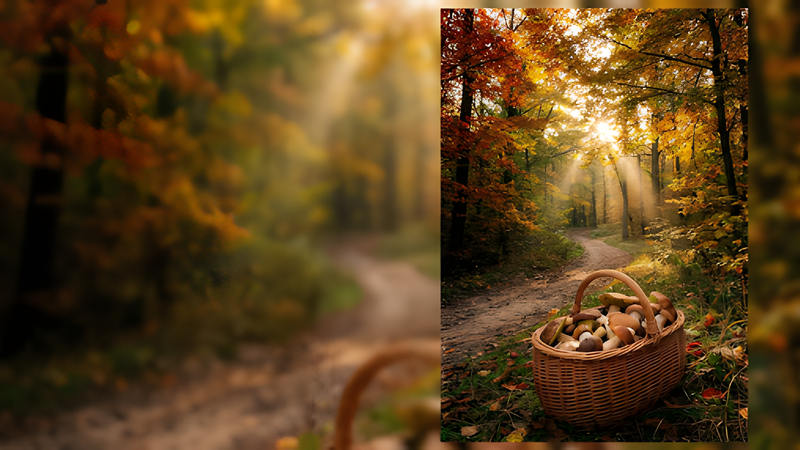
Foraging is safe if you respect one rule: you are not identifying a mushroom by what it looks like, you are ruling out the dangerous things it could be. Most serious mushroom poisonings are not exotic. They come from a small handful of common toxic species that resemble popular edibles. Here are five of the most important pairs, and the key feature that separates each. Learn these, and understand up front that a single feature is a starting point, not a permission slip: for anything you intend to eat, you confirm multiple characteristics, take a spore print, and get an experienced identifier to check your first finds.
1. Death cap and destroying angel vs. edible whites
This is the one that kills. Amanita phalloides (death cap) and its white cousins the destroying angels (Amanita bisporigera, A. virosa) are responsible for the large majority of fatal mushroom poisonings worldwide. Their amatoxins cause no symptoms for six to twelve hours, then violent GI illness, then a deceptive "recovery," then liver and kidney failure days later.
The feature: check the base of the stem, always. A deadly Amanita arises from an egg-like sac, leaving a membranous cup, or volva, around the stem base, often below the soil line, plus white gills, a white spore print, and a skirt-like ring. People confuse young ones with button mushrooms and puffballs. Never trust a "puffball" you have not sliced in half to confirm it is solid white inside with no developing gilled mushroom, and never harvest an Amanita-shaped mushroom without digging up and inspecting the base.
2. Deadly Galerina vs. honey mushrooms
Galerina marginata is a small brown mushroom that grows on wood and carries the same amatoxins as the death cap. It gets confused with the honey mushroom, a popular wood-growing edible, because both fruit on logs, often in the same season.
The feature: spore print color and growth habit. Deadly Galerina drops a rusty brown spore print, is small and thin-stemmed, and grows scattered along rotting wood. The edible honey mushroom (Armillaria) is larger, grows in dense clusters, and drops a white spore print. The broader lesson is the old one: never eat a "little brown mushroom" on the strength of a rough resemblance, because several look alike and a few are deadly.
3. Green-spored parasol vs. edible parasols
Chlorophyllum molybdites, the green-spored parasol, causes more poisonings than any other mushroom in North America. It erupts on lawns and in fairy rings after warm-weather rain, looking like a big, handsome, obviously edible mushroom, which is exactly the problem. It will not kill a healthy adult, but it delivers severe vomiting, cramps, and diarrhea.
The feature: take a spore print. The green-spored parasol has, as the name says, a grayish-green spore print and mature gills that flush green, while the edible parasol and shaggy parasol have white spore prints and Agaricus species have chocolate-brown ones. The gills of a young specimen are still white, so a spore print is the only reliable tell. This is the single best argument for never skipping that step on a lawn mushroom.
4. Jack-o'-lantern vs. chanterelle
The golden chanterelle is a prize edible, and its main dangerous mimic is the jack-o'-lantern (Omphalotus), a bright orange mushroom that causes severe, though rarely fatal, gastrointestinal illness.
The feature: false gills and where it grows. A true chanterelle has false gills, blunt, forked, ridge-like wrinkles that run down the stem, and grows singly from the soil, because it is mycorrhizal, partnered with tree roots. The jack-o'-lantern has true gills, sharp and blade-like, and grows in dense clusters on wood, on stumps or over buried roots. If it is growing in a tight cluster on wood and has real knife-blade gills, it is not a chanterelle, whatever its color. As a bonus tell, jack-o'-lantern gills are faintly bioluminescent and can glow in the dark.
5. False morel vs. true morel
True morels are among the most sought-after spring edibles, and the false morel (Gyromitra esculenta) is their dangerous shadow. Gyromitra contains gyromitrin, which the body converts to a compound related to rocket fuel, and it can be fatal.
The feature: slice it lengthwise. A true morel has a cap of neat honeycomb pits and ridges, and when you cut it in half from top to bottom it is completely hollow, one continuous empty chamber through cap and stem. A false morel has a wrinkled, lobed, brain-like or saddle-shaped cap that is not neatly pitted, and inside it is chambered, cottony, or stuffed, not cleanly hollow. Cut every "morel" in half before it goes in the basket.
The rule that ties them together
Notice the pattern: in almost every case the decisive feature is one you cannot see from the top. The base of the stem, the color of the spores, the inside of the cap. That is not a coincidence. Dangerous look-alikes fool you at a glance and give themselves away on closer inspection. So make the inspection a habit, carry the mindset that you are ruling out the deadly option rather than confirming the tasty one, and when a mushroom cannot clear that bar with certainty, leave it. The oldest rule in foraging is still the best one: when in doubt, throw it out.
Frequently Asked Questions
The death cap and destroying angels (Amanita species) cause most fatal mushroom poisonings. Always check the stem base for a cup-like volva, and never eat a puffball without slicing it to confirm it is solid white inside with no developing gilled mushroom.
References
- Meuninck, J. (2014). Basic Illustrated Edible and Medicinal Mushrooms. Guilford, CT: Falcon Guides.
- Rogers, R. (2011). The Fungal Pharmacy: The Complete Guide to Medicinal Mushrooms and Lichens of North America. Berkeley, CA: North Atlantic Books.
- Lincoff, G. (2010). The Complete Mushroom Hunter: Illustrated Guide to Foraging, Harvesting, and Enjoying Wild Mushrooms. Beverly, MA: Quarry Books.
- Benjamin, D. R. (1995). Mushrooms Poisons and Panaceas: A Handbook for Naturalists, Mycologists, and Physicians.