What Is Mushroom Coffee? A Plain-English Guide
By Louis on 02/08/2026
Mushroom coffee, explained without the hype. What's in it, which fungi are used, how it tastes, and whether it belongs in your morning cup.
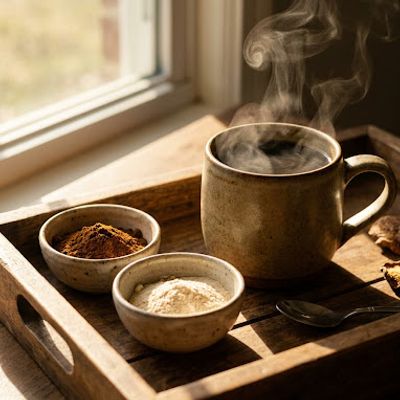
What Is Mushroom Coffee? A Straight Answer to the Trend in Your Feed
Mushroom coffee sounds like something a forager brews over a campfire, or possibly something that gives you a very different kind of morning. It is neither. Mushroom coffee is regular coffee blended with an extract of functional mushrooms like lion's mane or chaga, and it will not alter your reality, just maybe your afternoon jitters. The drink has jumped from health-food shelves to grocery endcaps fast enough that plenty of people are ordering it with no clear idea of what is in the cup. Here is the plain version, no woo required.
So What Exactly Is Mushroom Coffee?
At its simplest, mushroom coffee is a blend of ground or instant coffee and powdered functional mushroom extract. The mushrooms are dried, extracted, and milled into a fine powder, then mixed with the coffee. You are not steeping caps in your mug or scooping something out of the forest floor. In most blends, real coffee is still the base, and the mushroom powder rides along for the functional compounds.
One point that trips people up: a few products sold as "mushroom coffee alternatives" contain no coffee at all. These are caffeine-free tonics built from mushrooms and roasted roots like chicory, made to mimic the ritual without the buzz. Read the label so you know which one you are buying.
Mushroom coffee is one slice of a larger category worth knowing, so if you want the full map of drinks in this space, start with the overview.
The Mushrooms Behind the Brew
Four species show up again and again, each for a different reason. Being honest about the evidence matters here, because the marketing rarely is.
Lion's mane is the cognitive pick. Its hericenones and erinacines can stimulate nerve growth factor in lab work, and a few small human trials have looked at mood and mild cognitive support. Interesting mechanism, early data.
Chaga brings a heavy antioxidant profile and is studied for immune modulation, though most of that research sits in test tubes and animals rather than people.
Cordyceps is the endurance favorite, studied for oxygen use and stamina, with mixed results in trained humans.
Reishi is the calm one, used traditionally for relaxation, with human trials that are small and inconsistent.
Does It Taste Like a Mushroom?
This is the question everyone actually wants answered, and the honest reply is: sort of, but less than you fear. A well-made blend tastes like slightly earthy, mellow coffee, with a nutty edge from the fungi. A poorly made one can taste like a campfire or wet cardboard, which is usually a sign of cheap, over-roasted powder rather than the mushrooms themselves.
Milk, cream, or a splash of oat milk smooths the earthiness right out, and most people stop noticing the difference within a week.
Caffeine, Energy, and Why People Make the Switch
Because the mushroom powder replaces some of the coffee, most blends land lower on caffeine than a straight cup. That is the single biggest reason people switch: they want the ritual and some alertness without the racing heart at 2 p.m. Whether you feel a smoother energy is partly the lower dose and partly personal, so treat the "no crash" promises as anecdotal rather than proven.
If caffeine content is your deciding factor, or you are weighing the perks against a regular cup, the cluster has dedicated breakdowns.
The Formats: Instant, Pods, Powder, and Homemade
Mushroom coffee comes in more shapes than regular coffee does, which is either convenient or confusing depending on your patience level. Ground blends brew in a French press or drip machine like any coffee. Instant sachets dissolve in hot water for travel and desk drawers. Pods fit single-serve machines. Straight mushroom powder lets you spike coffee you already own, which is usually the cheapest route.
Each format has its own trade-offs on cost, strength, and convenience.
Is Mushroom Coffee Right for You?
If you like coffee, want a touch less caffeine, and are curious about functional mushrooms, it is an easy, low-stakes thing to try. If you are pregnant, nursing, on medication, or managing a health condition, check with a clinician first, since these are supplements and interactions are possible.
The bigger variable is quality. A blend is only as good as the powder inside it, so look for products that name the mushroom species, state a beta-glucan percentage, and back it with a third-party certificate of analysis. The functional mushroom powders and coffee blends on ShroomSpy are curated with those standards in mind, which makes it easier to compare species and lab documentation without decoding a dozen brand sites.
The Short Version
Mushroom coffee is coffee with a functional mushroom extract stirred in, most often lion's mane, chaga, cordyceps, or reishi. It is not psychoactive, it usually carries less caffeine than a regular cup, and a good one tastes like earthy, mellow coffee rather than a forest floor. The health research is encouraging for supporting normal function and still early for most species, so go in curious, not credulous. If it fits your morning, the quality of the powder is what separates a keeper from a compost candidate.
Ready to take your mycology journey to the next level? Browse our full range of mushroom products at ShroomSpy.com/mushrooms/products and find everything you need to grow, forage, and thrive.
This post covers functional mushrooms and supplements as researched foods. It does not diagnose, treat, cure, or prevent any disease, and the mushrooms discussed are non-psychoactive culinary species.
Check out our Products!
Preguntas frecuentes
Anyone pregnant, nursing, taking medication, or managing a medical condition should talk to a clinician first. These are supplements, not medical products, and possible interactions are worth checking before making it a daily habit.