Best Lion's Mane Supplement: How to Choose (2026)
By Josh Shearer on 07/10/2026
What the research shows on lion's mane for focus and memory, and how to pick a real fruiting-body supplement: capsules, powder, or tincture.
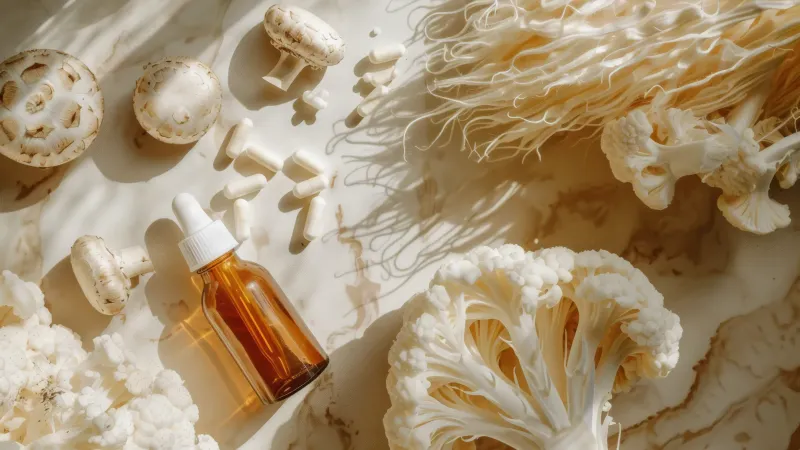
Lion's mane (Hericium erinaceus) is the functional mushroom most people reach for first, usually because they have heard it described as the "focus" or "memory" mushroom. The interest is well earned: lion's mane is the single most-studied mushroom for cognitive support, and unlike a lot of supplement-aisle hype, there is real human research behind it. The catch is that the market is crowded with products that range from genuinely potent to nearly inert. This guide explains what the research actually shows, what separates a good lion's mane supplement from a weak one, and which format fits which goal.
What the research actually says
The most cited human study is a 2009 double-blind, placebo-controlled trial in older adults with mild cognitive impairment. Participants taking lion's mane showed significant improvement on a cognitive scale versus placebo while they were taking it, though the benefit faded after they stopped, which points to consistent daily use rather than a one-off dose. A separate small trial found reductions in self-reported depression and anxiety after four weeks of intake, and a 2023 double-blind study in healthy young adults reported effects on aspects of cognitive performance and mood. Mechanistic work in animals has shown lion's mane can influence hippocampal signaling tied to recognition memory.
Taken together, this is a promising and unusually deep evidence base for a mushroom, but it is still early-stage. The honest framing is that lion's mane is a reasonable daily supplement for cognitive support and general wellbeing, not a treatment for any medical condition. If you have a diagnosed cognitive or mood disorder, talk to a clinician.
What separates a good supplement from a weak one
Fruiting body, not mycelium. This is the biggest divide in the category. Lion's mane's active compounds concentrate in the fruiting body (the actual mushroom). Many cheap products are made from mycelium grown on grain and milled together with that grain, so much of what you are paying for is starch. Look for "fruiting body" on the label and treat "mycelium," "mycelial biomass," or "myceliated grain" as a red flag. We break this down further in our mushroom powder guide.
Extraction. Lion's mane's beneficial compounds are locked inside a tough chitin cell wall. Hot-water and dual (water plus alcohol) extraction pull those compounds out so your body can use them. An unextracted raw powder gives you far less.
Third-party testing. Because mushrooms absorb whatever is in their substrate, independent testing for potency and for contaminants like heavy metals is what separates a trustworthy product from a guess.
Beta-glucan content over "polysaccharides." A stated beta-glucan percentage is more meaningful than a vague polysaccharide figure, which grain starch can inflate.
Capsules, powder, or tincture?
Tinctures are liquid dual extracts you take by the dropper. They are the most concentrated per serving, absorb quickly, and are easy to keep consistent day to day. Our triple-extract lion's mane tincture and organic lion's mane tincture are the most direct way to a reliable daily dose. We cover this format in depth in our lion's mane tincture guide.
Powders are versatile and good value, stirring into coffee, smoothies, or broth. Whole dried fruiting body like our certified organic dried lion's mane also works in cooking.
Capsules win on convenience and precise, taste-free dosing, which makes them the easiest to stick with, though a capsule is only as good as the extract inside it, so the same fruiting-body and extraction rules apply.
There is no single best format. Pick the one you will actually take every day, because consistency is what the research rewards.
How much and how long
Most human studies used doses in the range of roughly one to three grams of lion's mane per day, though products vary widely in concentration, so follow the dose on the label of the specific product you choose. The 2009 trial is a useful reminder that benefits built over weeks of daily use and faded after stopping, so give any lion's mane supplement a consistent four-to-eight week trial before judging it, and treat it as an ongoing habit rather than a quick fix.
The bottom line
Lion's mane has the strongest human evidence of any cognitive-support mushroom, but the benefit only shows up if the product is real. Buy fruiting body, look for genuine extraction and third-party testing, ignore inflated polysaccharide claims, and then pick whichever format, tincture, powder, or capsule, you will take consistently. You can compare lab-tested options in our functional mushroom extracts collection, and our guide to the best functional mushrooms helps if you are weighing lion's mane against reishi, cordyceps, or turkey tail.
Shop lion's mane supplements
Ready to try it? Browse lab-tested, fruiting-body lion's mane.
Frequently Asked Questions
There is no single best form. Tinctures are the most concentrated per serving and absorb quickly; powders are versatile and good value; capsules are the most convenient for precise, taste-free daily dosing. Pick whichever you will take consistently, because the research points to daily use over weeks rather than a single dose. In all cases, choose a fruiting-body extract.
References
- Docherty, S. & Doughty, F. (2023). The Acute and Chronic Effects of Lion's Mane Mushroom Supplementation on Cognitive Function, Stress and Mood in Young Adults: A Double-Blind, Parallel Groups, Pilot Study. .
- Brandalise, F. & Cesaroni, V. (2017). Dietary Supplementation of Hericium erinaceus Increases Mossy Fiber-CA3 Hippocampal Neurotransmission and Recognition Memory in Wild-Type Mice. .
- Nagano, M. & Shimizu, K. (2010). Reduction of depression and anxiety by 4 weeks Hericium erinaceus intake. .
- Mori, K. & Inatomi, S. (2009). Improving effects of the mushroom Yamabushitake (Hericium erinaceus) on mild cognitive impairment: a double-blind placebo-controlled clinical trial. .