Mushroom Powder Guide: What to Buy and How to Use It
By Josh Shearer on 07/09/2026
What mushroom powder is, why fruiting-body extract beats cheap mycelium filler, and how to choose lion's mane, reishi, and cordyceps powder.
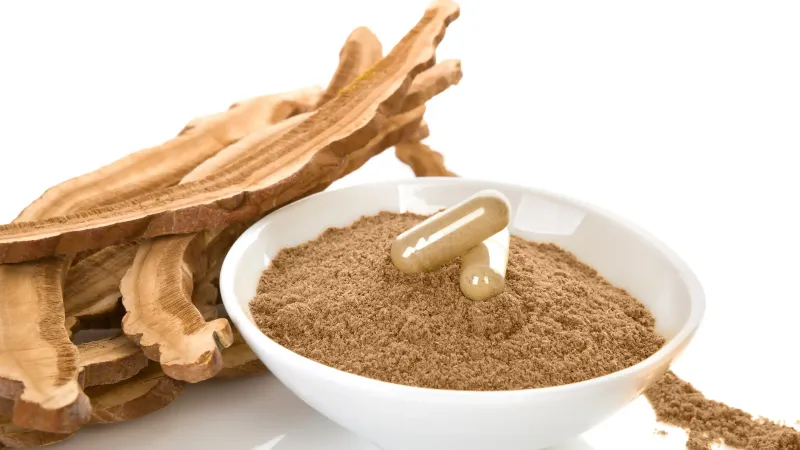
Mushroom powder is the simplest way to add functional mushrooms like lion's mane, reishi, and cordyceps to your daily routine. It stirs into coffee, smoothies, and broth, it stores for months, and, when it is made correctly, it can deliver more of a mushroom's active compounds than eating the raw fruiting body ever could. But "mushroom powder" is also one of the most abused labels on the supplement shelf, and the differences between products are large enough to change whether you get any benefit at all. This guide explains what mushroom powder actually is, how the good stuff is made, and how to read a label so you know what you are buying.
What mushroom powder actually is
At its simplest, mushroom powder is dried mushroom ground into a fine flour. The reason to bother, rather than just eating the mushroom, comes down to the mushroom cell wall. Fungal cell walls are built largely from chitin, the same tough, indigestible polymer found in insect shells. Locked inside and alongside that chitin are the compounds people actually want: beta-glucans and other polysaccharides. Drying and milling begin to break the material down and, as Christopher Hobbs puts it in his reference guide, the process of making the powder helps release the beta-glucans from other polymers like chitin so your body can access them.
That single fact explains most of the quality spread in the category. A coarse powder of raw, unextracted mushroom gives your digestion very little to work with. A properly dried, finely milled, and often extracted powder gives you far more.
Powder versus extract: they are not the same
This is the distinction that trips up most shoppers. A plain powder is dried, milled whole mushroom. An extract powder takes that material a step further: the mushroom is simmered in hot water (and sometimes alcohol) to pull the active polysaccharides and, in species like reishi, the triterpenes out of the chitin matrix. The liquid is then concentrated and dried back into a powder. The result is more concentrated in the compounds that matter, and those compounds are in a form the body can absorb more readily.
If a label says "10:1 extract," it means roughly ten kilograms of raw mushroom went into one kilogram of finished powder. That concentration is a feature, not marketing fluff, provided the starting material was real fruiting body. You can browse the difference directly in our mushroom extracts collection and our dehydrated whole mushrooms, which suit different uses: extracts for a concentrated daily dose, dried whole mushrooms for cooking and broth.
Fruiting body versus mycelium-on-grain
The single biggest hidden-quality issue in mushroom powder is what the powder is made from. Many inexpensive products in the United States are not made from the mushroom (the fruiting body) at all. They are made from mycelium grown on a bag of grain, then dried and milled together with that grain. The grain is never separated out, so a large fraction of the finished powder is starch, not mushroom.
This matters because the fruiting body is where the highest concentrations of beta-glucans typically sit. A grain-and-mycelium powder can test high for total "polysaccharides" while most of that number is grain starch, which does nothing for you. Reviews of the field have long emphasized that the medicinal value of these mushrooms tracks with genuine beta-glucan content, not with vague polysaccharide totals. When you compare products, "fruiting body" on the label is the first signal worth looking for. We go deeper on this in our explainer on mycelium versus fruiting body.
Lion's mane mushroom powder
Lion's mane (Hericium erinaceus) is the most searched-for single mushroom powder, and for good reason: it is the one most associated with focus and cognitive support. A 2023 double-blind pilot study in young adults found measurable effects on aspects of cognitive performance and mood after lion's mane supplementation, and mechanistic work in animals has shown lion's mane can influence hippocampal signaling tied to recognition memory. Those are promising, still-early findings rather than settled medicine, and lion's mane is best thought of as daily cognitive support rather than a treatment for anything.
For powder specifically, the same fruiting-body rule applies with force: lion's mane's compounds concentrate in the fruiting body, so a fruiting-body powder or extract is what you want. Our certified organic dried lion's mane is whole fruiting body you can grind or cook, and our super-food extract powders offer a concentrated daily option.
How to read a mushroom powder label
Look for the mushroom part. "Fruiting body" is good. "Mycelium," "mycelial biomass," or "myceliated grain" means you are likely paying for starch.
Look for beta-glucan content, not just polysaccharides. A quality producer will state beta-glucan percentage specifically. A "polysaccharides" figure alone can be inflated by grain-derived starch.
Look for extraction on concentrated products. Reishi and chaga in particular need hot-water (and for reishi, dual) extraction to make their compounds available; an unextracted reishi powder is mostly indigestible.
Check for third-party testing. Independent lab testing for potency and for contaminants such as heavy metals is the difference between a trustworthy powder and a guess, because mushrooms readily concentrate whatever is in their growing substrate.
How to use mushroom powder
The everyday appeal of powder is that it disappears into things you already consume. Stir a measured dose into coffee or tea, blend it into a smoothie, or whisk it into a warm mug of cacao. Because heat does not destroy the beta-glucans, powders work well in cooking and broth too. Start with the dose on the label and keep it consistent day to day, since the functional-mushroom effects that research points to build with regular use rather than a single serving.
If a straight powder is not to your taste, a liquid mushroom tincture delivers the same extracted compounds in a dropper, and our broader guide to the best functional mushrooms can help you match a species to what you are after.
The bottom line
Good mushroom powder is one of the best-value ways to use functional mushrooms: shelf-stable, versatile, and, when properly extracted from real fruiting body, rich in the beta-glucans that give these mushrooms their reputation. The category's problems, cheap grain-and-mycelium filler and inflated polysaccharide claims, are all avoidable once you know to read for fruiting body, beta-glucan content, extraction, and third-party testing. Buy on those four signals and mushroom powder earns its place in your daily routine.
Shop functional mushroom powders & extracts
Ready to try it? Browse lab-tested, fruiting-body mushroom extracts and powders.
Frequently Asked Questions
A plain powder is simply dried, milled whole mushroom. An extract powder goes further: the mushroom is simmered in hot water (and sometimes alcohol) to pull the beta-glucans and other active compounds out of the tough chitin cell wall, then that liquid is concentrated and dried. Extract powders are more concentrated and their compounds are easier for the body to absorb.
References
- Docherty, S., Doughty, F., & Smith, E. (2023). The Acute and Chronic Effects of Lion's Mane Mushroom Supplementation on Cognitive Function, Stress and Mood in Young Adults: A Double-Blind, Parallel Groups, Pilot Study. .
- Hobbs, C. (2021). Christopher Hobbs's Medicinal Mushrooms: The Essential Guide. Storey Publishing.
- Brandalise, F., Cesaroni, V., & Gregori, A. (2017). Dietary Supplementation of Hericium erinaceus Increases Mossy Fiber-CA3 Hippocampal Neurotransmission and Recognition Memory in Wild-Type Mice. .
- Wasser, S. (2014). Medicinal mushroom science: Current perspectives, advances, evidences, and challenges. .