Mushroom Supplement for Gut Health: Turkey Tail & Beyond
By Louis on 05/06/2026
Turkey tail is the most research-backed mushroom supplement for gut health. Here's what the trials show, how to dose, & where it fits with probiotics.
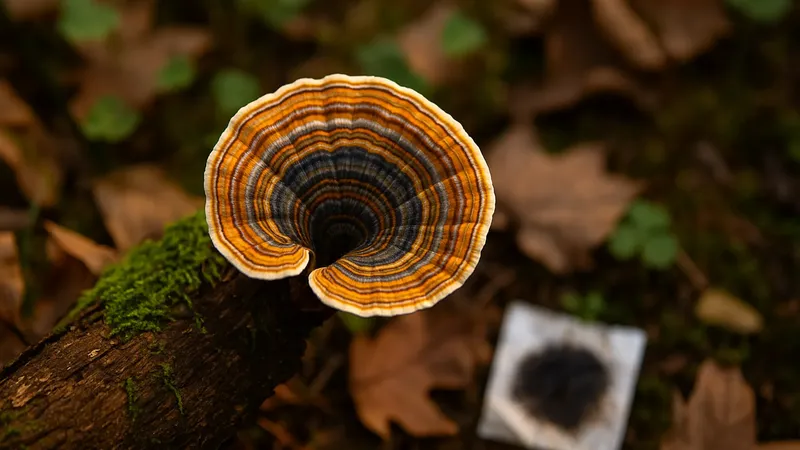
Mushroom Supplement for Gut Health: The Honest Guide to Turkey Tail and the Microbiome
If you're shopping for a mushroom supplement for gut health, here's the short answer: turkey tail. Trametes versicolor is the only common functional mushroom with a published human clinical trial showing direct prebiotic effects on the gut microbiome, and the results were the kind that get measured rather than vibed.
The longer answer matters because gut health is messy and individual. Turkey tail leads but doesn't act alone. Reishi is building an evidence base for gut inflammation and the gut-liver-brain axis, mostly in animal models so far. Maitake and chaga play supporting roles. None of them replace the basics of fiber, fermented foods, and not destroying your microbiome with antibiotics every six months.
Best Mushrooms for Gut Health at a Glance
Mushroom | Gut Mechanism | Typical Daily Dose | Evidence Strength |
|---|---|---|---|
Turkey Tail | Prebiotic, increases Bifidobacterium and Lactobacillus | 1,000–3,000 mg extract | Strong (human RCT) |
Reduces gut inflammation, supports gut barrier | 1,000–3,000 mg extract | Moderate (animal + mechanism) | |
Maitake | Beta-glucan fermentation, immune-gut crosstalk | 1,000–3,000 mg extract | Limited–Moderate |
Antioxidant, may protect gut lining | 500–2,000 mg extract | Limited (mostly preclinical) |
Doses listed are for standardized extracts, not raw mushroom powder.
Why Turkey Tail Is the Best Mushroom Supplement for Gut Health
Turkey tail wins because of two compounds with serious research behind them: polysaccharopeptide (PSP) and polysaccharide-K (PSK). Both are protein-bound polysaccharides extracted from Trametes versicolor. PSK is the one approved as an adjunct cancer therapy in Japan. PSP is the one studied for gut microbiome effects in healthy adults.
The mechanism is straightforward. PSP behaves like a prebiotic fiber: your digestive enzymes can't break it down efficiently, so it travels intact to the colon, where beneficial bacteria ferment it. That fermentation produces short-chain fatty acids like butyrate, which feed the cells lining your gut wall and modulate inflammation. PSP appears to selectively favor Bifidobacterium and Lactobacillus (the good bacteria most probiotic supplements try to deliver) while reducing populations of less helpful genera like Clostridium and Escherichia/Shigella.
This is more specific than the vague "supports gut health" language on most labels. PSP doesn't just add bacteria the way a probiotic does. It feeds the bacteria you already have, encouraging the right ones to outcompete the wrong ones. That's a meaningfully different mechanism, and arguably a more durable one. For how turkey tail fits alongside other functional mushrooms, see our complete guide to functional mushrooms.
What the Human Research Actually Shows
The headline study is Pallav et al. (2014), published in Gut Microbes. Twenty-four healthy adults were randomized to receive PSP from Trametes versicolor (about 2,600 mg/day), the antibiotic amoxicillin, or no treatment, for 8 weeks. Stool samples were analyzed seven times across the study using microbial ecology methods.
The findings were specific and consistent. PSP produced "clear and consistent microbiome changes consistent with its activity as a prebiotic," with increases in beneficial Bifidobacterium and Lactobacillus populations. The amoxicillin group showed substantial microbiome disruption, including increases in Escherichia/Shigella. The no-treatment group's microbiomes stayed stable. The researchers concluded that PSP from turkey tail acts as a prebiotic to modulate human intestinal microbiome composition.
Two qualifications worth being honest about. First, the study was small (24 participants, 22 completers), and a follow-up RCT at larger scale hasn't yet been published. Second, individual baseline microbiomes were so distinct that participant-level variation sometimes overshadowed treatment effects. The direction of evidence is positive and the mechanism is plausible, but this isn't yet a settled clinical question.
The supporting evidence base includes Yu et al. (2013), an in vitro study showing turkey tail extract modified human fecal microbiota composition in similar directions to the Pallav findings. Mechanistic and animal studies continue to accumulate. The 2014 RCT remains the most-cited human evidence, and at the level a supplement-buying reader needs, it's enough to place turkey tail at the top of the gut category.
Reishi, Maitake, and Chaga: The Supporting Cast
Three other mushrooms earn mentions for gut health, with appropriate caveats about evidence strength.
Reishi (Ganoderma lucidum) is the most interesting after turkey tail. The published research is heavily weighted toward mechanism studies and animal models, with one notable 2015 Nature Communications artigo showing reishi extract prevented obesity-associated gut dysbiosis in mice and improved gut barrier integrity. A ongoing randomized clinical trial in 2025 (NCT07534241) is testing standardized reishi in adults with metabolic-dysfunction-associated fatty liver disease, with gut microbiota composition as a secondary outcome. Human evidence is building but still preliminary. For now, reishi is reasonable to add to a gut-supportive routine if your concerns include inflammation or stress-driven digestive issues, with calibrated expectations.
Maitake (Grifola frondosa) contains a beta-glucan fraction (D-fraction) that's been studied primarily for immune and metabolic effects, with some indirect benefits to gut function via immune-gut crosstalk. The gut-specific human evidence is thinner than turkey tail but better than chaga.
Chaga (Inonotus obliquus) brings antioxidant support that may protect the gut lining from oxidative stress, but the human research for chaga and gut health specifically is essentially absent. Take it as a long-term general antioxidant tonic, not a targeted gut therapy. Honest framing matters more than commercial convenience here.
What about lion's mane and cordyceps? Both have other body system specialties (cognition and aerobic capacity respectively), and neither has meaningful gut-specific human research. If you're already taking them for those other reasons, fine. Don't add them expecting gut benefits.
Mushroom Supplement vs. Probiotic: Which Do You Need?
This is the question most readers actually have, and the honest answer is "probably both, for different reasons."
Probiotics deliver live bacteria directly. You're adding specific strains like Lactobacillus rhamnosus or Bifidobacterium longum and hoping they survive stomach acid, reach the colon, and stick around long enough to help. Many strains don't. Probiotics are useful in specific situations (after antibiotics, during travel, with certain digestive conditions), but they're a delivery problem more than a fundamental fix.
Mushroom supplements like turkey tail work as prebiotics. You're not adding bacteria. You're feeding the ones already there, encouraging the right ones to thrive and the wrong ones to fade. Prebiotic effects compound over weeks rather than working acutely, and they don't depend on whether specific strains survive the digestive tract. The Pallav RCT also suggested PSP could help maintain microbiome balance during antibiotic disruption, which is interesting if true and worth more research.
What works best for many people is layering: a mushroom supplement for ongoing prebiotic support plus targeted probiotics during specific events (after antibiotics, during travel, after a GI illness). Don't think of them as competitors.
How to Choose a Quality Turkey Tail Supplement
The same buying-quality rules apply that we've covered for cordyceps and lion's mane, with one species-specific consideration.
Fruiting body extract, not mycelium-on-grain. Most turkey tail bioactives are concentrated in the fruiting body. Mycelium grown on cereal substrate ends up mostly grain. Look for "100% fruiting body" or specifically "PSP extract" on the label.
PSP-standardized vs. beta-glucan-standardized. This is the turkey tail-specific consideration. The Pallav 2014 study used PSP-standardized extract, which means the active compound is concentrated and quantified. A whole-mushroom extract with verified beta-glucan content (look for at least 25%) covers most of the same ground but isn't identical to PSP. If your goal is microbiome modulation specifically, PSP-standardized products map more directly onto the research.
Third-party Certificate of Analysis. Heavy metal testing matters extra for fungi because mushrooms are bioaccumulators. Reputable products publish recent COAs showing beta-glucan content, heavy metals, microbial contamination, and pesticide residues. ShroomSpy's verificados meet these standards.
Dosing, Timing, and What to Expect
Studied doses for turkey tail range from 1,000 to 6,000 mg per day, with the Pallav 2014 microbiome study using approximately 2,600 mg/day of PSP-standardized extract. For a standard 10:1 extract, 1,000 to 3,000 mg daily falls inside the studied range.
Timing. Take with food to support stomach tolerance. Some people split the dose between morning and evening. Timing relative to meals matters less than consistency.
Timeline. The Pallav study showed measurable microbiome changes over 8 weeks. Subjective improvements in digestion (less bloating, more regular bowel movements) sometimes appear within 2 to 4 weeks. Plan on at least 8 weeks of consistent daily use before evaluating effects on the microbiome itself.
Stacking. Turkey tail combines well with reishi (gut inflammation angle), with conventional probiotics (different mechanisms, complementary), and with dietary fiber (because the prebiotic effect compounds with other prebiotic substrates). Avoid the temptation to take five mushroom species at once. Most multi-mushroom blends spread the dose so thin that no single species hits a useful threshold.
Who Shouldn't Take Turkey Tail
Turkey tail is well-tolerated by most healthy adults, but a few populations should check with a doctor first.
People on immunosuppressants. Turkey tail modulates immune function. For people on medications like methotrexate, cyclosporine, or biologics for autoimmune conditions or post-transplant care, talk to your specialist before starting.
People with active autoimmune flares. Same reasoning. Immune modulation isn't always what you want during a flare.
People with mold or fungal allergies. Start at a low dose to test tolerance.
Pregnancy and breastfeeding. Safety data are limited. The default answer is to skip unless your doctor specifically signs off.
People with active GI bleeding or severe inflammatory bowel disease. Talk to a gastroenterologist before adding any new supplement, including prebiotic mushrooms.
The most commonly reported side effect is mild gastrointestinal upset (some bloating or loose stools) during the first 1 to 2 weeks, which usually resolves as the gut microbiome adjusts. If symptoms persist beyond that or worsen, stop and reconsider.
The Bottom Line
The best mushroom supplement for gut health is turkey tail extract, dosed at 1,000 to 3,000 mg of a 10:1 extract daily, taken consistently for at least 8 weeks. Look for fruiting body extract with verified PSP or beta-glucan content and a published COA. Pair with reishi if your gut issues include inflammation, with conventional probiotics during specific events like antibiotic courses, and with dietary fiber for compounding prebiotic effects. Skip the cheap mycelium-on-grain products, skip the gummies that don't list milligrams, and don't expect any supplement to compensate for a diet that doesn't include real food.
Ready to take your mycology journey to the next level? Browse our full range of mushroom products at ShroomSpy.com/mushrooms/products and find everything you need to grow, forage, and thrive.
Frequently Asked Questions
What is the best mushroom supplement for gut health?
Turkey tail (Trametes versicolor) has the strongest human research for direct gut microbiome support. A 2014 randomized clinical trial showed that turkey tail's polysaccharopeptide (PSP) acts as a prebiotic, increasing beneficial Bifidobacterium and Lactobacillus populations over 8 weeks. No other functional mushroom has comparable human gut-specific evidence.
Is turkey tail mushroom a probiotic or a prebiotic?
Turkey tail is a prebiotic, not a probiotic. Probiotics deliver live bacteria. Prebiotics feed the beneficial bacteria already in your gut. Turkey tail's polysaccharopeptide (PSP) acts as a fermentable substrate that Bifidobacterium and Lactobacillus species selectively use, encouraging healthy bacterial populations to thrive without introducing new strains.
How long does turkey tail take to improve gut health?
The 2014 Pallav study measured microbiome changes over 8 weeks of daily supplementation. Subjective improvements in digestion (reduced bloating, more regular bowel movements) sometimes appear within 2 to 4 weeks. Plan on at least 2 months of consistent daily use before evaluating effects, since microbiome shifts take time.
Can I take a mushroom supplement with my probiotics?
Yes, and many people do. Mushroom prebiotics and conventional probiotics work through different mechanisms and complement rather than compete with each other. The mushroom feeds beneficial bacteria already in your gut, while the probiotic adds specific strains. There is no known interaction issue, though it's always worth confirming with your prescriber if you take other medications.
Does turkey tail help with leaky gut or IBS?
Mechanism studies and animal research suggest turkey tail's prebiotic activity may support gut barrier integrity (the "leaky gut" mechanism). Direct human RCT evidence specifically for IBS, leaky gut, or IBD is limited. People with diagnosed gastrointestinal conditions should consult a gastroenterologist before starting any new supplement and should treat turkey tail as a complementary support to medical care, not a replacement.
Disclaimer: This statement has not been evaluated by the Food and Drug Administration. This product is not intended to diagnose, treat, cure, or prevent any disease. Always consult a qualified healthcare professional before starting a new supplement, especially if you take medications, are pregnant or breastfeeding, or have a medical condition.
Check out our Turkey Tail Products!
Frequently Asked Questions
Turkey tail (Trametes versicolor) is described as the only common functional mushroom with a published human clinical trial showing direct prebiotic effects on the gut microbiome. Its compounds polysaccharopeptide (PSP) and polysaccharide-K (PSK) are protein-bound polysaccharides with serious research behind them. According to the article, no other functional mushroom has comparable human gut-specific evidence, which places turkey tail at the top of the gut category.