Nootropic Mushrooms: Best Fungi for Focus & Memory
By Josh Shearer on 07/17/2026
Which mushrooms actually support focus and memory: lion's mane, cordyceps, and reishi, what the research shows, and how to use them.
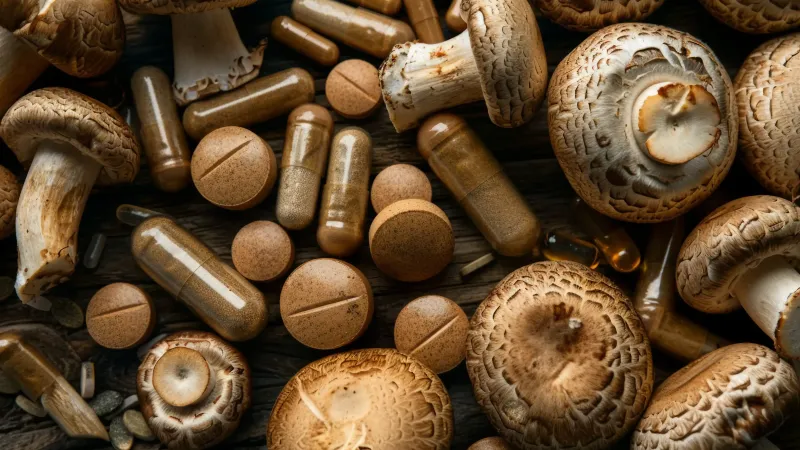
"Nootropic" means a substance taken to support cognition, focus, memory, or mental clarity. Nootropic mushrooms are the functional mushrooms with the best case for that role, and unlike most of the synthetic nootropic world, a couple of them have real human research behind them. This guide covers which mushrooms actually belong in the nootropic category, what each one does, and how to use them so they earn their place in your routine.
Lion's mane: the flagship nootropic mushroom
If there is one nootropic mushroom, it is lion's mane (Hericium erinaceus). It is the most-studied mushroom for cognitive support, and the research is unusually deep for a natural product. A double-blind, placebo-controlled trial in older adults with mild cognitive impairment found significant improvement on a cognitive scale during supplementation, with the benefit fading after they stopped, a strong argument for consistent daily use. A study in healthy young adults reported effects on aspects of cognitive performance and mood, and mechanistic animal work has tied lion's mane to hippocampal signaling involved in memory.
The practical takeaway is that lion's mane is a reasonable daily supplement for cognitive support, not a smart-drug shortcut. Our best lion's mane supplement guide covers how to choose and dose it, and a lion's mane tincture or powder is the most direct way to take it.
Cordyceps: focus through energy
Cordyceps is not a memory mushroom; it earns its nootropic mention a different way. Cordyceps is studied for energy and exercise capacity, and one controlled trial found improved tolerance to high-intensity exercise after supplementation. Mental performance is hard to separate from physical energy and fatigue, so for people whose "brain fog" is really tiredness, cordyceps can support the alertness that focus depends on. A cordyceps tincture is an easy daily option, and our note on the energizing effects of cordyceps goes deeper.
The supporting cast
Reishi is not a stimulant, but by supporting calm and sleep it can indirectly help daytime focus, since poor sleep is one of the biggest drags on cognition. Turkey tail and chaga are immune- and gut-support mushrooms; the gut-brain link means they belong in the broader wellness picture even though they are not direct nootropics. For a single mushroom marketed for the brain, though, lion's mane is the one with the evidence, and cordyceps is the one for energy-driven focus.
How to use nootropic mushrooms
Two principles matter more than any stack. First, quality decides everything: choose fruiting-body extracts, not mycelium-on-grain, insist on genuine extraction and third-party testing, and read for beta-glucan content rather than vague polysaccharide totals. Our mushroom powder guide walks through this. Second, consistency beats dosing tricks: the human studies ran for weeks, and lion's mane's benefits faded when people stopped, so a daily habit over a month or two is the real test.
Many people take lion's mane in the morning for focus and reishi in the evening for sleep, letting the two bracket the day. If that feels like too much to manage, our best functional mushrooms guide can help you narrow to one.
The bottom line
The nootropic mushroom worth prioritizing is lion's mane, backed by the deepest human cognitive research of any mushroom, with cordyceps as the energy-and-alertness complement and reishi as the sleep-supporting foundation. Buy fruiting-body extracts, take them consistently for weeks, and keep expectations realistic: these are daily cognitive-support tools, not instant smart drugs. Compare lab-tested options in our functional mushroom extracts collection.
Shop nootropic mushroom extracts
Browse lab-tested, fruiting-body nootropic mushrooms.
Frequently Asked Questions
Lion's mane is the flagship nootropic mushroom, with the deepest human research for cognitive support. Cordyceps supports energy and alertness, which helps focus when fatigue is the problem. Reishi is not a stimulant but supports sleep, which underpins daytime cognition.
References
- Sadowska, A. (2026). Medicinal Mushrooms and Their Bioactive Compounds: From Traditional Use to Therapeutic Potential. .
- Docherty, S. & Doughty, F. (2023). The Acute and Chronic Effects of Lion's Mane Mushroom Supplementation on Cognitive Function, Stress and Mood in Young Adults: A Double-Blind, Parallel Groups, Pilot Study. .
- Hirsch, K. & Smith-Ryan, A. (2017). Cordyceps militaris Improves Tolerance to High-Intensity Exercise After Acute and Chronic Supplementation. .
- Mori, K. & Inatomi, S. (2009). Improving effects of the mushroom Yamabushitake (Hericium erinaceus) on mild cognitive impairment: a double-blind placebo-controlled clinical trial. .