Quantas Calorias Existem nos Cogumelos? Guia Completo de Espécies
By Louis on 17/07/2026
Quantas calorias existem nos cogumelos? Descrição completa por espécie, método de cozimento e tamanho da porção, com contexto prático para dietas de perda de peso e cetogênicas.
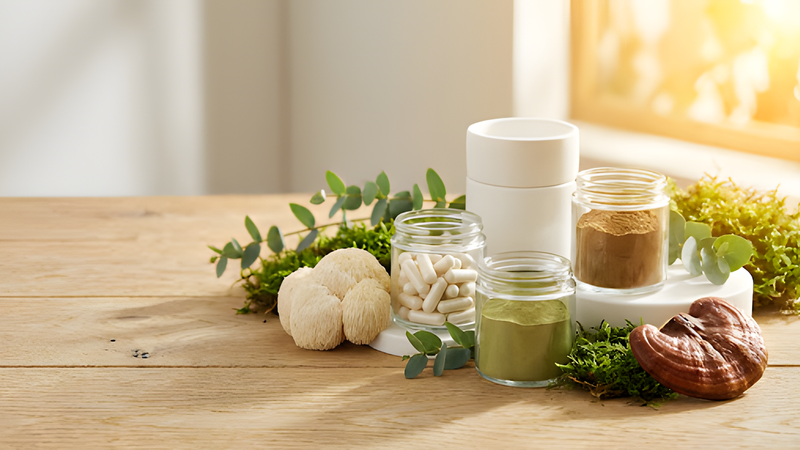
How Many Calories in Mushrooms? A Complete Guide by Species
A 100-gram serving of raw white button mushrooms contains roughly 22 calories. That number holds remarkably steady across most common culinary mushrooms, with shiitake, oyster, and maitake coming in slightly higher at 30 to 35 calories per 100 grams. For context, that means a full cup of sliced mushrooms delivers fewer calories than a single tablespoon of olive oil. The real story behind how many calories are in mushrooms is what changes those numbers: drying concentrates them dramatically, sautéing in fat multiplies them several times over, and species selection makes more difference than most people assume. This is the full breakdown by species, preparation method, and practical context.
The Quick Answer: Calories in Mushrooms by Species
Here is what 100 grams of raw mushroom (roughly one cup sliced) delivers across the most common edible species:
- White button mushrooms: 22 calories
- Cremini (baby bella) mushrooms: 22 calories
- Portobello mushrooms: 22 calories
- Shiitake mushrooms: 34 calories
- Oyster mushrooms: 33 calories
- Maitake mushrooms: 31 calories
- Enoki mushrooms: 37 calories
- King trumpet mushrooms: 35 calories
- Lion's mane mushrooms: 35 calories
- Chanterelle mushrooms: 38 calories
White button, cremini, and portobello are the same species (Agaricus bisporus) at different stages of maturity, which is why their calorie counts are identical. The slightly higher numbers in shiitake, oyster, and the gourmet varieties reflect higher protein and carbohydrate content per gram, not added sugars or fats. None of these are meaningfully different from a calorie-counting standpoint. A cup of any culinary mushroom is going to land somewhere between 15 and 40 calories. Check out our guide for the full nutritional context behind these calorie counts, because that matters too!
Why Mushrooms Are So Low in Calories
The answer is mostly water. Fresh mushrooms are 90 to 92 percent water by weight, which is on par with watermelon and cucumber. The remaining dry matter is primarily protein, fiber, and a small amount of carbohydrate, with essentially zero fat. Out of the 22 calories in 100 grams of white button mushrooms, roughly 12 come from protein, 8 come from carbohydrates (most of which is fiber), and less than 2 come from fat.
That macronutrient distribution is unusual. Most plant foods this low in calories are also low in protein, and most foods this high in protein per calorie come with significant fat. Mushrooms occupy a category of their own: low-calorie like vegetables, but with a protein-to-calorie ratio that more closely resembles lean fish or egg whites. This is part of why they have become a recognized tool for weight management. They contribute meaningful protein and substantial volume to a meal without contributing meaningful calories.
Fresh vs. Dried: The Number That Catches People Off Guard
This is where the calorie math gets interesting. Once you remove the water content, the calorie density of mushrooms multiplies dramatically. Dried shiitake mushrooms contain roughly 296 calories per 100 grams. Dried porcini come in at around 296 calories per 100 grams as well. That is a more than tenfold increase from their fresh counterparts.
This rarely matters in practical cooking, because dried mushrooms rehydrate back to roughly their original water content when soaked, and you generally use far less of them by weight. A typical recipe might call for 14 grams of dried porcini, which translates to about 41 calories. After rehydrating, those mushrooms expand to roughly the equivalent of 140 grams of fresh, while still contributing the same 41 calories to the dish.
Where the dried-mushroom math does matter is if you are eating dried mushroom snacks (which are increasingly available and increasingly popular) or using mushroom powders. A tablespoon of mushroom powder is concentrated, not the calorie equivalent of a tablespoon of fresh mushrooms. Worth knowing if you are tracking intake closely.
How Cooking Method Changes the Calorie Count
Raw mushrooms and cooked mushrooms have essentially the same calorie content when no fat is added. Grilled, roasted dry, boiled, or steamed mushrooms come in at the same 22 to 35 calories per 100 grams as their raw counterparts, just with some water loss that concentrates the numbers slightly.
Sautéing is where things change. Mushrooms are notoriously porous, and they absorb cooking fat efficiently. A cup of mushrooms sautéed in one tablespoon of olive oil ends up containing around 140 calories, the vast majority of which come from the oil rather than the mushrooms themselves. Two tablespoons of butter pushes that over 220 calories per cup.
This is not a reason to avoid sautéing mushrooms, which is genuinely the best way to cook them for flavor. It is a reason to be honest about the math. The "mushrooms are basically zero calories" framing only holds when you cook them in minimal fat or without any fat at all. If you want to capture the umami and texture benefits of sautéing while keeping the calorie count down, dry-sautéing in a hot nonstick pan until the water releases and evaporates, then finishing with just a teaspoon of fat for flavor, gets you most of the benefit at a fraction of the calories.
Calories in Context: Weight Loss, Keto, and Why Mushrooms Earn Their Plate
The practical applications of mushroom calorie content show up in two diets where they consistently outperform expectations. For weight management, mushrooms work as a partial meat substitute. Replacing half the ground beef in tacos or pasta sauce with finely chopped mushrooms can reduce a meal's calorie load by 200 to 400 calories without measurably changing how satisfying the meal feels. A multi-year intervention study at the University of Buffalo documented this effect in real-world eating patterns, with participants consuming significantly fewer total daily calories when mushrooms were swapped in for half their usual meat portions.
For ketogenic and low-carb diets, mushrooms are one of the few foods that combine very low net carbs (typically 1 to 2 grams per serving once fiber is subtracted) with substantial satiating power. They are not zero-carb, but they are close enough to function as a free-pass food for most low-carb eating plans.
If you are specifically using mushrooms as a calorie-control tool, dried and powdered forms can be useful for adding umami depth without volume. ShroomSpy's functional and culinary mushroom collection includes tested powders and extracts that integrate easily into broths, sauces, and dressings without adding meaningful calories.
Calorie Counts by Serving Size
Most people do not weigh their food in grams, so here are the numbers in more practical units for white button mushrooms (the most common culinary variety):
- One whole medium mushroom (about 18 grams): 4 calories
- One cup sliced (about 70 grams): 15 calories
- One cup whole (about 96 grams): 21 calories
- One large portobello cap (about 84 grams): 18 calories
- Three ounces (85 grams): 19 calories
- One pound (454 grams): 99 calories
For comparison, those same servings of shiitake mushrooms would run roughly 50 percent higher in calories across the board (so one cup of sliced shiitake is about 23 calories rather than 15). The differences between species are real but small enough that they rarely change meaningful eating decisions.
Conclusion
The calorie count for mushrooms is one of the more straightforward numbers in nutrition. Fresh culinary mushrooms run between 22 and 38 calories per 100 grams across nearly all common species, with white button, cremini, and portobello at the low end and gourmet varieties like chanterelle and king trumpet slightly higher. Drying multiplies those numbers by roughly ten by weight, sautéing adds whatever fat you cook them in, and cooking method otherwise has minimal impact. For weight management, keto, or simply adding volume and umami to a meal without adding calories, mushrooms remain one of the best tools on the produce aisle.
Ready to take your mycology journey to the next level? Browse our full range of mushroom products at ShroomSpy.com/mushrooms/products and find everything you need to grow, forage, and thrive.
Confira nossos Produtos!
Perguntas frequentes
Uma porção de 100 gramas de cogumelos brancos crus contém cerca de 22 calorias, e os cogumelos cremini e portobello também têm 22 calorias, uma vez que são todos da mesma espécie em diferentes estágios de maturidade. Os cogumelos shiitake, ostra, maitake e variedades gourmet têm um pouco mais, geralmente entre 30 e 38 calorias por 100 gramas. Como regra geral, uma xícara de qualquer cogumelo culinário fica entre 15 e 40 calorias.